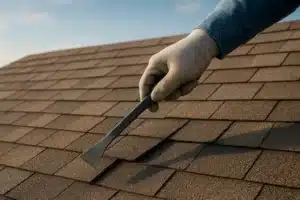
The storm passed overnight. Now there’s a shingle in the yard, a dent in the gutter, and a question you didn’t have yesterday: what do you do first? You want to get the roof fixed, and you don’t want to be taken advantage of while you do it.
A roof insurance claim usually runs in six steps: document the damage, get a roof inspection, report the damage to your Insurance Company, meet the insurance adjuster, review the estimate, and complete the repair. You own the claim, and you’re the one who files it. The insurance company’s adjuster decides what is covered. A roofing contractor can inspect the roof, write a repair estimate and talk through the damage with the adjuster, but no roofer can promise a claim will be approved.
In this article
- What Is a Roof Insurance Claim, and Who Decides What?
- Step 1: Stay Safe and Document the Damage
- Step 2: Get a Free Roof Inspection
- Step 3: Call Your Insurance Company
- Step 4: The Adjuster’s Visit
- Step 5: The Estimate and the Supplement
- Step 6: The Repair
- Who Does What on a Roof Insurance Claim?
- What If You Disagree With the Decision?
- Frequently Asked Questions
What Is a Roof Insurance Claim, and Who Decides What?
A roof insurance claim is the report you make to your Insurance Company after a storm damages your roof, asking them to review the damage and the repairs it needs.
Three people are involved. You start the claim and keep it moving. The adjuster, who works for your Insurance Company, inspects the damage and writes the report the company uses to make its decision. The roofer looks at the roof, tells you what it needs and does the repair.
Your Insurance Company decides what is covered. Edwards & Sons doesn’t, and we can’t promise any claim gets approved.
We only make promises we keep.
What we can do is give you an honest read on your roof and help you navigate the claims process from the first inspection to the finished work. Questions about your homeowners insurance and what’s covered belong with your Insurance Company or your agent.
Step 1: Stay Safe and Document the Damage
Make sure everyone is safe, then photograph the damage before anything gets cleaned up. Those photos are the first record of the roof damage.
Stay off the roof. Wet shingles, loose granules and hidden soft spots make a storm-damaged roof a dangerous place to stand, and you can document plenty from the ground.
Here’s what to capture:
- Wide shots of every side of the house, so each roof slope shows up at least once.
- Close-ups of anything on the ground: torn or missing shingles, pieces of flashing, granules collected at the end of a downspout.
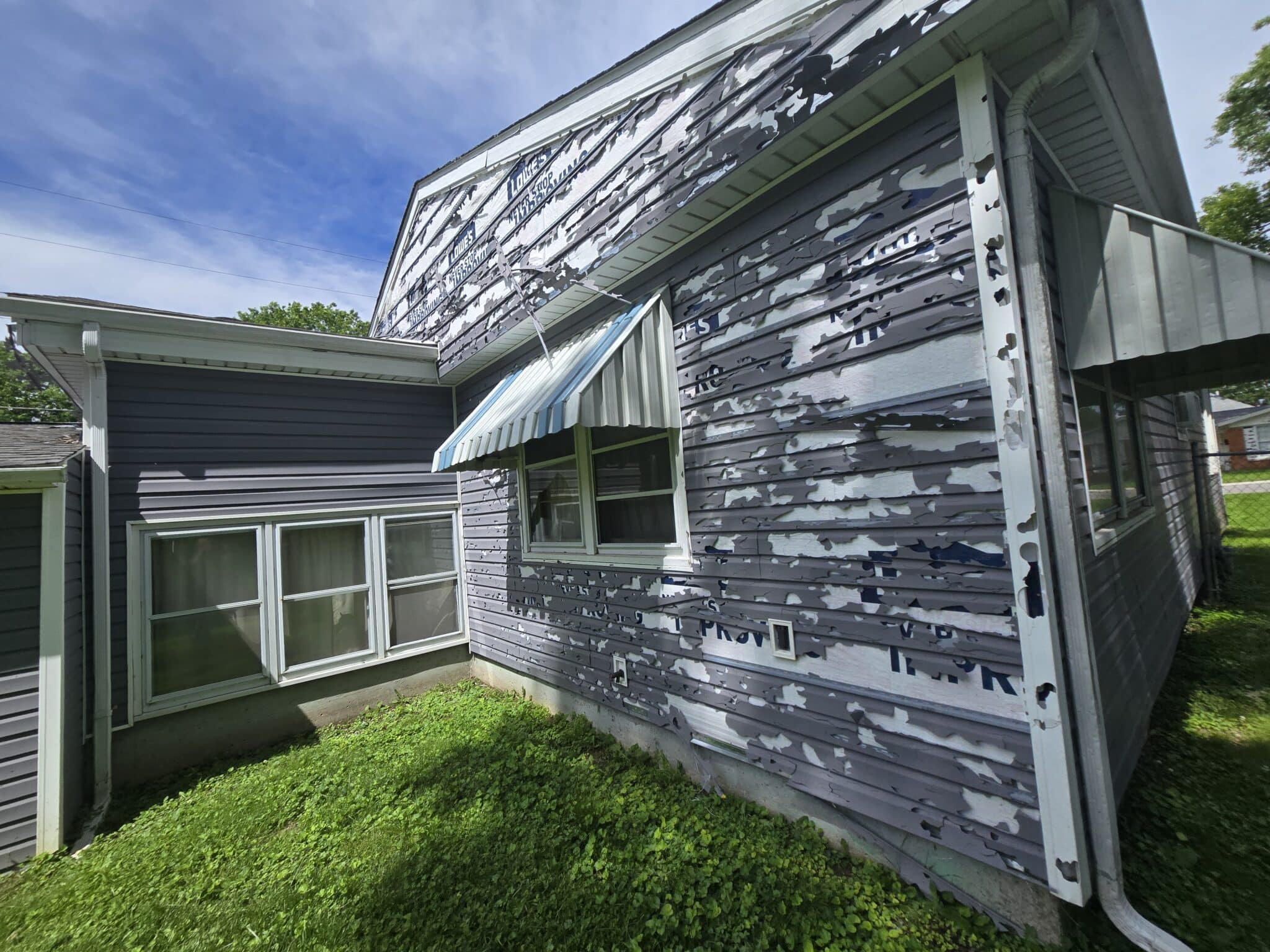
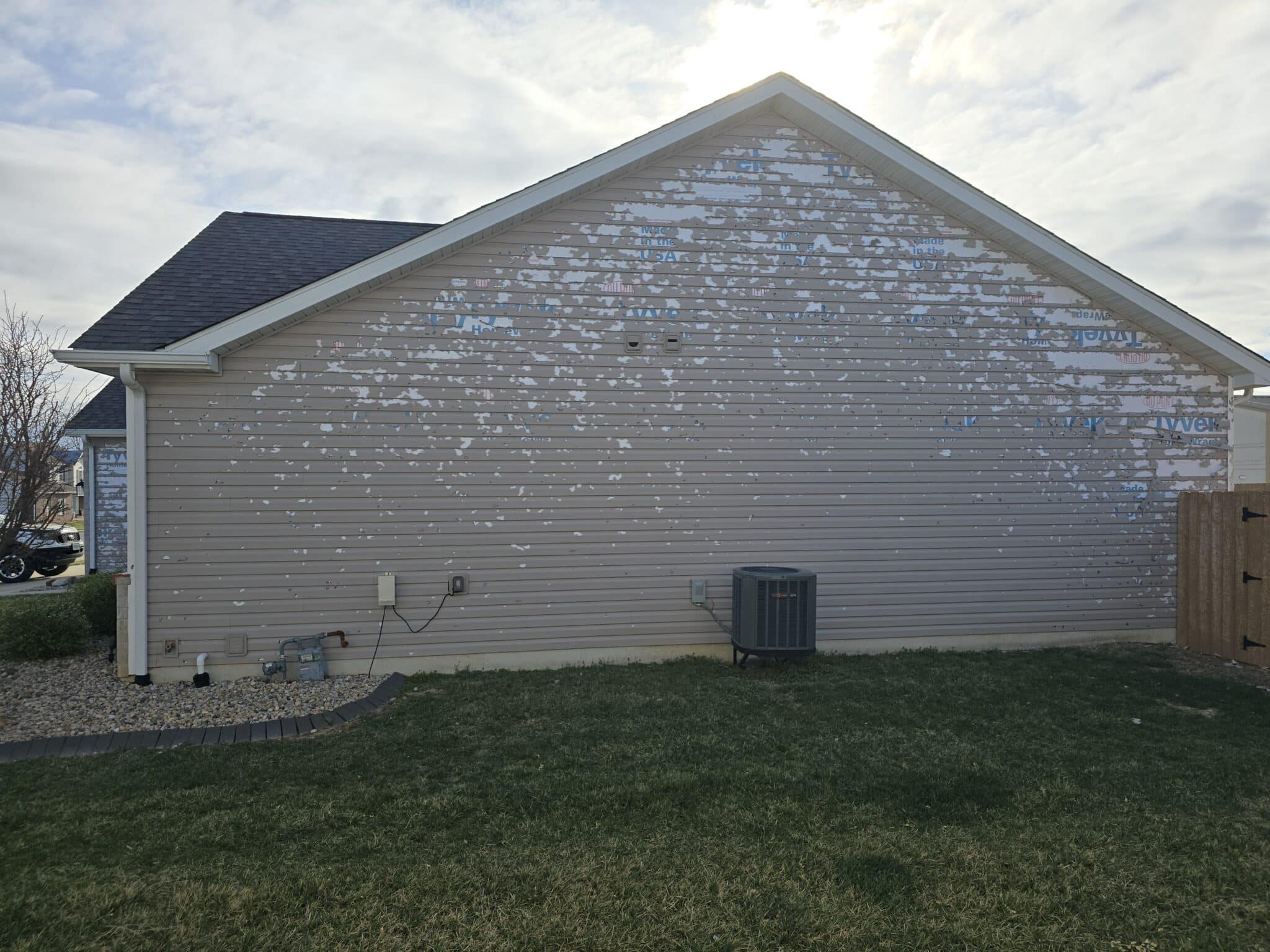
- Dents in soft metal: gutters, downspouts, roof vents and window trim often show hail marks plainly.
- Inside the house: water stains on ceilings, wet insulation in the attic, drips around light fixtures.
- A short video walk-around, narrating what you see as you go.
Write down two dates: the day of the storm and the day you noticed the damage. They aren’t always the same.
The Insurance Information Institute advises homeowners to “take reasonable steps to protect your property from further damage.” For a roof, that usually means a tarp over an open spot to keep rain out. Treat it as temporary only, and save every receipt for materials or emergency work.
The same guidance says to avoid throwing out damaged items until the adjuster has visited, if you can. Leave the fallen shingles in a pile. Hold off on permanent repairs until the damage has been seen.
Step 2: Get a Free Roof Inspection
A roof inspection tells you what the storm actually did before you talk to the insurance company. You go into that call knowing whether you’re dealing with a few missing shingles or damage across several slopes.
When Edwards & Sons inspects a storm-damaged roof, we use drone and close-up photos to document each slope. We look at the shingles for hail bruises and wind creases, check the flashing around chimneys and vents, and look over the gutters and soft metal. Hail and wind often hit together, so we look at the whole exterior, not just one corner of the roof.
Then you get a straight answer. Whenever a repair will do the job, a repair is what we recommend over a full replacement. If the damage is minor, we’ll say so. Sometimes the roof came through the storm just fine.
No sales pressure.
Step 3: Call Your Insurance Company
Report the damage to your Insurance Company or your agent soon after the storm, and write down the claim number they give you. This is the call where you file a claim, and it’s yours to make. Every later step runs on that claim number.
The Insurance Information Institute suggests asking a few questions on that first call:
- Is there a deadline for filing a claim?
- How long does processing usually take?
- Do they need estimates from a roofing contractor, and if so, how many?
Start a simple log, too. For every call or email, note the date, who you spoke with and what they said.
From there, your Insurance Company “will probably arrange for an adjuster to come and inspect your home,” in the Insurance Information Institute’s words. Someone will reach out to set up that visit.
Step 4: The Adjuster’s Visit
The adjuster comes to look at the damage in person, and their report is what your Insurance Company uses to make its decision on the claim.
Adjusters commonly look at:
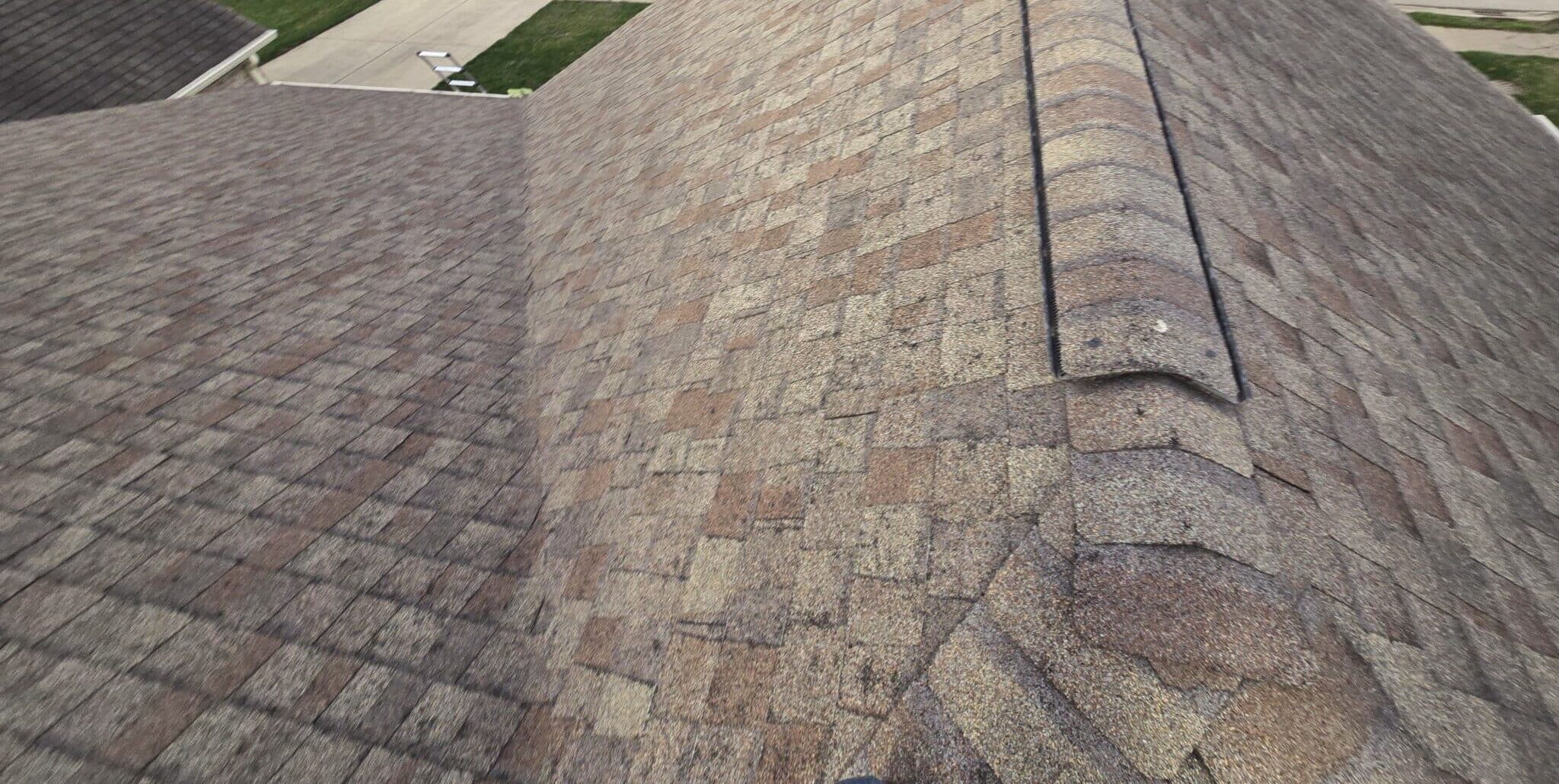
- Each roof slope, checking the shingles for hail marks, bruising, cracks and missing pieces.
- Wind damage: shingles that were lifted, creased or torn loose.
- Soft metal: gutters, vents and flashing, where hail tends to leave clear dents.
- The roof’s age and condition, sorting older wear from new storm damage.
If a roof is too steep or too damaged to walk safely, an adjuster may inspect it from a ladder or with a drone.
Have your records ready before they arrive: the photos and video, your notes with both dates, receipts for any tarping, and your roofer’s inspection photos and estimate if you have them. Be home for the visit if you can, and walk the adjuster to anything you noticed from inside the house, like a ceiling stain they’d never see from the roof.
Answer questions plainly. If you don’t know something, it’s fine to say so.
Step 5: The Estimate and the Supplement
After the inspection, your Insurance Company sends its estimate of the repairs it has approved. That’s the document you and your roofer will work from.
Read it next to your roofer’s estimate, line by line. Insurance paperwork has its own shorthand. We’ll go through it with you so you understand what’s listed and what isn’t. Anything about the amounts or what’s covered is a question for your insurer.
Sometimes the first estimate misses something. That’s not unusual, because some damage stays hidden until the old shingles come off. Soft or rotted decking under the shingles is the common example. Local building codes can also require work the first estimate didn’t include.
When that happens, the next step is a supplement. A supplement is a request to add legitimate repair items the first estimate left out, backed by photos and an itemized list. It goes to your Insurance Company for review, and they may approve it, change it or decline it.
A supplement isn’t automatic, and nobody can promise one goes through. What a roofer can do is document the damage clearly so the decision is made on good information.
Step 6: The Repair
Once you have the estimate and you’ve picked your roofer, the repair gets scheduled. It’s either a repair or a full roof replacement, and the condition of the roof decides which.
If a repair is enough, that’s what we’ll recommend. If the roof needs replacing, the old shingles come off first, and we photograph anything that turns up underneath, such as damaged decking, so there’s a record for a possible supplement.
Edwards & Sons is an Owens Corning Preferred Contractor, and we install Owens Corning roofing products, including Duration shingles. Duration shingles come with a limited lifetime manufacturer warranty from Owens Corning. Most roof replacements are completed in a single day.
When the work is finished, keep everything in one folder: the final paperwork, your photos from before and after, and your log of calls. If questions come up later, you’ll have the whole story in one place.
Who Does What on a Roof Insurance Claim?
You own the claim, the adjuster decides it, and the roofer takes care of the roof. Keeping those three jobs straight is the easiest way to avoid confusion and bad advice.
| You (the homeowner) | The insurance adjuster | The roofer |
|---|---|---|
| Report the damage and file the claim | Inspects the damage for your Insurance Company | Inspects the roof and documents the damage |
| Take photos, keep notes and save receipts | Writes the report the company uses to decide | Writes a repair estimate you can share |
| Make the decisions on your claim | Decides, with the company, what is covered | Talks through the damage with the adjuster |
| Choose who repairs your roof | Sends the estimate of approved repairs | Does the repair or replacement |
In Illinois, state law spells out what a roofing contractor can and can’t do on a claim. A contractor can give you an estimate, talk with the insurance company’s adjuster about the damage, and go over repair options with you. A contractor can’t file or call in the claim for you, or act on your behalf with your Insurance Company.
That line protects homeowners, and we stay on the right side of it on both sides of the river. We work directly with your Insurance Company, and we’ll help you navigate the claims process. The claim stays yours.
We’re a family-owned roofer since 1974, veteran-owned and operated, and A+ BBB rated. If a storm just came through and you’re not sure where your roof stands, start with a look at it. Get a Free Roof Inspection.
What If You Disagree With the Decision?
If you disagree with your Insurance Company’s decision, ask them to explain it in writing, then ask for a second look.
Send what you have: your photos, your notes, and your roofer’s estimate and photos. Be specific about which items you believe were missed and why.
Some homeowners with a complicated claim hire a public adjuster. Unlike a roofer, a public adjuster can act on your behalf with the insurance company. They’re licensed, so check the license with your state before you sign anything.
If you’re still stuck, your state’s insurance regulator takes consumer questions and complaints. On the Illinois side, that’s the Illinois Department of Insurance. On the Missouri side, it’s the Missouri Department of Commerce and Insurance.
Frequently Asked Questions
What should you not say to an insurance adjuster about your roof?
Don’t guess at the cause of the damage, and don’t exaggerate it. “The whole roof is ruined” is harder to back up than “I found six shingles in the yard and a dent in the gutter.” Don’t give a storm date if you only know when you noticed the damage, and don’t leave out earlier repairs. If the roof had work done a few years ago, say so.
Can your roofer be there when the adjuster inspects?
Yes, if you invite them. When the adjuster calls to schedule, tell them your roofer would like to be there and pick a time that works for everyone. Having both on the roof at once means a question about a soft spot or a dented vent gets looked at together, on the spot. The two may not see every item the same way, and that’s normal. The adjuster’s report is what goes to your Insurance Company.
How long does a roof insurance claim take?
There’s no fixed answer. It depends on how big the storm was, how complete the paperwork is, and whether anything needs a second look or a supplement. Your Insurance Company is the best source for a timeline on your claim, so ask for one on the first call and again after the adjuster’s visit.
Is it smart to file a roof insurance claim?
That’s your decision, made with your Insurance Company or agent, and a roofer shouldn’t make it for you. What helps is knowing the facts about your roof first. Bring the inspection results to that conversation: how many slopes are damaged, whether a repair would handle it, and the photos. It’s easier to decide with the roof’s real condition in front of you than with a guess from the driveway.
Get A Free Roof Inspection