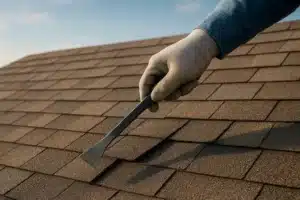
Hail storms arrive without warning, and by the time they’re over, you’re left wondering: Did my roof survive? The problem is that hail damage isn’t always obvious from the ground. Some damage appears immediately—dents, cracks, missing pieces. Other damage hides under shingles or in valleys, only to cause leaks weeks or months later when snow melts or heavy rain arrives. Knowing what to look for protects you during the critical window when insurance claims are filed and contractors schedule inspections.
This guide shows you the visible and hidden signs of hail damage, how to distinguish storm damage from normal roof aging, and when to bring in a professional. You won’t be able to diagnose every problem from your driveway, but you’ll know enough to take action—and know when to trust an experienced inspector over your own observations.
Visible Hail Damage: What You Can Spot from the Ground
Dents and Dings in Shingles
The most straightforward hail damage is a simple dent or bruise in the shingle itself. These look like someone tapped the asphalt surface with a hammer, creating a small indentation or circular depression.
- Golf ball-sized hail leaves dents roughly the size of a quarter to a half-dollar
- Marble-sized hail creates smaller dents, sometimes just a few millimeters across
- Dents may be isolated (one or two on a shingle) or clustered across multiple shingles in the same area
The key detail: dents alone aren’t always a claim-worthy problem. However, if the dent is deep enough to expose the shingle’s base mat or if there are dozens of them across your roof, an adjuster will likely approve replacement coverage. Look for a consistent pattern of damage across the same roof plane—hail affects broad areas, not random spots.
Cracks and Splits in Shingles
Hail impact can crack asphalt shingles, either straight across the shingle or radiating from the impact point like spiderweb fractures. This is more serious than a dent because cracks allow water to come through the shingle and reach the underlayment and decking beneath.
- A single crack running across one or two shingles may not trigger a full replacement claim, depending on your policy and adjuster judgment
- Multiple cracks across a large section of roof—or cracks on shingles in different roof planes—indicate significant storm damage and are highly likely to be covered
Cracks are easiest to spot with binoculars or from a ladder propped against the gutter line (do not climb onto the roof). Look at the shingle surface directly; cracks will appear as dark lines where the asphalt has split.
Missing Shingles or Shingle Pieces

Hail occasionally tears away entire shingles or large sections of the shingle surface, exposing the dark-colored base mat underneath. This is unambiguous storm damage—visible from the street and typically covered by insurance.
- Missing shingles create a noticeable patchwork where the roof color is uneven
- Partial tears (where the top portion of the shingle is missing but the base remains) are also clear signs of impact
- Look especially at roof edges and ridge lines, where shingles are more exposed to wind and impact
Granule Loss and Discoloration
Hail can gouge asphalt shingles hard enough to dislodge the protective granule coating. You may notice:
- Darker areas on shingles where the base mat is now exposed
- Shiny spots where the asphalt surface has been scuffed and the granules removed
- Granules collecting in your gutters in the days or weeks after a storm (though some granule loss is normal aging)
This damage is subtle but significant: the granule coating protects shingles from UV rays and water absorption. Where it’s gone, the shingle ages faster and becomes more vulnerable to leaks.
Less-Obvious Hail Damage: What Hides Under the Surface
Bruised Shingles Without Visible Cracks
This is the most common type of hail damage and the most frequently missed by untrained eyes. A shingle can be severely bruised underneath—the mat and adhesive layers crushed—without showing a visible crack or dent on the surface. From the street, the roof looks fine. But the bruising has compromised the shingle’s structural integrity, and within a year or two, the damaged section often fails.
Professional inspectors spot bruised shingles by:
- Feeling the shingle surface with a gloved hand to detect soft spots or areas where the mat has been crushed
- Walking the roof to examine each shingle at close range (something a homeowner should never attempt without proper training and safety equipment)
- Using drone photography to zoom in on shingle patterns and spot damage that’s invisible from ground level
Damage in Roof Valleys and Under Flashing
Hail often targets valleys (the V-shaped seams where two roof planes meet) because they collect water and are typically a weaker point in the roof system. Damage here is particularly risky because water flowing down the valley will find every crack and weak point.
Flashing—the metal or rubber strips installed around chimneys, vents, skylights, and roof penetrations—can also be dented or bent by hail. Bent flashing may not leak immediately, but it disrupts water flow and increases the likelihood of future leaks.
From ground level, you won’t see this damage clearly. It requires close inspection or drone photography to identify.
How to Tell Hail Damage from Normal Roof Aging
The key distinction: hail damage clusters in a pattern across a broad roof section, while aging appears randomly and unevenly.
Hail Damage Pattern
- Concentrated in one or two roof planes (typically the north- or west-facing side, depending on storm direction)
- Consistent type of damage (all dents, or mostly cracks, or mostly missing granules) across the affected area
- Appears suddenly (after a specific storm event)
- Affects shingles that would otherwise be in good condition—the rest of your roof looks fine
Normal Aging
- Scattered randomly across multiple roof planes
- Mixed types of deterioration (some curled edges, some granule loss, some minor discoloration)
- Gradual (you notice a little more wear each year)
- Typically affects the oldest shingles first—if your roof is 20 years old, aging accelerates uniformly
Specific Signs of Aging, Not Hail
Curled shingle edges: The edges of shingles curl upward or downward as they age and lose flexibility. This is a weathering effect, not impact damage. Curling is common after 10+ years and is a legitimate reason to consider roof replacement, but it’s not storm damage.
Moss or algae growth: Streaks of green or black on the roof, typically on the north-facing side, indicate organic growth, not hail. This is a maintenance issue, not damage.
Consistent granule loss across the entire roof: If every shingle is losing granules evenly, your roof is aging. Hail would affect one area severely while leaving another area untouched.
Sagging or visible dips: If sections of your roof visibly dip or sag, this indicates structural failure from prolonged water intrusion or rot—not fresh hail damage. This is a serious problem requiring immediate professional evaluation.
What You Should (and Shouldn’t) Do After a Storm
Immediate Steps
- Document what you see — Take photos and video from your driveway, gutters, and ground level. Do not climb on the roof.
- Check for interior signs — Look at your attic and ceilings for water stains, dripping water, or damp insulation. These indicate active leaks.
- Contact your insurance company — Report the storm event and any suspected damage. Most insurers have 24–48 hour response windows after major storms.
What NOT to Do
- Do not diagnose the damage yourself. Many homeowners mistake normal aging for storm damage, or miss damage that’s invisible from the ground. A single opinion from a neighbor or contractor—especially one who hasn’t inspected your roof closely—isn’t enough to file a claim.
- Do not schedule emergency repairs before an insurance adjuster inspects the roof. If you repair damage, the insurance company may refuse to cover it (they pay for repairs, not reimbursement after the fact).
- Do not trust a verbal estimate. Any reputable contractor will provide a written inspection report and photos documenting the damage they found.
When You Need a Professional Inspection
You should schedule a professional roof inspection if:
- Your area experienced a hail storm in the last 48 hours, regardless of whether you see obvious damage
- You notice any visible damage from the ground—dents, cracks, missing shingles, or discolored patches
- You spot water stains on your ceiling or attic following a storm
- You’re filing an insurance claim and need independent documentation of damage to support your case
- Your roof is 15+ years old and you want to know its remaining lifespan
A professional inspection typically includes:
- A full walk-around of the roof at ground level
- A closer inspection from a ladder or drone, photographing any suspect areas
- Interior attic inspection for signs of water intrusion
- A written report documenting all findings
- Consultation about whether damage is storm-related or age-related
Important: A professional inspector can identify damage you can’t see from the ground and can distinguish legitimate storm damage from aging. They also can photograph damage in detail for your insurance adjuster, which significantly increases the likelihood of claim approval. However, only a licensed adjuster (hired by your insurance company) makes the final decision about what is and isn’t covered by your policy.
Storm Damage and Insurance: The Next Step
If your inspection confirms hail damage, here’s the typical process:
- Report the damage to your insurance company. Provide photos and the date of the storm. Most policies have time limits for filing claims (often 30 days after the loss).
- Schedule an adjuster inspection. The insurance company sends a licensed adjuster to photograph and assess the damage. This usually happens within 5–10 business days of your claim.
- Receive the estimate. The adjuster prepares an estimate for repairs. The insurance company typically covers 80–100% of the repair cost, minus your deductible.
- Hire a contractor. Once the claim is approved, you’re free to hire any licensed, bonded contractor you choose. Some contractors will work with you with the insurance company to streamline the process; others will let you manage the claim yourself.
Many homeowners are surprised or frustrated during this process because:
- The adjuster’s estimate is lower than the contractor’s bid (adjusters often apply depreciation to older roofs, reducing the payout)
- The adjuster identifies some damage as “aging” rather than “storm-related” and excludes it from coverage
- The claim takes longer than expected, leaving your roof exposed during the wait
A contractor experienced in storm damage and insurance claims—one who regularly works with adjusters and can advocate for homeowners—can make this process significantly smoother.
The Bottom Line: Look, Document, and Call a Professional
Hail damage ranges from obviously visible (missing shingles, large cracks) to nearly invisible (bruised shingles, damaged decking). You can spot some of it from the ground and your gutters, but you can’t see everything—and that’s by design. The storm damage that matters most for insurance purposes is often the damage you can’t see.
The right move after a storm is straightforward: document what you observe, contact your insurance company, and have a licensed, experienced contractor inspect your roof before an adjuster arrives. That inspection serves two purposes: it confirms whether hail damage actually exists, and it gives you professional documentation to support your insurance claim.
You shouldn’t need to worry about being upcharged for hidden costs or left in the dark about what’s wrong with your roof. A trustworthy contractor will show you drone photos of every problem they find, explain what can and can’t be covered by insurance, and guide you through the claim process without pressure or surprises.
Get A Free Roof Inspection