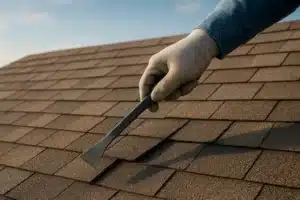
After a strong Midwest storm, it is a good idea to take a look around your property.
Wind, hail, and heavy rain can affect more than just the roof. Gutters, siding, vents, flashing, and other exterior parts of the home may also show signs of damage.
The good news is that homeowners can check many of these areas without climbing a ladder or walking on the roof.
At Edwards & Sons Roofing, we recommend starting with a simple ground-level inspection. Look for anything that seems different, take photos of what you find, and have a professional take a closer look if you have questions.
This guide explains what you can safely check yourself, what should be left to a professional, and what your options may be after a storm.
Start With a Safe Walk Around Your Property
Before looking closely at the roof or exterior, make sure the area around your home is safe.
Watch for:
- Fallen tree limbs
- Loose debris
- Downed or damaged power lines
- Standing water
- Loose siding or exterior materials
- Other hazards around the property
If you see a downed power line, stay away from the area and contact your utility provider.
Once the area is safe, you can begin looking at the home from the ground.
What Can Homeowners Safely Check?
You do not need to get on the roof to begin looking for storm damage.
A simple walk around the outside of the home can give you useful information about what may have happened during the storm.
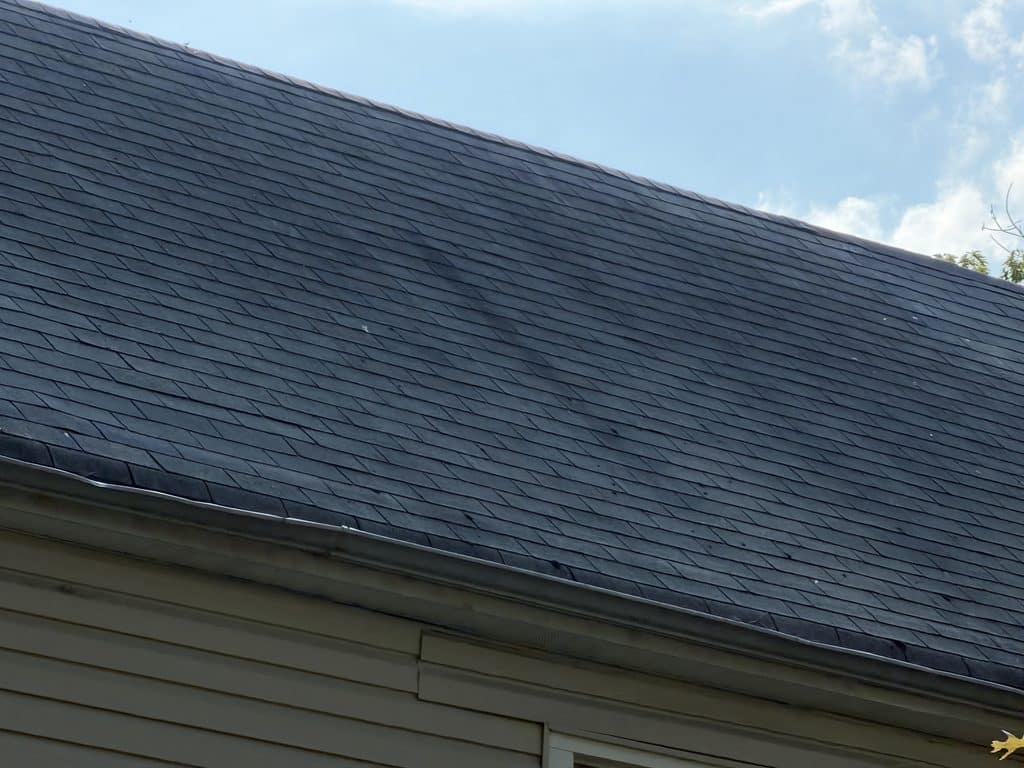
1. Look at the Roof From the Ground
Stand far enough away from the house to see as much of the roof as possible.
Look for:
- Missing shingles
- Shingles that appear lifted or shifted
- Areas that look different from the surrounding roof
- Visible damage along roof edges
- Debris resting on the roof
- Changes around vents, flashing, or other roof features
Binoculars or your phone’s camera zoom can help you get a closer look without climbing a ladder.
You do not need to determine exactly what caused a mark or whether it needs repair. If something looks different after the storm, make a note of it.
Edwards & Sons Roofing can take a closer look and explain what we find.
2. Check Your Gutters and Downspouts
Gutters and downspouts can also show signs of storm activity.
From the ground, look for:
- Dents
- Bent or crushed sections
- Gutters pulling away from the fascia
- Loose downspouts
- New debris collecting near downspouts
- Granules from asphalt shingles
- Areas that no longer appear to drain properly
Some wear is normal, especially on an older gutter system. The important thing is to look for changes that appeared after the storm.
If Edwards & Sons Roofing inspects your property, gutters and downspouts can provide additional information about how the exterior was affected.
3. Look at the Siding
Walk around each side of the house and look for visible changes.
Depending on the type of siding and the storm, you may notice:
- Dents
- Cracks
- Small punctures
- Loose panels
- Sections that have shifted
- Other visible impact marks
Pay attention to areas that look different from the rest of the siding.
Because Edwards & Sons Roofing works with roofing and other exterior components, we can look at the home as a complete exterior system rather than focusing only on the shingles.
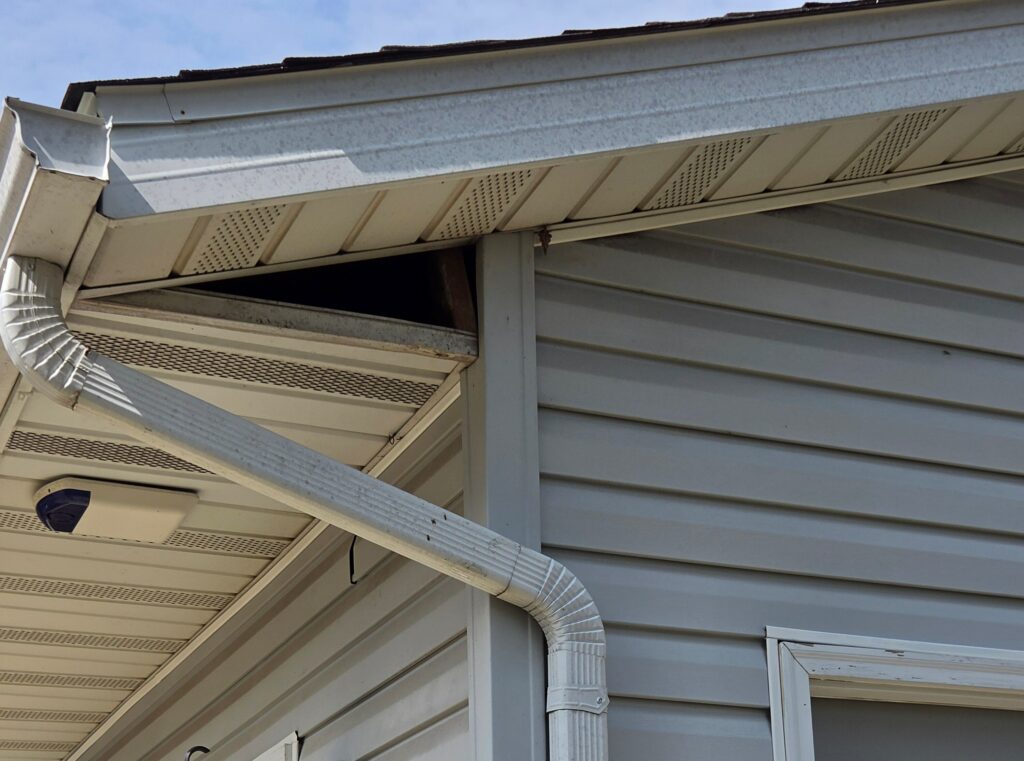
4. Check Fascia, Soffit, Vents, and Other Exterior Components
Storms can affect smaller exterior components too.
Take a look at:
- Fascia
- Soffit
- Roof vents
- Flashing you can see from the ground
- Skylights
- Exterior trim
Look for dents, loose pieces, cracks, or areas that appear to have shifted.
These details can help provide a more complete picture of what happened during the storm.
5. Look Around the Yard
The ground around your home can provide useful clues.
Look for:
- Fallen branches
- Pieces of shingles
- Siding or roofing materials
- Metal flashing
- Gutter pieces
- Other debris that may have come from the home
Keep in mind that debris can also come from neighboring properties, so finding a shingle in the yard does not automatically mean it came from your roof.
If you can clearly identify material from your home, take a photo and keep it in a safe place.
Check Inside Your Home, Too
Not every roofing concern is visible from outside.
Walk through the upper level of your home and look at ceilings and walls for anything that appears new or unusual.
You may notice:
- Water stains
- Damp areas
- Discolored drywall
- Peeling paint
- Signs of moisture around ceilings or upper walls
If you have safe access to your attic, you can also look for visible moisture, water stains, or damp insulation.
There is no need to move insulation or disturb anything you are unsure about. Simply take note of what you can safely see.
Let Edwards & Sons Roofing know about any interior changes when you schedule an inspection. What is happening inside the home can provide helpful context when evaluating the roof.
What Should You Leave to a Professional?
The most important thing homeowners should avoid is climbing onto the roof.
Even when a roof looks normal from the ground, the surface may be wet, loose, or difficult to walk safely.
You also do not need to inspect individual shingles closely or try to diagnose flashing, valleys, penetrations, or other roofing components yourself.
That is where a professional inspection becomes useful.
Edwards & Sons Roofing can safely evaluate areas that are difficult to see from the ground and explain whether we find storm damage, normal wear, an existing maintenance issue, or something else.
What Does Edwards & Sons Roofing Look for During an Inspection?
A professional storm inspection should look at the roofing system as a whole.
Depending on the home and the conditions, Edwards & Sons Roofing may evaluate:
- Shingles
- Roof edges
- Valleys
- Flashing
- Vents and other roof penetrations
- Gutters and downspouts
- Fascia and soffit
- Siding and other exterior components
- Accessible attic areas when appropriate
We also consider the overall age and condition of the roof.
That matters because not every mark on a roof is storm damage. Normal aging, previous repairs, installation issues, weather exposure, and general wear can sometimes look similar.
Our job is to inspect the roof carefully and explain what we actually see.
How Should You Document Storm Damage?
You do not need complicated equipment to document what you notice.
A phone camera and a few notes are usually a good place to start.
Take Photos From Safe Locations
Consider photographing:
- Each side of the home
- Visible roof changes
- Missing or displaced shingles
- Gutters and downspouts
- Siding
- Fascia and soffit
- Vents
- Fallen branches or debris
- Interior water stains
Take wider photos to show where the concern is located and closer photos when you can safely do so.
Do not climb onto the roof just to get a better picture.
Write Down What You Notice
A simple list can also be helpful.
You may want to record:
- The date of the storm
- Approximate time of the storm
- Areas where you noticed changes
- New interior water stains
- Exterior materials found around the property
- Anything else that looks different from before the storm
If Edwards & Sons Roofing inspects the property, share this information with us. It can help us understand what you noticed and where to begin looking.
What About Insurance?
If you believe your home may have storm damage, review your homeowners insurance policy and contact your insurance company if you have questions about coverage or the claims process.
Your insurance company determines coverage based on your policy and the circumstances of the loss.
Edwards & Sons Roofing focuses on the physical condition of your home.
We can inspect the roofing system, document visible conditions, explain our findings, and provide information about recommended repairs.
If your insurance company schedules an adjuster to inspect the property, Edwards & Sons Roofing can be present to answer technical questions about the roofing system and the conditions we observed.
You remain in control of your insurance claim and the decisions you make about your home.
Does Storm Damage Mean You Need a New Roof?
No. A storm does not automatically mean a roof needs to be replaced.
The right recommendation depends on what actually happened to the roof.
An evaluation may consider:
- The type of damage
- How much of the roof is affected
- The age and overall condition of the roof
- Previous repairs
- Existing wear
- The condition of surrounding roofing components
- Whether the affected areas can be properly repaired
At Edwards & Sons Roofing, we take a repair-first approach.
If a repair makes sense, we will explain the repair. If more extensive work is appropriate, we will explain what we found and why.
The condition of the roof should guide the recommendation—not a predetermined sales goal.
When Should You Call Edwards & Sons Roofing?
You do not need to know whether something is technically “storm damage” before asking us to take a look.
Consider scheduling an inspection if you notice:
- Missing or shifted shingles
- New dents or impact marks
- Damaged gutters or downspouts
- Loose or damaged siding
- Fallen debris on the roof
- New interior water stains
- Visible changes around vents, flashing, fascia, or soffit
- Anything else that looks different after the storm
Edwards & Sons Roofing offers free roof inspections to help homeowners better understand the condition of their roofing system.
We’ll inspect the areas that can be safely evaluated, document visible concerns, and explain what we find.
The goal is simple: find the problem, explain it clearly, and help you understand your options.
A Simple Storm Damage Checklist
After a storm, start with the basics.
Around the property:
- Make sure the area is safe.
- Look for fallen branches and debris.
- Stay away from downed power lines.
From the ground:
- Look at the roof for visible changes.
- Check gutters and downspouts.
- Look at siding.
- Check fascia, soffit, vents, and other exterior components.
- Take photos of anything unusual.
Inside the home:
- Look for new ceiling or wall stains.
- Check accessible attic areas for visible moisture.
- Take photos of any changes.
If something concerns you:
- Stay off the roof.
- Write down what you noticed.
- Contact Edwards & Sons Roofing for a professional evaluation.
- If insurance may be involved, review your policy and contact your insurer about its process.
The Bottom Line
Checking your property after a storm does not need to be complicated.
Start with what you can safely see. Walk around the property, look at the roof from the ground, check the gutters and siding, and look inside the home for signs of moisture.
You do not need to diagnose the problem yourself.
Edwards & Sons Roofing can take it from there by inspecting the roofing system, documenting what we find, and explaining your options in plain language.
For homeowners across Southern Illinois and the St. Louis Metro East, our approach has stayed simple: inspect carefully, explain clearly, and let the condition of the home guide the recommendation.
Get A Free Roof Inspection