Freeze thaw roof damage rarely happens in one night. It builds over a winter of freezing nights and milder afternoons, and when the snow finally clears, you’re left looking up at the roof and wondering whether it took a hit.
Freeze thaw roof damage happens when water gets into a weak spot on a roof, such as a cracked shingle, a loose nail or an edge that never sealed, then freezes, expands and thaws, moving a little deeper each time. Over many cycles that widens cracks, loosens granules, lifts nails and curls shingle edges. Most of it is gradual. Water inside the home is the clearest sign it has gone past ordinary wear.
In this article
- What Is Freeze Thaw Roof Damage?
- How Does the Damage Build Up Over a Winter?
- What Are the Signs of Cracked Shingles in Winter and Other Damage?
- Is It Normal Wear, or Damage Worth an Inspection?
- Why Do Roof Age and the Attic Matter?
- How Can You Check Your Roof Safely, and What Comes Next?
- Frequently Asked Questions
What Is Freeze Thaw Roof Damage?
It’s wear caused by water that gets into your roof, freezes, expands, then thaws and works its way a little farther in. One freeze-thaw cycle does very little. Dozens of them over a winter can pry a small weakness wide open.
Cold by itself does little to affect your roof. Water is the problem.
A dry roof can sit through a hard freeze. A roof holding water in a cracked tab or under a lifted edge gets worked on every time the temperature drops below freezing and climbs back up.
Winters around St. Louis set this up well. The National Weather Service’s St. Louis office notes that prolonged periods of extremely cold weather are rare in the area. Cold here tends to come and go instead of settling in, and each swing gives meltwater another chance to refreeze.

How Does the Damage Build Up Over a Winter?
It starts at a weak spot and gets a little worse with each freeze-thaw cycle. The usual sequence looks like this:
- Water finds a way in. Rain or melting snow seeps into a cracked shingle, around a loose nail, or under an edge whose sealant strip never bonded.
- The water freezes and expands. Ice takes up more room than water, so it pushes the gap open.
- The ice thaws. The opening is now a little wider, which can allow the next round of meltwater to travel farther.
- The cycles repeat. Over a winter, cracks widen, granules loosen, nail heads lift and edges curl.
An older roof, or one where the shingles were never fastened or sealed down well, gives water more places to get in.
Cold also changes the shingle itself. The Asphalt Roofing Manufacturers Association notes that asphalt shingles “tend to become less flexible as temperature decreases,” and shingles that are too cold may crack or break when they’re bent or stepped on.
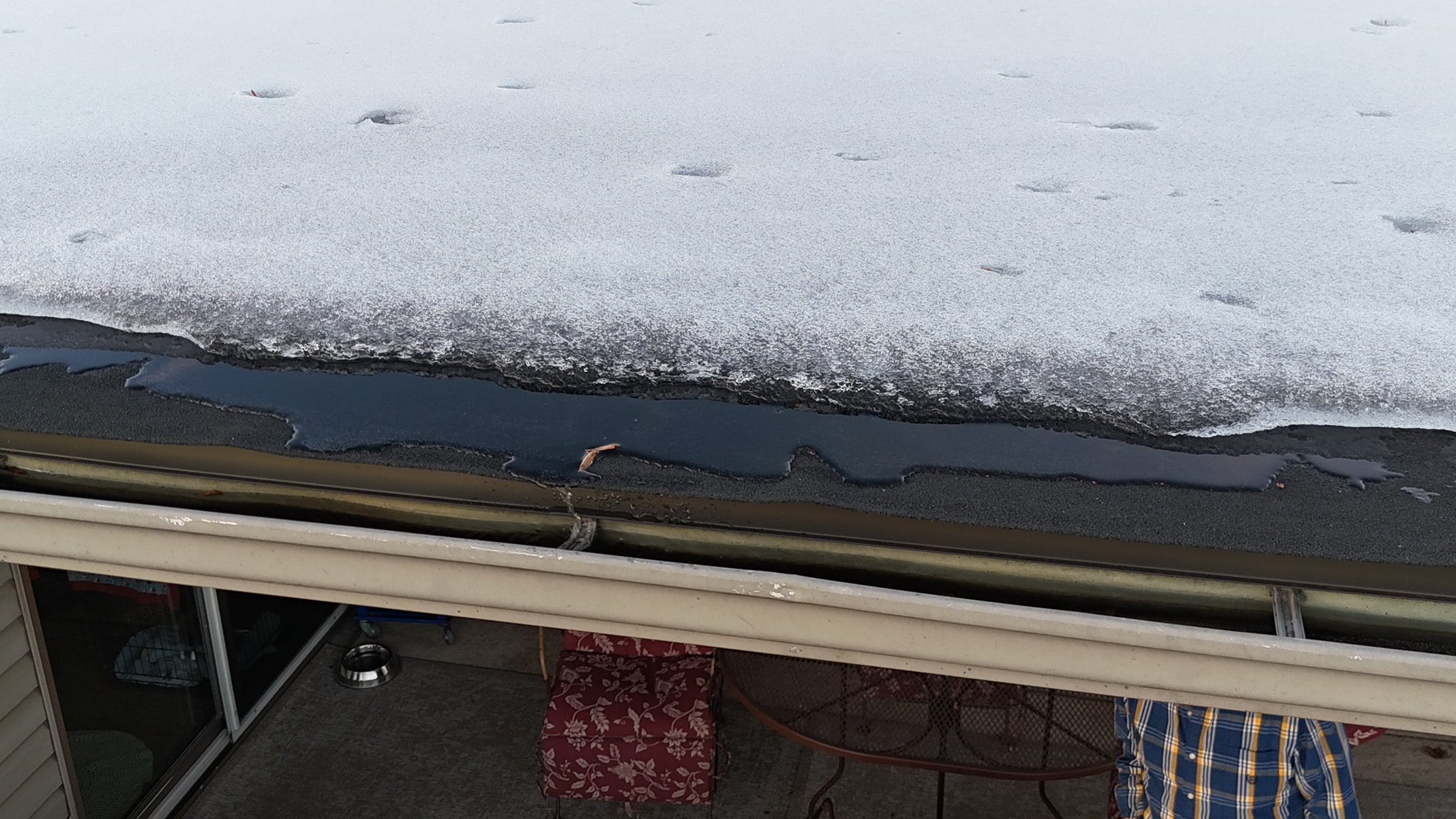
Ice dams are the other route. The association says ice dams “form due to the constant freezing and thawing of melting snow,” and that slush backing up “causes water to be forced under the roof, causing the deck to swell,” which leads to “waviness and buckling of the deck and shingles.” Once water reaches the wood deck, the damage has moved past the shingles. A membrane under the shingles can help here, and we explain what ice and water shield is.
What Are the Signs of Cracked Shingles in Winter and Other Damage?
The signs are easiest to spot once the snow is off the roof. From the ground, look for:
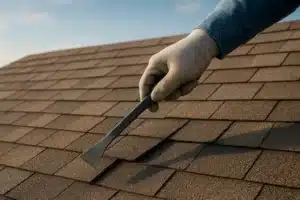
- Cracked or split shingle tabs
- Curled or lifted edges, and tabs that no longer lie flat
- Nail heads raised above the surface, or pushing up the shingle that covers them
- Heavy granules in your gutters and at the bottom of downspouts
- Dark, bare patches where the granules have worn off
- Water stains on your ceilings
Some areas take more water than others. Check below the valleys, where two slopes meet and water runs heavy. Check along the eaves, where ice tends to sit, and around vents and chimneys. If one slope looks noticeably rougher than the rest, make a note of it.
Basic gutter maintenance helps here too. Keep your gutters clean of leaves and debris, so spring rain drains the way it should and the next granule check is easier to read.

Is It Normal Wear, or Damage Worth an Inspection?
Even, gradual wear across the whole roof is usually just age. Concentrated or sudden problems, and anything tied to a leak, deserve a closer look.
Homeowners often find a handful of granules in the downspout after winter, and that’s common. On its own, it doesn’t mean your roof is failing.
The picture changes when issues cluster. These signs of damage are worth having checked:
- Damage on one slope or in a few areas while the rest of the roof looks fine
- Dark shingle mat showing through where the granules are gone
- Several lifted or cracked tabs, not just one
- Any ceiling stain or other interior water spot
Water inside the house is the strongest sign, no matter how old the roof is.
Timing matters too. A small opening found in spring can often be handled with small repairs. Left through another winter, the same opening lets in more water and can become a costly problem for the wood deck underneath. A fall roof checklist for Illinois and Missouri homeowners helps you catch those openings before the cold arrives.
Why Do Roof Age and the Attic Matter?
They decide how much a winter can affect your shingles. Older shingles (see how an asphalt shingle roof works, layer by layer) are stiffer and have lost more of their granules, so the same freeze-thaw cycles that barely touch a newer roof can do more to an older one.
The attic matters because heat from your living space ends up right under the roof deck. A warm attic is a common cause of ice dams, and ice dams are one of the main ways winter water gets under shingles. More on that is in our guide to attic heat loss and winter roof problems.
On a dry day, take a flashlight into the attic and look for water stains around the flashing points, where the roof meets a chimney, vent or wall.
How Can You Check Your Roof Safely, and What Comes Next?
Check from the ground. The Asphalt Roofing Manufacturers Association puts it simply: “Property owners should never climb onto a roof.” Look from the yard or an upstairs window, with binoculars for detail. Take photos of anything that looks off, so you can compare later or show a roofer.
If something from the list above turns up, a professional inspection is the next step. Edwards & Sons offers free roof inspections, and we use drones on inspections, so we can get a close look at your shingles without anyone walking around on a cold roof.
Then you hear what your roof actually needs. Our rule is to recommend roof repair over full replacement whenever possible, and a small repair is often enough.
If a roof really is past repair, we install Owens Corning Duration shingles, which carry a limited lifetime manufacturer warranty. Like any shingle, they still do their best work on a sound deck with an attic that stays cool and dry in winter.
We’ve been family-owned since 1974, which adds up to a lot of Midwest winters on a lot of roofs.
Frequently Asked Questions
What does freezing and thawing do to shingles?
Mostly, it makes existing weak spots worse. A shingle that’s in good shape, well fastened and sealed down usually comes through a winter with little change. A roof that goes into the cold season without cracks, lifted edges or loose nails is far less likely to come out of it damaged.
How cold is too cold for shingles?
There’s no single temperature at which shingles fail. Manufacturers commonly cite about 40°F as the point where shingles stiffen and the factory sealant strip may not bond right away, which matters most when shingles are being installed. In cold-weather installs, hand-sealing the shingles with approved roofing cement is the usual fix.
How do ice dams form?
Heat escaping from the house warms the roof and melts the snow on top. The meltwater runs down to the overhang, which sits past the warm attic and stays below freezing, and refreezes there. Later melt backs up behind that ice and can work under the shingles. Air sealing, insulation and ventilation work together to prevent it, and ventilation alone can’t make up for major air leaks.
Does a 20 year old roof need to be replaced?
Not on age alone. A 20-year-old roof with even wear and no leaks may only need a repair, or nothing yet. What points toward replacement is damage spread across the roof: bare mat over whole slopes, many cracked or curling shingles, or leaks in more than one place. An inspection sorts out which one you have.
Is it safe to look at my roof after winter?
Yes, from the ground or an upstairs window. Staying off the roof protects the shingles as well as you. The Asphalt Roofing Manufacturers Association says even professionals should keep foot traffic to a minimum “to avoid damaging the surface,” and in cold weather the sealant bond between shingle courses is less flexible and can break underfoot.
Get A Free Roof Inspection