Two roofers can walk the same roof in the same week and hand you two very different numbers. When you’re trying to set a budget, that’s frustrating. There is a reason for it, and once you know what goes into the price, any quote gets a lot easier to read.
How much does a new roof cost? It depends on your roof: its size and pitch, how many layers come off, the condition of the wood decking underneath, the shingle line you choose and the other parts of the roof system replaced with it. Nobody can give you a firm number without looking at the roof first. A free inspection and a written estimate give you the number for your home.
In this article
- Why Can’t Anyone Price a Roof Without Seeing It?
- How Do the Size and Shape of Your Roof Affect the Cost?
- What Does Tear-Off Add to a Roof Replacement?
- What If There’s Damage Under the Old Shingles?
- How Does the Shingle Line Change the Price?
- What Else Can Change the Cost of a New Roof?
- Why Do Two Roofing Quotes for the Same House Differ?
- Do You Need a Whole New Roof?
- How Can You Pay for a New Roof?
- Frequently Asked Questions
- Get a Number for Your Own Roof
Why Can’t Anyone Price a Roof Without Seeing It?
Because the things that set the price are on your roof, and some of them are under it.
At Edwards & Sons Roofing, we don’t publish prices for that reason. A figure on a web page would be a guess about a roof we haven’t seen. We only make promises we keep.
What we can do is walk you through what goes into the bill. Then, when an estimate lands in front of you, from us or anyone else, you’ll know what you’re looking at.
Want a real number for your own home? Get a free roof inspection.

How Do the Size and Shape of Your Roof Affect the Cost?
Size and shape set the base of roof replacement costs: more surface means more materials and more labor, and a harder roof takes longer to do safely.
Roofers measure in squares. According to the Asphalt Roofing Manufacturers Association, a roofing square is 100 square feet of sloped roof surface, and the count comes from the actual roof area plus an allowance for waste, not from the footprint of your house. That’s why two homes with the same floor plan can need very different amounts of shingles.
Pitch matters too. A steeper roof has more surface to cover, and it’s slower to work on, with more safety equipment and more care with every bundle carried up.
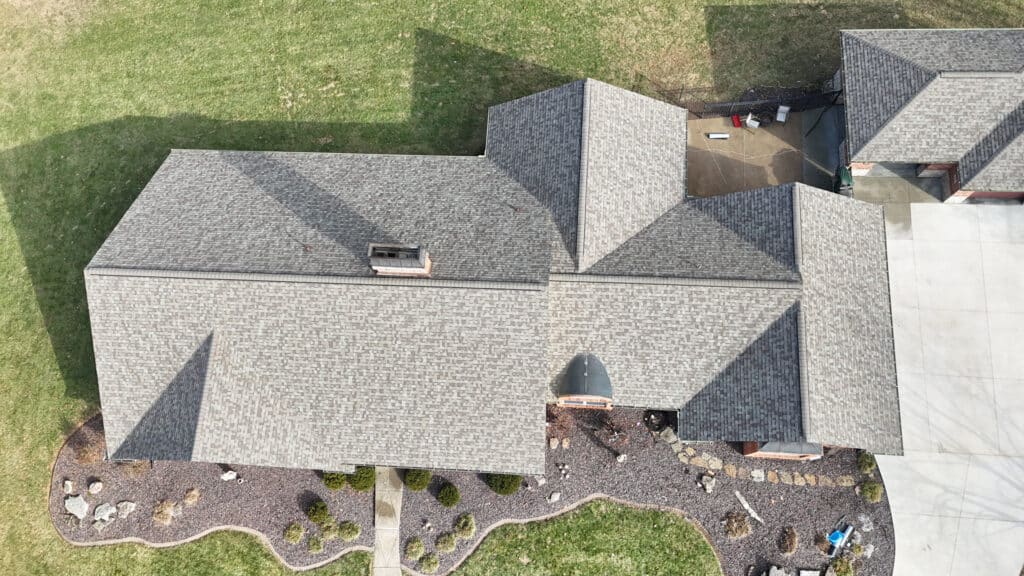
Then there’s complexity. Each of these adds cutting, flashing and time:
- Valleys, where two roof slopes meet
- Dormers
- Chimneys and skylights
- Pipes, vents and other penetrations
- Hard-to-reach spots, like a steep slope over a garage or a lot with little room to work
A simple roof with two big slopes is the easy case. A roof the same size with several dormers and a chimney is a different job.
What Does Tear-Off Add to a Roof Replacement?
Tear-off means removing the old roof down to the decking, and the more layers there are, the more labor and disposal it takes.
Some homes have one layer of shingles. Some have two, because a past roofer laid new shingles over the old ones. Every layer is more weight to strip, haul down and get rid of.
The International Residential Code generally allows no more than two layers of asphalt shingles, and a second layer only goes on when the first is a sound base. If your roof already has two, it needs a full tear-off. Towns in Illinois and Missouri set their own rules, and re-roofing commonly needs a permit, so check with your town or ask your roofer what applies where you live.
Sometimes the layer count is a surprise. A roof can look like one layer from the ground and turn out to have two. A good estimate says how many layers it assumes and what happens if there are more.
What If There’s Damage Under the Old Shingles?
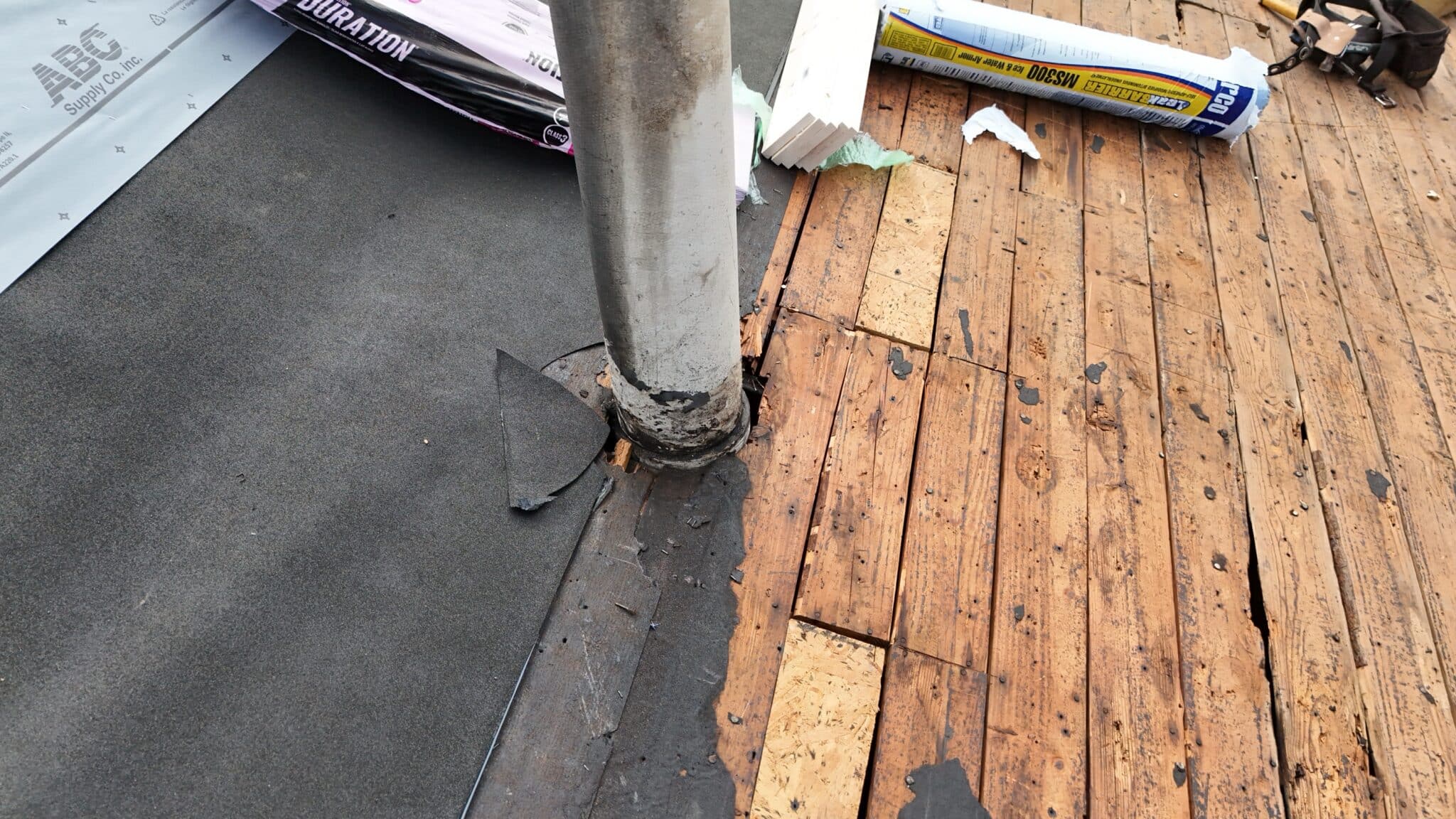
Damage to the wood decking only shows up once the old roof is off, so an honest estimate tells you up front how that repair would be priced and approved.
The decking is the wood your shingles are nailed to. Water that got past old shingles can soften or rot it. You can’t see that from the yard, and often not from the attic either.
When a crew finds bad decking, it has to be replaced before new shingles go on. New shingles won’t hold on soft wood.
So ask before you sign: if you find rotted decking, how is it priced, and who approves the extra work? Nothing on your final bill should be news to you.
How Does the Shingle Quality Change the Price?
The shingle quality you choose moves the materials part of the bill, and a better shingle line costs more than a basic one.
We’re an Owens Corning Preferred Contractor, and Duration is the shingle we install. It’s an architectural shingle with SureNail Technology, a reinforced nailing zone. Owens Corning also makes a basic three-tab line, Supreme, and a more decorative step up, Duration Designer.
Two warranties come with that choice. On the shingles themselves, Owens Corning Duration shingles carry a limited lifetime manufacturer warranty. On the job, full replacements with Owens Corning Duration shingles include a 10-year Owens Corning Preferred Protection limited warranty.
Shingles are only part of what goes on your roof. A full roof system also includes:
- Underlayment: the layer between the decking and the shingles, a second line of defense against water
- Flashing: metal around chimneys, walls and valleys that keeps water out of the joints
- Ventilation: intake and exhaust vents that let heat and moisture out of the attic
- Drip edge: metal along the roof edges that guides water off the roof and into the gutters
- Ridge cap: the shingles that finish the peak
Whether each of these is replaced or reused changes the price. It’s also one of the biggest reasons two quotes don’t match.
What Else Can Change the Cost of a New Roof?
Timing, permits and material prices all play a part, though usually a smaller one than the roof itself.
Season. Most roofing in Illinois and Missouri happens from late spring into fall, because shingles seal best with sun and warmth. Owens Corning’s installation instructions treat anything below 40°F as cold-weather installation and call for the shingles around the edges to be hand-sealed with asphalt cement, since the factory adhesive strip may not activate in the cold. Winter work can be done. It just takes more care.
Permits. Rules come from your town. Some estimates include the permit; others list it separately.
Material prices. Costs move with the market. That’s one reason every estimate should carry a date.
Time at your house. Most roof replacements are completed in a single day. A bigger or more complex roof, or a surprise under the old shingles, can take longer.
Why Do Two Roofing Quotes for the Same House Differ?
Two quotes for the same house usually differ because they describe different jobs.
Line them up side by side and look at:
- Whether both include a full tear-off, and how many layers each assumes
- How each one handles rotted decking
- Which shingle line each one uses
- Whether underlayment, flashing and ventilation are new or reused
- Whether permits, disposal and cleanup are included
The Federal Trade Commission advises getting several estimates, not automatically picking the lowest, and asking why estimates differ significantly. The National Roofing Contractors Association suggests getting three or four proposals and weighing price against materials and workmanship.
A lower number that leaves out tear-off or decking isn’t really the same roof. Ask what’s missing.
Do You Need a Whole New Roof?
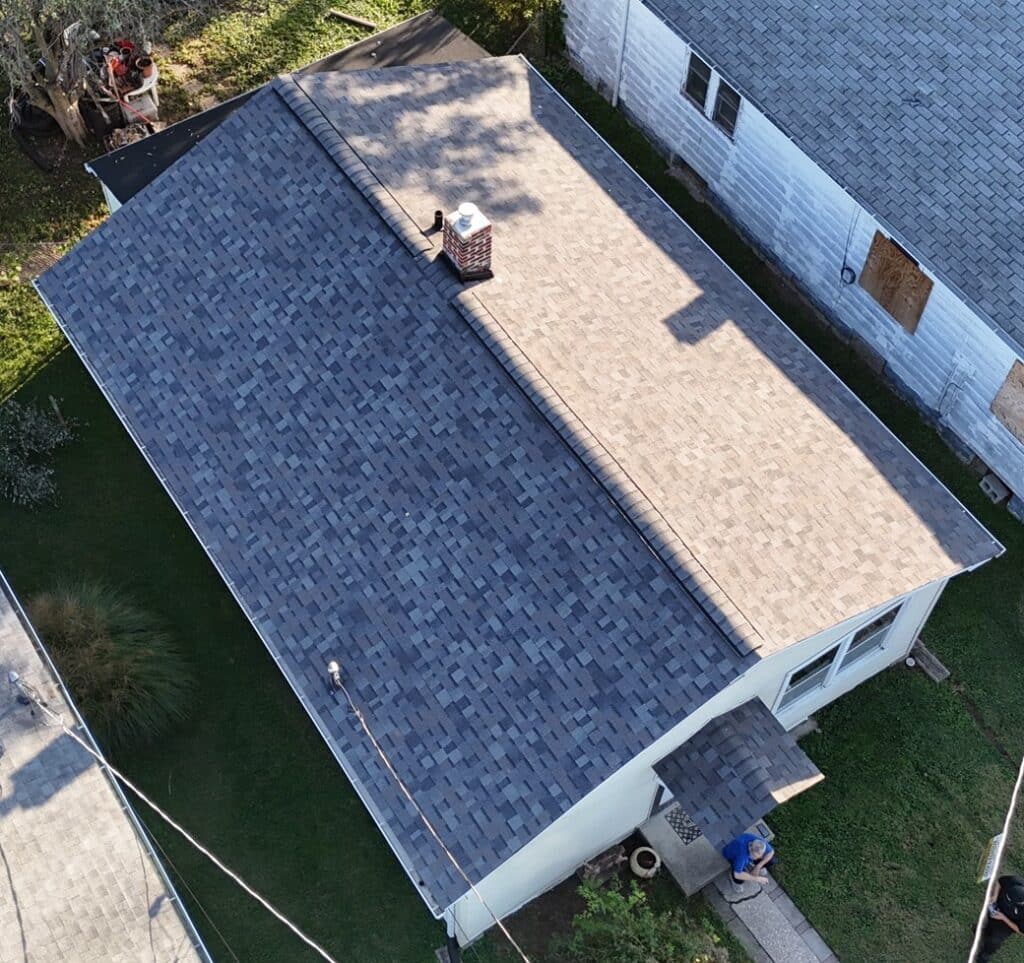
Not always. If the damage is in one area and the rest of the roof is sound, a repair may be all you need.
Repair comes first with us whenever a roof repair will do the job, and our guide to knowing when you don’t need a new roof explains how we decide. You’ll hear what your roof needs, even when that’s the smaller job.
Replacement starts to make sense when:
- The roof is near the end of its life
- Damage shows on several slopes, not just one
- Granule loss is widespread
- It leaks in more than one place
A thorough inspection tells you which side of that line you’re on. Sometimes the answer is that you don’t need any work at all.
How Can You Pay for a New Roof?
Financing is available, and if a storm damaged your roof, we work directly with your Insurance Company.
Whoever offers you financing, compare three things: the APR, which may or may not include fees, the length of the term and the fees themselves. A longer term lowers the monthly payment but means more interest over time. On a 0% offer, look for no prepayment penalty.
Hail and wind storms roll through the St. Louis area every spring and summer. After one, your first step is an inspection, not a signature. If there’s storm damage, we’ll help you navigate the claims process with our storm damage roof repair team.
Frequently Asked Questions
What is the best time of year to replace a roof?
In Illinois and Missouri, roughly May through October is the usual working season, and May and June or September and October tend to bring the most comfortable conditions. Roofers’ calendars fill up in the busy months, so it helps to call early. If your roof is leaking now, don’t hold out for perfect weather.
What is the most expensive part of replacing a roof?
For an ordinary asphalt shingle roof, skilled labor and installation is usually the largest part, followed by materials. Tear-off and disposal may be folded into labor or listed on their own line. On a steep or cut-up roof, labor’s share tends to grow, because every valley and dormer is slower work.
Is it cheaper to repair or replace a roof?
A repair costs less today. Over the years it depends on the roof: one repair on a sound roof can carry you a long way, while patch after patch on a worn-out roof can add up past what a replacement would have cost. Ask whoever inspects your roof to show you photos of what they found, so you can judge how widespread the damage is.
Get a Number for Your Own Roof
Family-owned since 1974, Edwards & Sons has priced a lot of roofs, and every one started with a look at the roof itself. Get a free roof inspection or call us at (618) 476-1480. We come to you, no sales pressure.
Get A Free Roof Inspection