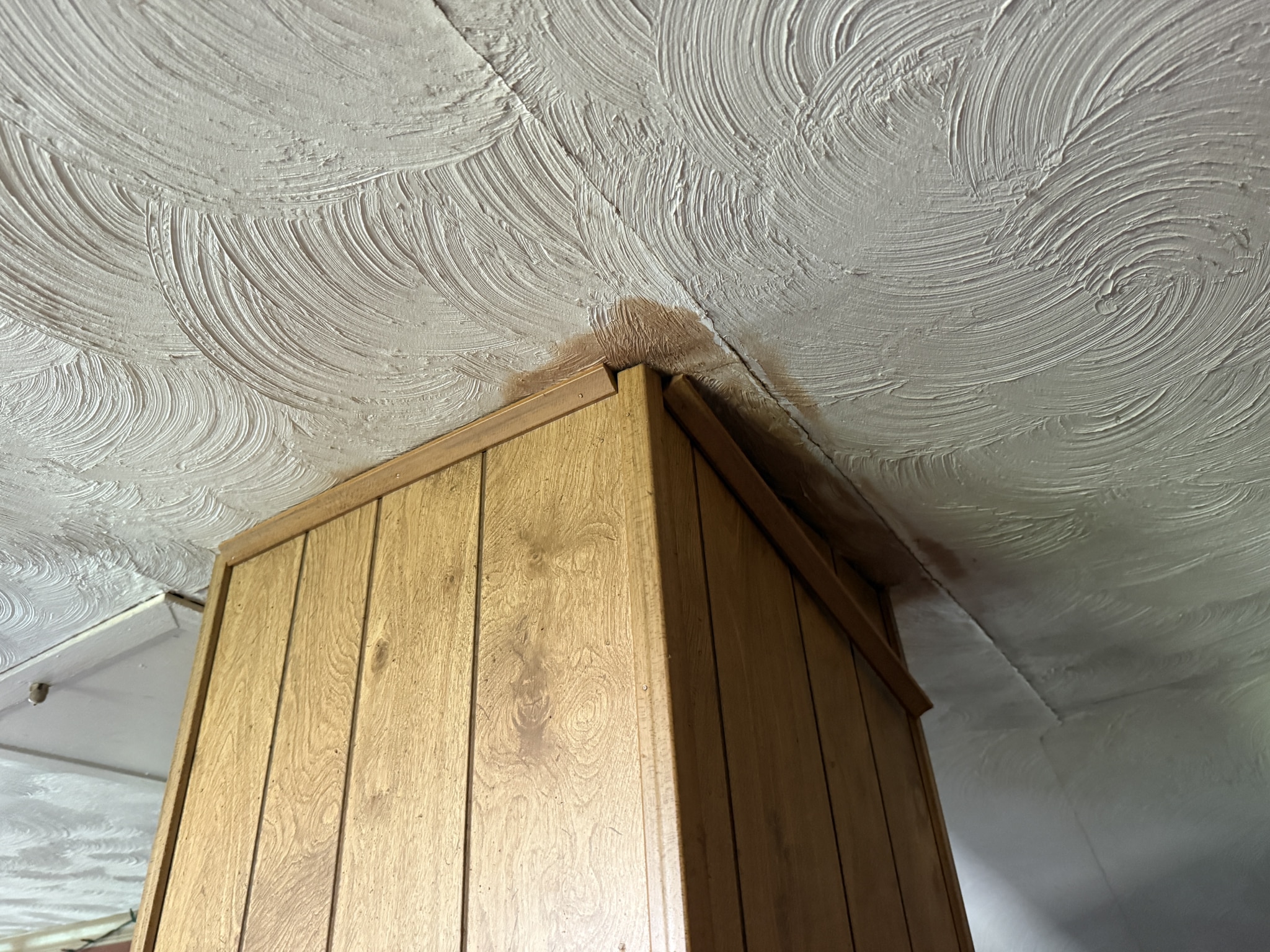
The stain usually shows up after a hard rain. A brown ring on the ceiling, maybe a slow drip into a bucket by morning, and one question on your mind: what is this going to cost, and is it the start of something bigger?
How much it costs to repair a roof leak depends on three things: what failed, how hard your roof is to work on, and how much water has damaged the materials underneath. A cracked pipe boot or a few lifted shingles sit at the simple end. Failed flashing, a leaking valley or soft decking sit at the involved end. An inspection shows you which one you have before you spend anything.
In this article
- What Decides the Cost of a Roof Leak Repair?
- Where Is the Leak Coming From?
- How Does the Roof Itself Change the Bill?
- What Hidden Water Damage Could Be Under the Shingles?
- Is It a Small Fix or the Start of a Bigger Problem?
- What Should a Roof Repair Estimate Include?
- Does the Season Change a Roof Leak Repair?
- What Should You Do the First Hour a Roof Leaks?
- Frequently Asked Questions
- Not Sure Which Kind of Leak You Have?
What Decides the Cost of a Roof Leak Repair?
Three things set the roof leak repair cost on any house: the cause, the access and the hidden damage. Every line on a fair repair estimate traces back to one of them.
The cause. A roof leak is never just “a leak.” It’s a specific part that failed, and some parts are a quick swap while others are tied into the shingles, the wall or the chimney around them.
The access. Height, pitch and the shape of the roof decide how long the work takes and what it takes to do it safely. Labor is part of every repair, and a hard-to-reach spot takes more of it.
The hidden damage. Water that got in may have soaked insulation or softened the wood decking under the shingles. Nobody can price that from the driveway.
So, how much does it cost to repair a roof leak on your house? There’s no average leak, and a leak repair can be anything across a wide range of work, from one rubber collar to a section of new decking. No two roofs match, so we look at yours before we put a number on the repair.
Where Is the Leak Coming From?
Where the water gets in changes the repair more than anything else. Here are the usual entry points on an asphalt shingle roof, roughly from simpler to more involved:
- Pipe boots: the rubber collar that seals around a plumbing vent. It commonly cracks with age and sun, and replacing it is usually one of the simpler repairs.
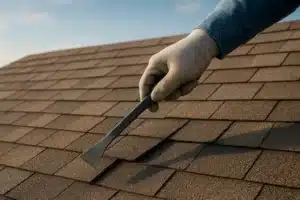
- Damaged or lifted shingles: wind lifts the edges and storms crease or tear them. When it’s one or two shingles, the fix is usually small.
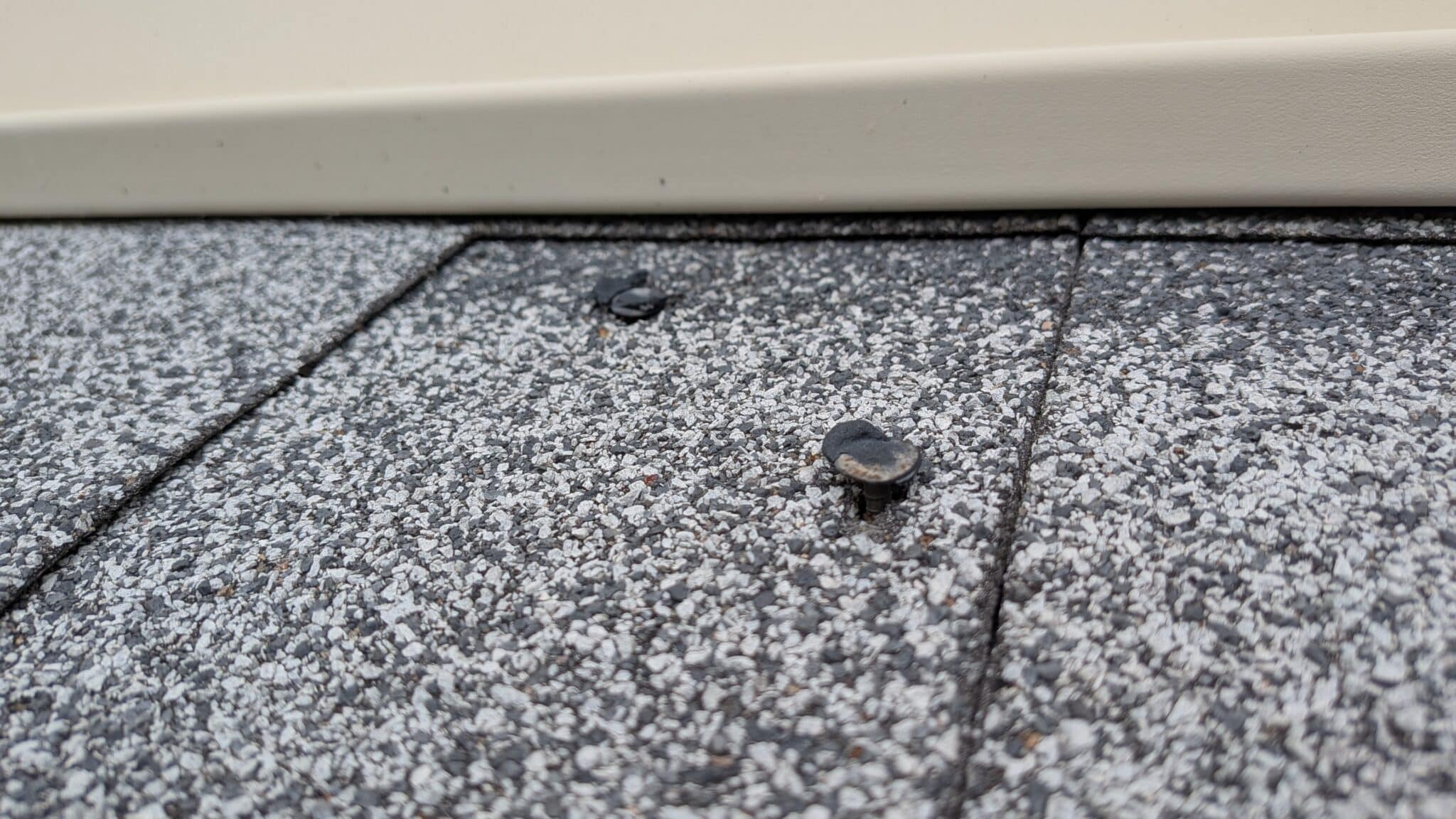
- Nail pops: a nail backs out and lifts the shingle above it, leaving a gap for water. An isolated one is usually a simple repair.
- Flashing: the roof flashing that seals the joints at chimneys, skylights, vents and walls. Flashing leaks are often hidden, and the repair depends on careful workmanship. Its cost moves with the flashing material, how much of it is involved, how complex the roof is and how steep it is.
- Valleys: the channels where two roof slopes meet and carry the most water. Valley leaks are often hard to spot and need the shingles on both sides worked back in correctly.
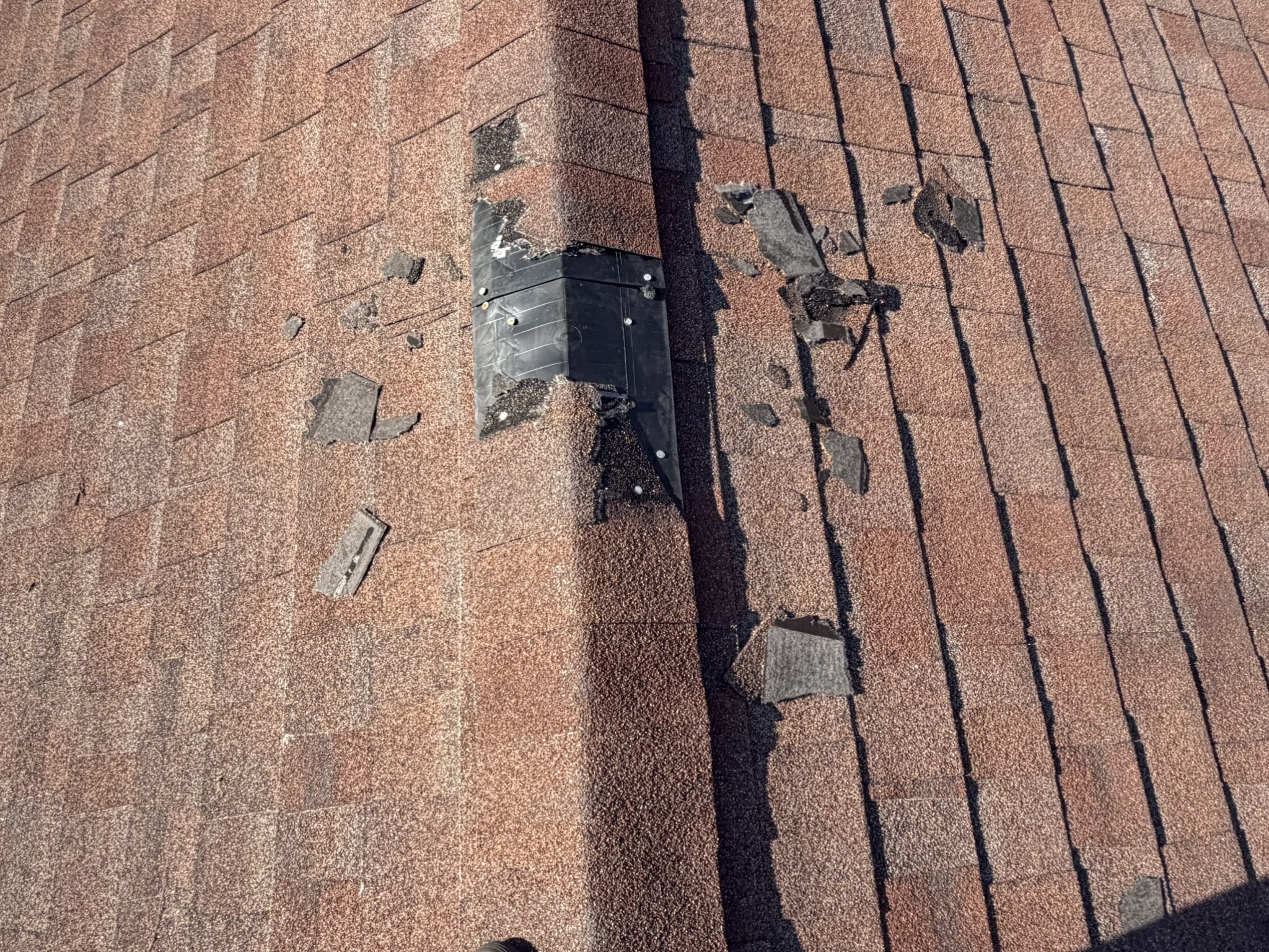
- Storm damage: hail and wind, covered in our storm damage roof repair work, can affect a whole slope instead of one spot, which turns a single leak into a wider repair.
One more thing makes leaks tricky. The stain on your ceiling isn’t necessarily under the spot where water gets in. Water can run along the decking, the underlayment, the rafters or the trusses before it shows up indoors, sometimes several feet away.
That’s why a repair priced from the stain alone is a guess. We use drones on inspections, so we can look over the whole roof without climbing around on it, then trace the water back to where it actually starts. Our guide to advanced leak diagnostics explains how that works.
How Does the Roof Itself Change the Bill?
The same repair can take very different amounts of work on two different houses. The roof’s shape, height and age all move the roof repair cost.
- Pitch: a steep roof takes longer to work on safely and needs more safety setup than a low one.
- Height and access: a second-story roof, a spot over a deck or a section boxed in by landscaping all add time.
- Complexity: dormers, chimneys, skylights and multiple valleys mean more flashing details and more places a repair has to tie in.
- Age and layers: on an older roof, the shingles around the repair have more years on them, which can turn a small fix into a wider one. A roof that already carries its maximum number of layers also limits what a repair can do.
- Small-job minimums: some roofers have a minimum charge for any visit. Ask about it up front so a small repair doesn’t surprise you.
None of these is a reason to panic. They’re just the reason two neighbors with “the same leak” can get two different estimates.
What Hidden Water Damage Could Be Under the Shingles?
The part of a leak you can’t see is often the part that decides the bill. Water that gets past the shingles can reach the decking, the attic insulation, the framing and the drywall below.
Wet insulation is hard to dry and may need to come out. Moisture can weaken wood decking and framing over time, and a ceiling that has soaked for a while can sag.
Then there’s mold. The U.S. Environmental Protection Agency advises drying water-damaged areas and items within 24 to 48 hours to prevent mold growth. A slow leak nobody notices for weeks blows right past that window.
Here’s the practical part. Decking condition can’t be fully judged from above until the shingles come off. So before any work starts, ask this question: “If you find rotten decking, how will you tell me, and how will it be priced?” A good roofer answers it in writing before anyone finds anything.
Is It a Small Fix or the Start of a Bigger Problem?
Most leaks are repairs, not a reason for a new roof. You can place your own leak somewhere in this range before anyone climbs a ladder.
Small fix:
- One leak with a clear cause, like a pipe boot, a nail pop or a couple of damaged shingles
- Caught early, with little or no water damage inside
- The rest of the roof in good shape
More involved repair:
- A leak at flashing or in a valley
- Some wet or soft decking in one area
- A stain that has been growing for a while
Time to talk about replacement:
- Several leaks, or leaks that keep coming back after repairs
- Damage spread across large areas of the roof
- Widespread granule loss, with bare spots on the shingles
- Rotten or weakened decking in more than one place
- A roof that’s both older and in poor overall condition
Age alone doesn’t decide it. Age and overall condition get judged together.
Our position doesn’t change from house to house: roof repair whenever possible, and replace only when a repair can’t do the job. You’ll hear what your roof actually needs from us, not what earns us the most. If a pipe boot is the whole problem, a pipe boot is all we’ll quote.
If a full replacement really is the right call, we’ll show you why with photos, and our page on what a new roof costs covers that price. As an Owens Corning Preferred Contractor, we install Owens Corning Duration shingles, and Owens Corning Duration shingles carry a limited lifetime manufacturer warranty.
What Should a Roof Repair Estimate Include?
A good repair estimate tells you what’s wrong, what will be done about it and what happens if something unexpected turns up. If any of these is missing, ask for it before you sign.
- Diagnosis: where the leak is, what caused it, and photos that show you.
- Scope of work: each line item spelled out, so you can see exactly what you’re paying to have done.
- Materials: what’s going on your roof, by name.
- Decking terms: how rotten or soft decking will be handled and priced if it’s found.
- Changes in writing: any added work gets your approval in writing before it happens.
- Warranty: workmanship coverage and manufacturer coverage listed separately, so you know who stands behind what.
A quote that skips the diagnosis and jumps straight to a total leaves you guessing. A written scope lets you compare one contractor’s price to another’s on the same work.
Edwards & Sons Roofing is licensed, bonded and insured. One of the four guarantees in our $100 Edwards Promise is an estimate within 48 hours of inspection, or $100. It applies to retail estimates, not insurance work, and the full conditions are on the Promise page. We only make promises we keep.
Does the Season Change a Roof Leak Repair?
The season matters less than the leak itself. Don’t wait out an active leak hoping for a better time of year, because every rain sends more water toward the insulation and decking.
Temperature does matter for small shingle repairs. Asphalt shingles seal down with adhesive strips that need sun and warmth to bond. In cold weather, a new shingle may not seal right away and can be more exposed to wind until it does, so roofers watch the temperature and some seal those shingles by hand.
Around the St. Louis area, roofs see it all: freeze-thaw winters, spring hail and wind storms, and hot summers. For planned, non-urgent work, many roofers consider fall a good window. For a leak that’s dripping now, the right time is now.
What Should You Do the First Hour a Roof Leaks?
Protect people first, then your things, then get the roof looked at. These steps keep a leak from getting worse while you wait for a roofer:
- Keep everyone away from a sagging ceiling and from any wet outlets, light fixtures or electrical equipment.
- Catch the water with a bucket or tub, and move furniture, rugs and boxes out of the way.
- Take photos of the stain, the drip and anything damaged before you clean up.
- Stay off the roof. Wet or steep roofs cause falls, and the leak isn’t worth it.
- Call a roofer and describe where the stain is and when it started.
- Start drying wet carpet, belongings and anything else you can reach.
For a longer walkthrough, read about emergency roof leak repair. When you’re ready for the fix itself, see how we handle roof leak repair.
If the leak followed a storm, we work directly with your Insurance Company and can help you navigate the claims process.
Frequently Asked Questions
How much should you pay for a leaking roof?
Pay for a repair that names its cause. If a quote can’t tell you where the water gets in and why, you have no way to judge the price. When two estimates for the same leak are far apart, set the scopes side by side before you compare the totals. The difference is usually in how much of the roof each one plans to repair, and the reason for it should be on paper.
Can a handyman fix a roof leak?
Sometimes. One visible, reachable shingle or a single popped nail on a low, dry roof that’s safe to stand on is reasonable handyman work. An active leak, flashing, valleys, vents or soft decking call for a roofer, because the source is often hidden and a poor patch can push water somewhere new. Manufacturer warranties generally expect repairs to follow the manufacturer’s instructions, and a repair that doesn’t can give grounds to dispute a later warranty claim. Terms vary, so read yours before anyone touches the roof.
How fast does mold start after a roof leak?
If wet materials are dried within a day or two, the EPA says that in most cases mold will not grow. The EPA also lists roof materials above ceilings, wet from roof leaks, among the places mold hides, so you may not see it from the room below. Writing about buildings after floods and hurricanes, the CDC says those wet for more than 48 hours will generally support visible and extensive mold growth. If a leak went unnoticed for a while, have the insulation and decking above the stain checked for moisture, not just the ceiling.
Not Sure Which Kind of Leak You Have?
Most homeowners can’t tell a pipe boot from a flashing leak from the ground, and they shouldn’t have to. We’ve worked roof by roof since 1974, family-owned the whole way, with more than 5,000 roofing projects behind us. We’ll find the cause, show you what we found and tell you whether it’s a small fix or something bigger.
Call (618) 476-1480 or use Get a Free Roof Inspection online. We come to you, no sales pressure.
Get A Free Roof Inspection