When a shingle goes missing after a storm or curls from age, most homeowners panic about replacing it. But here’s what many don’t realize: that shingle is just the first line of defense. Beneath it sits a critical layer—roof underlayment—that’s doing the real heavy lifting to keep water out of your home. Understanding what underlayment is, where it sits, and what happens when it fails can save you thousands in water damage and structural rot.
What Is Roof Underlayment?
Roof underlayment is a protective layer of material installed directly on top of your roof deck (the wooden boards that form the structure of your roof). It sits between the wooden deck and your shingles, acting as a secondary moisture barrier.
Think of underlayment as a backup goalie. Your shingles are the first line of defense, deflecting rain and debris. But when water inevitably gets past them—through gaps, damaged seams, or wind-driven rain—the underlayment catches it and directs it safely away from your home’s interior.
The material itself is typically made of one of three types:
-
- Asphalt-saturated felt: The oldest and most economical option, made from wood fibers soaked in asphalt. It’s less expensive but can absorb moisture over time and degrades faster in direct sunlight.
-
- Synthetic underlayment: Engineered from polypropylene or polyester, these products are lighter, more durable, and resistant to moisture absorption. They don’t degrade when exposed to sun and last longer than felt.
-
- Rubberized asphalt (peel-and-stick): Self-adhering material that sticks directly to the deck and seals around nails. It provides excellent waterproofing and is often preferred in high-impact zones, though it’s more expensive.
Which material is best depends on your roof’s slope, your local climate, your budget, and what your contractor recommends. There’s no universal answer—each has legitimate advantages in the right situation.
Where Underlayment Sits: The Roof Layer System
Your roof is built in layers, and understanding that structure helps explain why underlayment matters so much.
From bottom to top:
-
- Roof deck (wooden boards or plywood that form the structure)
-
- Underlayment (the moisture barrier)
-
- Shingles (the visible weatherproofing)
When a professional inspects your roof, they see the shingles. When they tear off a roof for replacement, they can see whether the underlayment is still intact beneath them. If the underlayment has failed—rotted, deteriorated, or gaps have opened—that’s when real problems emerge.
The underlayment is installed in horizontal overlapping rows, with each row extending slightly over the one below it, like shingles themselves. This overlap ensures water always flows downward and outward. If the installation isn’t done correctly—if seams aren’t overlapped enough or if the material is damaged during installation—water can sneak sideways into your home.
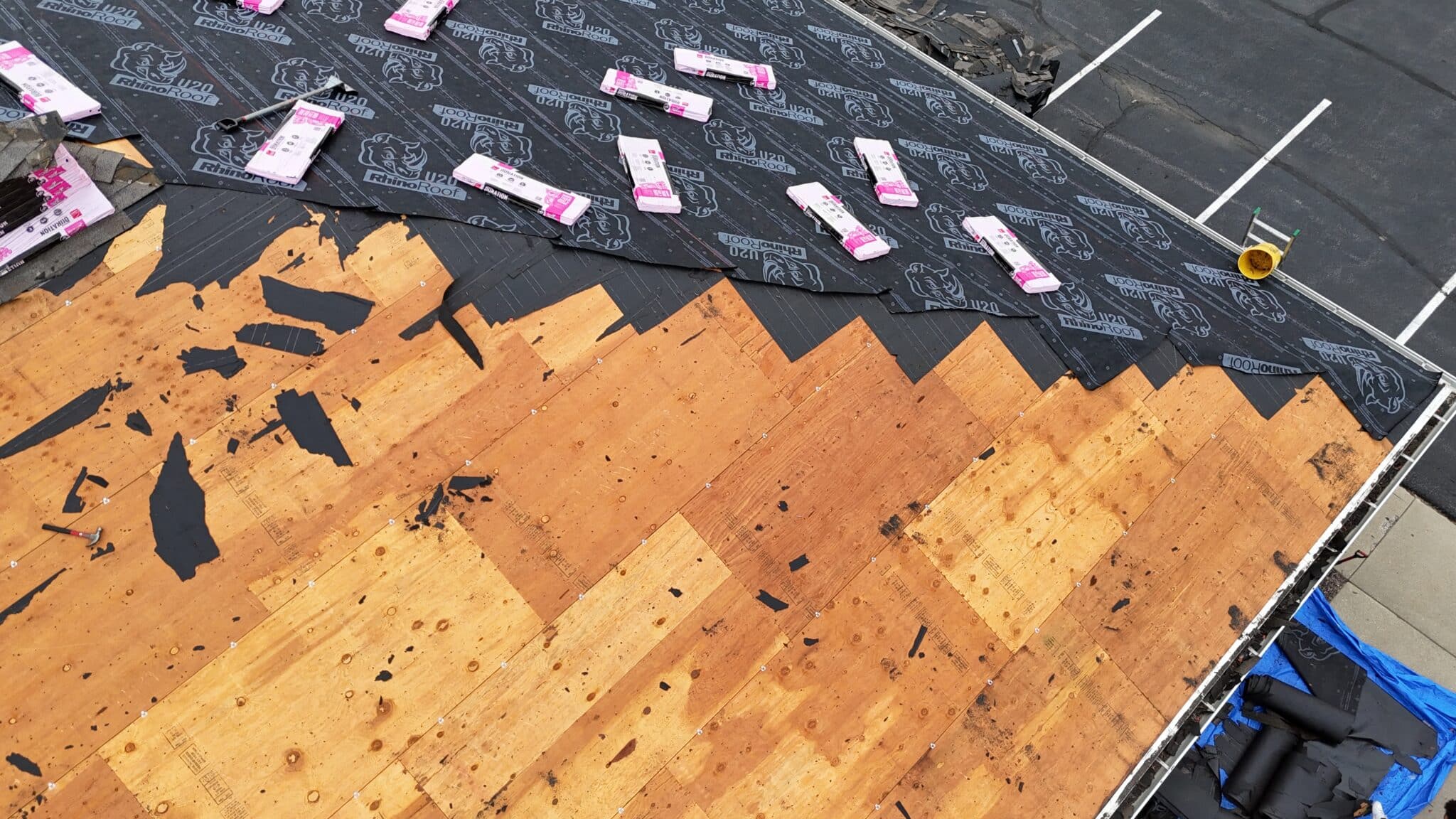 [Roof deck with underlayment exposed, showing overlapping rows]
What Underlayment Actually Does
Underlayment serves four critical functions:
1. Catches Water That Bypasses Shingles
Wind-driven rain, snow melt, and ice dams can force water under shingles. Underlayment stops that water before it reaches the wooden deck and creates rot. In heavy storms, this secondary defense is the difference between a minor repair and structural damage.
2. Protects the Roof Deck During Installation
When your roof is being replaced, the old shingles come off and the deck is exposed to the weather for several hours. Underlayment protects that vulnerable period. If a rain shower hits mid-installation, underlayment prevents water from soaking into the deck before new shingles are installed.
3. Extends the Life of Your Roof
By preventing moisture from penetrating to the deck, underlayment reduces the decay and weakening of the wood structure. A roof with degraded underlayment will fail faster than one with a intact, functioning secondary barrier—even if both have the same shingles.
4. Helps Meet Building Codes
Most modern building codes require underlayment as part of a complete roof system. It’s not optional in most jurisdictions; it’s part of what makes a roof installation meet code and qualify for manufacturer warranties.
Why Shingles Alone Aren’t Enough
This is the biggest misconception homeowners have: that shingles are the roof.
Shingles are excellent at shedding water when they’re intact and properly sealed. But shingles are also constantly under attack:
-
- UV radiation breaks down the sealant that holds shingles down
-
- Temperature swings cause expansion and contraction, loosening fasteners
-
- Wind lifts and curls shingles, especially at edges
-
- Debris (branches, hail, fallen objects) punctures and breaks them
-
- Age simply wears them out—most architectural shingles last 20–30 years
Even a well-maintained roof will experience moments when water finds its way past the shingles. Missing a nail. A torn seam. A spot where flashing isn’t quite seated. These aren’t failures of the shingle layer—they’re inevitable.
That’s why building codes and manufacturers don’t rely on shingles alone. Every properly installed roof has that backup layer of underlayment catching whatever water makes it through.
How Underlayment Matters When Shingles Are Damaged
This is where underlayment becomes a hero or a liability depending on its condition.
Scenario: A hail storm or high wind event damages some of your shingles.
If your underlayment is intact and in good condition, water that enters through damaged shingles will be directed down and off the roof deck. You’ll notice the damaged shingles (maybe they’re cracked or missing), but the interior of your home stays dry. You have time to schedule a repair without urgency, and the repair is straightforward: replace the damaged shingles.
If your underlayment has already failed or degraded (something you’d only discover if the roof were torn off for inspection or replacement), the same storm damage becomes a crisis. Water won’t just soak the damaged shingles—it will penetrate directly into the deck and attic. Now you’re looking at:
-
- Mold and rot in the wooden deck
-
- Water stains and structural damage inside your attic
-
- Potential mold in walls and insulation
-
- Compromised structural integrity
-
- Thousands of dollars in remediation
A single missing shingle is a $20 fix. A failed underlayment discovered during damage assessment can turn into a $5,000+ replacement because the deck has rotted underneath.
The insurance claim difference: When you file an insurance claim for storm damage, the adjuster will look at visible damage—the missing or cracked shingles. But if the inspector (or Edwards & Sons, when advocating for you) can show that the underlayment has failed or is failing, that significantly increases the claim value. A claim for “damaged shingles” might be $2,000. A claim that includes “deck replacement due to underlayment failure” can be $10,000+.
This is why contractors who take drone photos of the bare deck after tearing off old shingles are doing their customers a service. Those photos document the actual condition of the deck and underlayment before you’re charged for structural repairs. They’re also essential ammunition in an insurance claim—you can show the adjuster exactly what condition the deck was in when the roof was opened.
 [Water stain on ceiling caused by failed roof underlayment and water getting in.]
Signs Your Underlayment May Be Failing
You typically can’t see underlayment from the ground, but several warning signs suggest it’s degraded:
-
- Interior water stains or leaks that appear on ceilings or walls, especially after rain or snow melt
-
- Soft or spongy spots in your roof deck if a contractor probes it during an inspection (this indicates rot from water penetration)
-
- Granules in your gutters in large quantities, which can indicate both aging shingles and water running through the system
-
- Mold or mildew in your attic, which suggests moisture is penetrating the roof system
-
- Sagging or wavy roof sections, which can indicate the deck has weakened from water damage and rot
The only reliable way to know if underlayment is still functional is to have it inspected during a roof tear-off or by a professional who can examine it. A roofing contractor doing a full inspection (especially if you’ve had water damage or are planning a replacement) can photograph the underlying conditions and give you a clear picture of what’s actually protecting your home.
What Happens During a Roof Replacement
When a roof is replaced, your contractor removes the old shingles and examines the underlayment and deck beneath.
If the underlayment is intact and the deck is sound, the team can simply install new underlayment over the existing deck and install new shingles. Straightforward job, typically completed in a day.
If the underlayment has failed or the deck shows signs of rot, the contractor faces a decision point: repair or replace the affected sections. Some contractors quote this transparently upfront (showing drone photos or inspection notes before work begins). Others wait until the roof is torn open, discover the damage, and then present the customer with a surprise bill for plywood or deck replacement.
This is one of the most common sources of customer frustration in roofing: the final invoice is thousands higher than the estimate because of hidden structural damage discovered mid-project. Protecting yourself against this means working with a contractor who inspects thoroughly before quoting, photographs the deck during tear-off, and communicates any additional repairs needed before charging you for them.
The Takeaway
Your roof is a system, not a single layer. Shingles are the visible, weatherproofing component. Underlayment is the critical backup barrier that keeps your home dry even when the shingles fail. When you’re replacing a roof, you’re replacing both—and the quality of the underlayment installation is just as important as the shingles on top.
Understanding this distinction helps you make better decisions: when comparing roofing quotes, ask what underlayment material is being used and why. When negotiating an insurance claim, make sure the adjuster understands the condition of the deck and underlayment, not just the shingles. And when you see water stains or damage, don’t assume a few new shingles will fix it—have a professional inspect the underlayment to be sure.
If you’ve noticed signs of roof damage, water stains in your attic, or simply want to know the real condition of your roof system, a professional inspection is the first step. Edwards & Sons can provide a free inspection and transparent assessment of what’s actually protecting your home—shingles, underlayment, and all.