
Stand outside during the next steady rain and follow the water. It runs off the roof, into the gutter, down the downspout, and then it goes somewhere. If that somewhere is a puddle against your basement wall, the gutters are doing half the job.
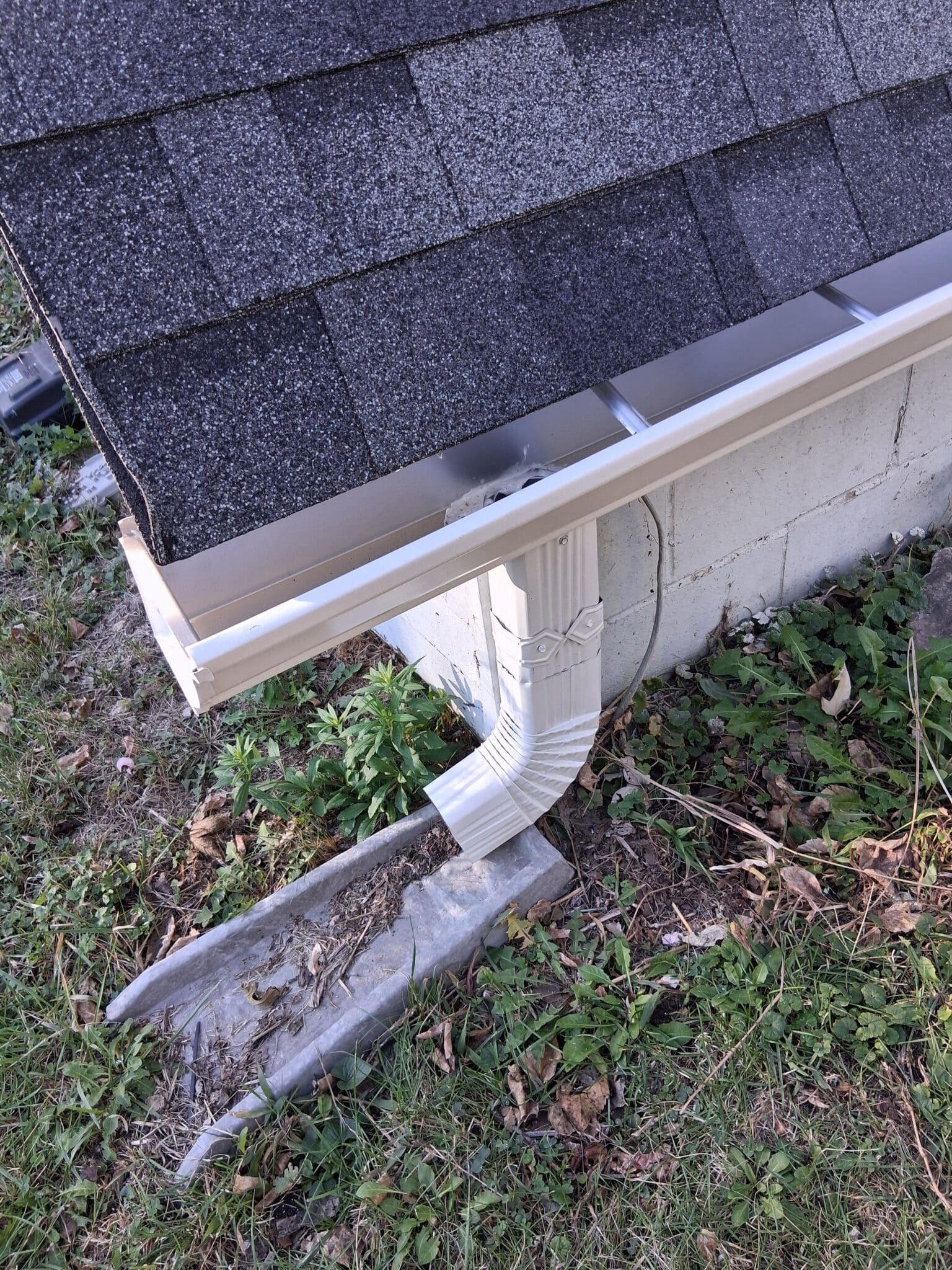
Good downspout drainage away from house walls means two things: the water leaves the downspout several feet from the foundation, and it lands on ground that slopes away. The University of Minnesota Extension says extensions should carry water at least 4 feet beyond the wall. Farther helps, especially if you have a basement. Often a simple extension or a gutter cleaning is the whole fix.
In this article
- How Much Water Does One Downspout Carry?
- How Far Should a Downspout Drain From the House?
- Does the Ground Around Your Foundation Matter?
- What Are Your Options for Downspout Extensions?
- Where Shouldn’t a Downspout Point?
- Why Do Gutters Overflow?
- What Are the Signs Water Is Collecting at the Wall?
- Frequently Asked Questions
How Much Water Does One Downspout Carry?
More than most people picture. A roof sheds roughly 600 gallons of water for every 1,000 square feet of roof, for every inch of rain, according to university extension figures.
That water doesn’t spread out evenly. The gutters collect it and send it to a handful of downspouts, so each outlet can drop hundreds of gallons in one spot during a single storm.
Here in the St. Louis metro, that adds up. The National Weather Service in St. Louis puts normal yearly precipitation at a little less than 34 inches, with just under 10.5 inches falling from March through May. Thunderstorms show up on 40 to 50 days a year, and those are the downpours that test a gutter system.
So where each downspout lets go matters a lot.
How Far Should a Downspout Drain From the House?
At least 4 feet from the wall, and more if you can manage it. That 4 feet is the University of Minnesota Extension’s minimum. Other university extension guidance stretches the distance to as much as 10 feet for a home with a basement.
Why the spread? A basement sits below ground, so water that soaks in near the wall has a direct path to it. A home on a slab or a crawl space has less below-grade wall for water to push against, and some guidance allows a shorter run there.
If you have a basement and the room to go farther, go farther. If you’re not sure what your town expects, check with your city or county. Drainage rules vary from one town to the next on both the Illinois and Missouri sides of the river.
Does the Ground Around Your Foundation Matter?
Yes, as much as the downspout does. An extension that drops water onto soil sloping back toward the house just moves the puddle a few feet.
The University of Minnesota Extension calls for soil that slopes a minimum of 1 inch per foot for at least 6 feet away from the foundation. The University of Illinois Extension, the closest regional source, says the final grade around the foundation walls should slope at least 4% away from the house. The model residential code that many towns build from asks for 6 inches of fall in the first 10 feet. Your local building department can tell you which version applies where you live.
Ground that was right when the house was built doesn’t always stay right. University of Illinois Extension notes that the soil beside foundation walls settles over the years, mostly because the backfill wasn’t packed tight. A low strip along the wall is a common result.
Clay soil drains slowly. Water left at the wall stays there longer.
If you add soil to fix a low spot, keep it below your siding. Illinois Extension warns against piling soil up against it.
What Are Your Options for Downspout Extensions?
Start with the simplest one that gets water far enough out, then watch it work in a real rain. Here is how the common choices compare:
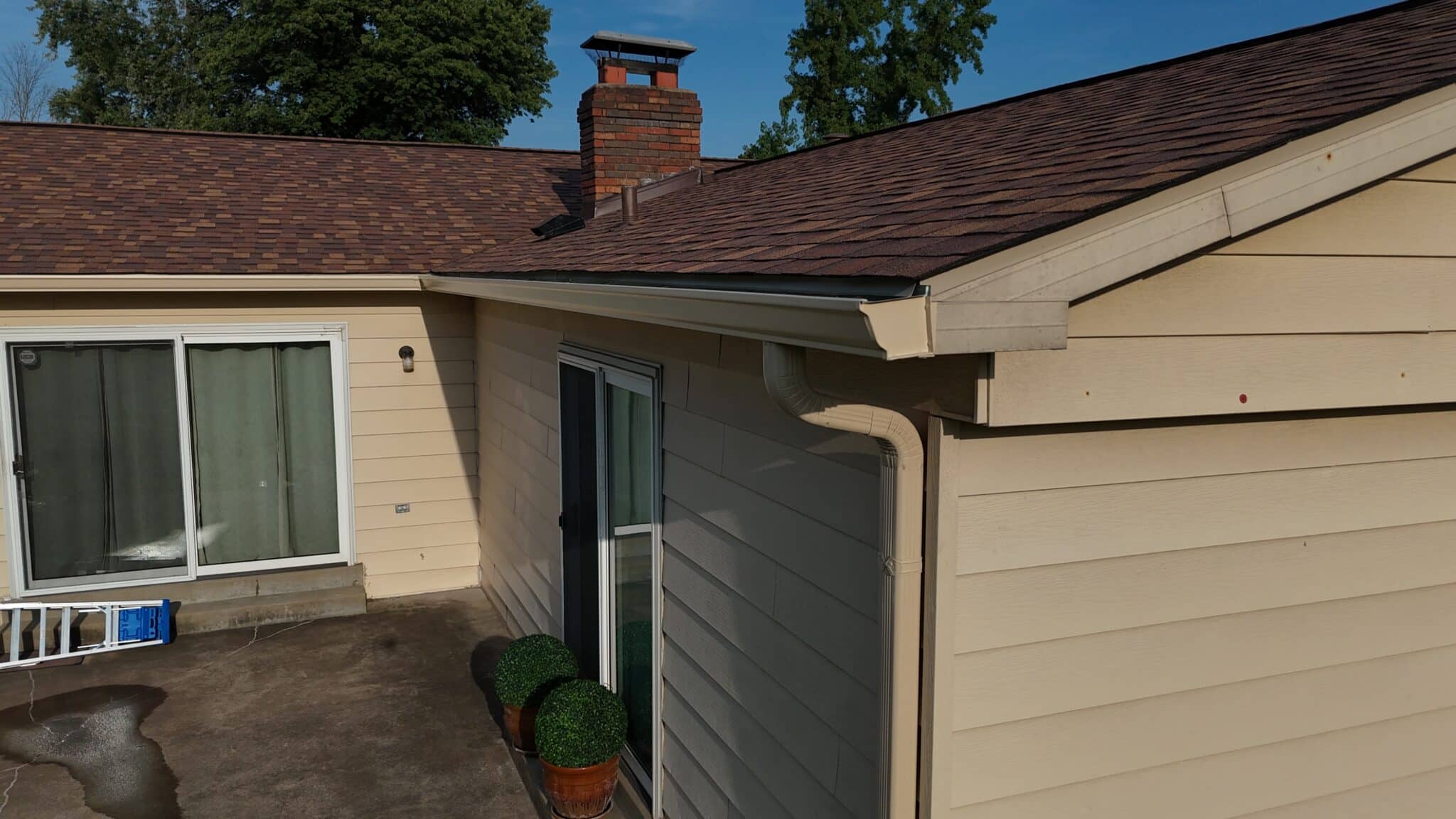
- Flexible extension: Cheap and easy to move. It can kink, get crushed, or get caught by the mower.
- Rigid extension: Steadier and harder to knock out of place. Takes up a fixed path across the yard.
- Hinged (flip-up) extension: Lifts out of the way for mowing. Check that it actually gets flipped back down before the next storm.
- Splash block: Spreads the flow so it doesn’t dig a hole at the base of the downspout. On its own, it rarely moves water far enough.
- Buried pipe: Permanent and out of sight. It needs a steady downhill fall the whole way, a real place for the water to come out, and a call to the utility-locating service before you dig.
FEMA lists both rigid and flexible extensions, plus keeping splash pads in place, as ways to move roof water away from a home. Some homeowners also send a downspout to a rain barrel or rain garden, as long as there’s a safe overflow for heavy storms.
Where Shouldn’t a Downspout Point?
Anywhere the water becomes someone else’s problem, or comes right back to yours. Avoid pointing a downspout:
- Onto a driveway or sidewalk, where it can pool
- Toward a neighbor’s yard or house
- Into or near a window well
- Over a septic area
- Into a storm sewer or other drain without your town’s approval
Again, rules vary by town. When in doubt, check with your city or county before tying into anything underground.
Why Do Gutters Overflow?
Most of the time, the gutter is clogged, sagging, or getting more water at one spot than it can handle. Where the water spills over tells you a lot.
- A low spot in a long run: The gutter may have lost its pitch and is holding water instead of moving it toward the downspout.
- An inside corner or below a roof valley: Two roof slopes meet there and send a rush of water into one short stretch of gutter. That’s a flow problem more than a clog.
- A long, clean run that still spills: It may need another downspout or a larger gutter.
- Everywhere, in an ordinary rain: Start by cleaning the gutters and every downspout elbow. Twice a year, in spring and fall, is the usual advice, and more often with trees nearby. Our guide to gutter maintenance and roof health explains why it matters beyond the foundation, and the fall checklist for Illinois and Missouri homeowners fits cleaning into your seasonal routine.
Gutter guards help keep leaves out. They don’t fix a gutter with the wrong pitch, too small a size, or a valley pouring into one corner.
You can see most of this from the ground. Please don’t climb onto the roof to look. If the gutters are above one story, or you’d need to lean out from a ladder to reach them, that’s the point to call someone.
When we come out for a free inspection, we look at the whole gutter system and foundation protection setup and tell you whether it needs cleaning, repair or replacement. Sometimes the answer is that it’s fine and the downspout just needs a longer extension. We’ll say so.
What Are the Signs Water Is Collecting at the Wall?
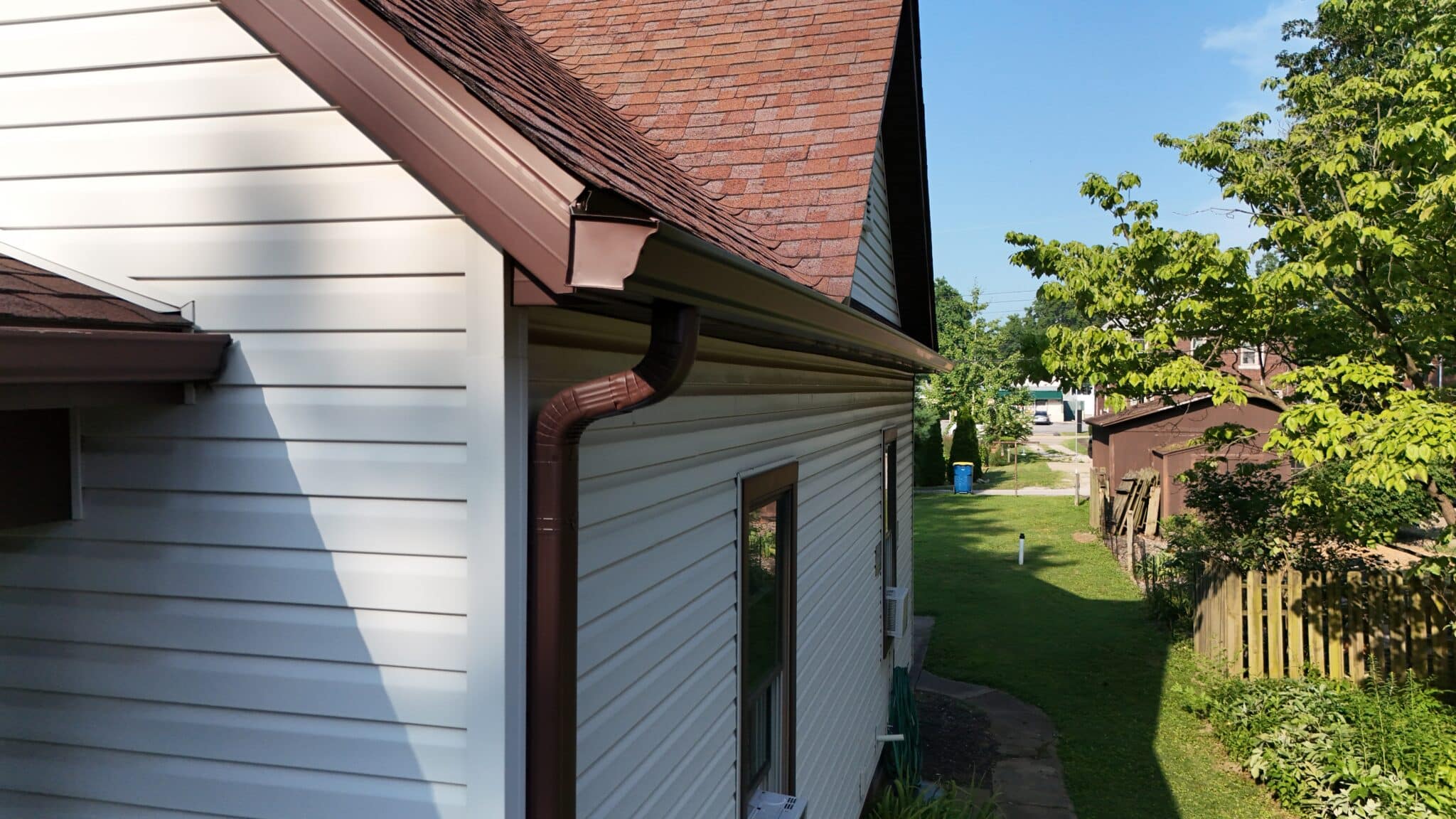
The ground and the wall usually show it before the basement does. Look for:
- Bare, washed-out soil or mulch, or a small gully, below a downspout
- Dark stains or white, crusty deposits on the foundation wall
- Mud splashed up onto the siding
- Water standing near the house a day after rain
- A damp smell in the basement after a storm
If you’ve extended the downspouts, the ground slopes away, and these signs keep showing up, the next call is a drainage or foundation specialist. Gutters and downspouts are our side of the problem. Foundations are not.
Frequently Asked Questions
How far away from the house should downspouts drain?
If you have a basement, 6 feet is a common target in extension guidance. For a slab or crawl space, a few extension services allow as little as 2 feet, though more distance never hurts. On a steep lot, check with your town before sending water downhill toward a neighbor.
How can I drain a downspout that’s still not draining well?
Run a garden hose into the top of the downspout. If water backs up or barely trickles out the bottom, there’s a clog, usually in an elbow. Flush it from the bottom up, or take the elbow off and clear it by hand. Then make sure the elbow at the bottom turns away from the house, not along the wall.
What should I do if my gutter is pulling away from my house?
Stay out from under it and don’t hammer the old spikes back in. Fasteners won’t hold in soft, rotted fascia board. Common causes are the weight of wet debris, loose or widely spaced hangers, rotted wood, ice and storm damage. Call a pro if the wood behind the gutter feels soft, the gutter is above one story, or more than one section has come loose.
How do you know if gutters are clogged?
Watch the downspout in a steady rain. Little or no water coming out the bottom while the gutter spills over the top is the clearest sign. Plants growing in the gutter, standing water days after a storm, and a gutter that sags between hangers point the same way.
Get A Free Roof Inspection