Maybe it’s a few cracked panels on the side of the house that takes the worst of the weather. Maybe the color has gone flat and chalky, or a strip worked loose in the last storm. Either way, you’re leaning toward new vinyl and you want to know what you’re signing up for.
Vinyl siding replacement in St. Louis, MO usually means removing the old siding, checking and repairing the wall underneath, adding house wrap and flashing, and installing new panels with room to expand and contract through hot summers and cold winters. In the City of St. Louis, re-siding with no change to existing openings usually needs no building permit. Vinyl needs little upkeep, but it isn’t hail-proof, and installation quality matters a great deal.
In this article
- How Does Vinyl Siding Hold Up in St. Louis Heat, Cold and Storms?
- What Upkeep Does Vinyl Siding Really Need?
- How Does Vinyl Look on Different Kinds of St. Louis Homes?
- Should You Repair or Replace Your Vinyl Siding?
- What Does the Manufacturer’s Warranty Cover, and What Doesn’t It?
- What Happens During a Vinyl Siding Replacement in St. Louis, MO?
- Frequently Asked Questions
- Weighing New Vinyl for Your Home?
We’re Edwards & Sons Roofing, a local, family-owned company since 1974, and Mastic by Ply Gem vinyl is the siding we install on homes across the St. Louis metro, as part of our full range of residential siding services. Below is the information most homeowners want first: what vinyl does well, where it falls short, what the warranty really means, and how a replacement goes from start to finish.
How Does Vinyl Siding Hold Up in St. Louis Heat, Cold and Storms?
Vinyl handles St. Louis weather well when it’s installed with room to move. Most of the trouble people blame on the weather traces back to how the panels were hung.
Vinyl expands in heat and shrinks in cold. On a long wall, that movement is real. The Vinyl Siding Institute’s installation guidance calls for a small gap where panels meet openings and trim, a slightly larger gap when the work happens in cold weather, and fasteners that hold each panel without pinning it tight. Nails driven too hard, or straight through the face of a panel, are a common cause of buckling.
So when you see a wavy wall on a July afternoon, the summer usually isn’t the problem. The installation is.
Winter brings its own care. Vinyl is stiffer in the cold, so it has to be handled and cut with more care, and the panels need extra room to grow once the weather warms up.
Wind is mostly a question of product and fastening. Certified vinyl siding is tested against an industry standard, ASTM D3679, that covers wind load, impact, weathering, and how much the panels expand and shrink. The Vinyl Siding Institute says certified products can be rated for winds of 110 mph or more, depending on the specific product and on installing it the way the manufacturer says. A high wind rating on the box doesn’t help much if the panels aren’t fastened to match it.
Hail is where vinyl is weakest, and you should know that going in.
Impact resistant is not hail-proof. Large, wind-driven hail can crack or puncture vinyl, most often on the sides of the house facing the storm. Thicker panels resist impact better, but no vinyl siding is guaranteed to come through a bad hailstorm untouched.
St. Louis has seen what that looks like. The City of St. Louis reported severe storms, straight-line winds, tornadoes and flooding on May 16, 2025, that damaged homes across the city. If your exterior came through that day, or any big storm since, with cracked or loose panels, it’s worth a closer look, and our guide to storm damage siding repair shows what to check. When storm damage is part of the picture, we work directly with your Insurance Company and help you navigate the claims process.
What Upkeep Does Vinyl Siding Really Need?
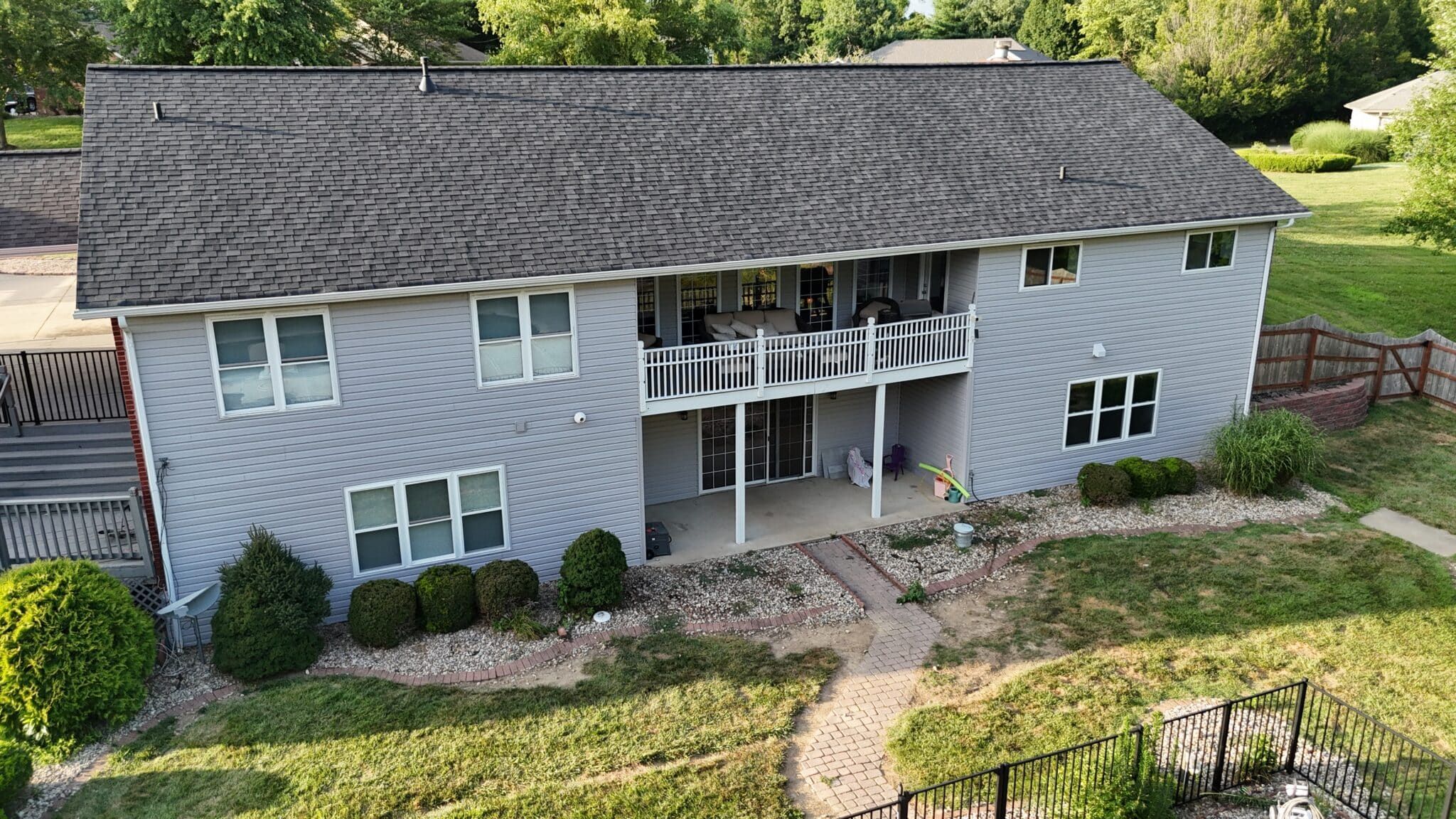
Not much. A yearly wash, a look after big storms, and some space between the walls and your plants cover most of it.
Wash your siding about once a year with a garden hose, mild soap and a soft brush. A regular wash helps the color look its best and gives you a reason to see every wall up close.
A pressure washer is tempting. If you use one, never aim the spray up behind the panels, where it can push water into the wall.
After a big storm, walk around the house and look from the ground. Cracked, loose or missing panels are the main issues to spot, along with trim that has pulled away.
Keep shrubs and vines trimmed back from the walls. Plants pressed against the siding keep it damp and hide problems you’d otherwise see on your walk-around.
That’s the whole routine. It’s that simple.
How Does Vinyl Look on Different Kinds of St. Louis Homes?
Vinyl comes in enough colors, profiles and textures to suit most homes in the area, and the right choice can improve curb appeal a great deal. What looks right depends on the shape of the house, so treat the notes below as starting points, not rules.
- Ranch homes: long horizontal walls suit a clean lap profile. A color with a little depth keeps a low, wide house from looking flat.
- Two-story colonials: taller walls carry a classic lap or wood-grain profile well, with crisp trim around the windows to keep the home’s balance.
- Brick-and-siding mixes: pick a siding color that works with the brick instead of competing with it. Pulling a tone from the brick or the mortar is a safe place to start.
- Older homes: wood-grain profiles and traditional trim help keep the character. Older houses also need a couple of checks before any work starts, covered in the step-by-step section below.
Color is the choice you’ll live with longest, so decide what you value most: blending in with the street, standing out a little, or simply a look that holds up. Any siding color can change after years of strong sun, so if fade matters to you, ask how the warranty treats it for the exact color you pick. And look at a real sample on your own wall, in morning and afternoon light, before you decide.
If you’re also thinking about comfort and energy use, read about energy efficient siding. Foam-backed (insulated) vinyl is one of the common options worth asking about. Other siding materials exist too, but once you’re leaning toward vinyl, profile, color and backing are where the real decisions sit.
Should You Repair or Replace Your Vinyl Siding?
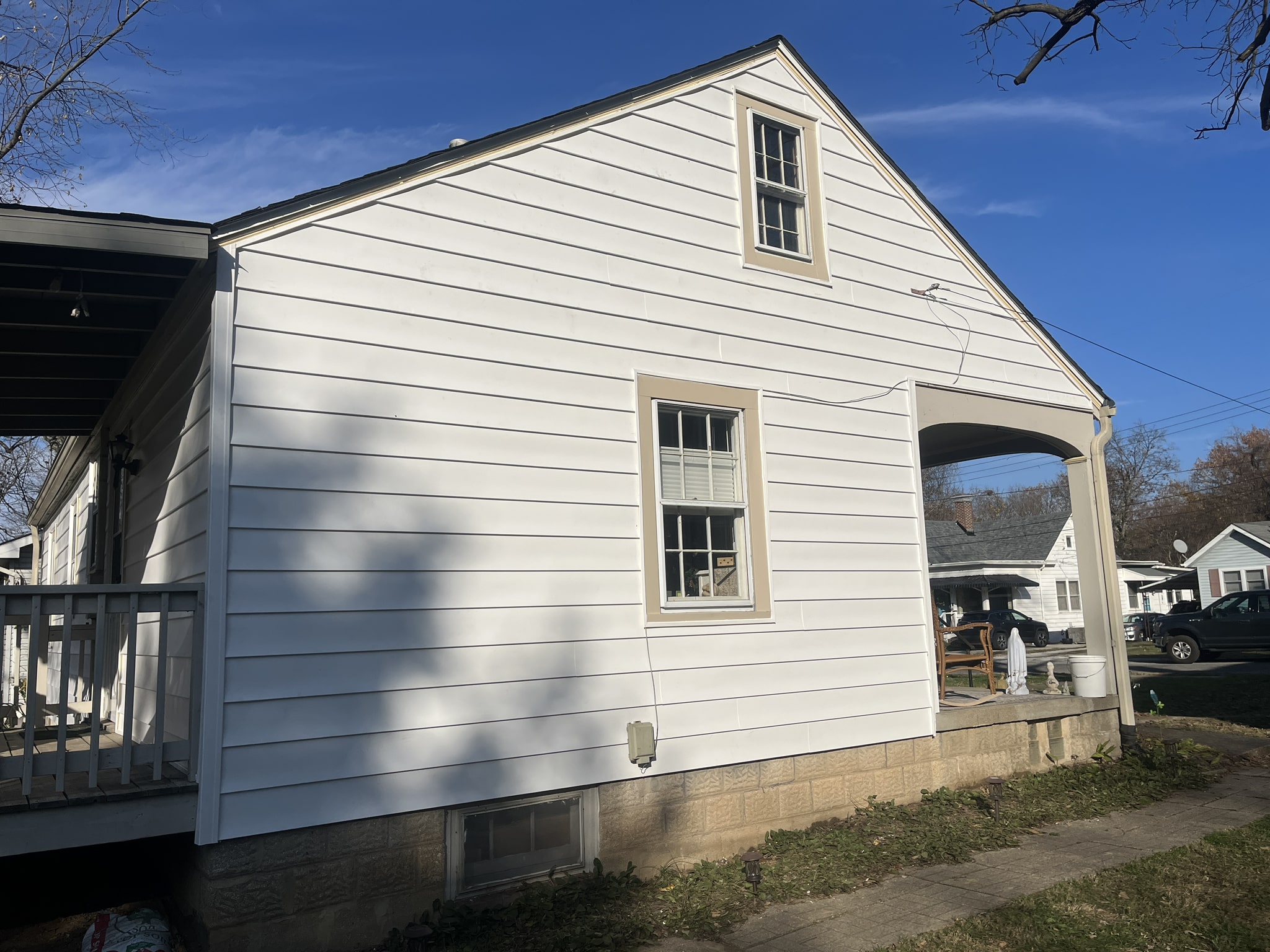
Repair is often enough. If the damage is limited to a few cracked or loose panels, the wall behind them is dry and firm, and matching panels are available, a repair usually makes sense.
We recommend repair over full replacement whenever possible. Selling you new walls you don’t need isn’t how a family business lasts five decades. Period.
Replacement starts to make more sense when you see:
- Cracking or brittle panels across the house, not just in one spot
- Warping on several walls
- Moisture or soft sheathing behind the siding
- Repairs that keep failing in the same places
Not sure which side of the line your house is on? A free inspection answers that, and it’s a service we offer whether or not you end up needing work. We come to you, no sales pressure.
What Does the Manufacturer’s Warranty Cover, and What Doesn’t It?
Select Mastic by Ply Gem siding carries a lifetime limited manufacturer warranty. It’s the manufacturer’s warranty, not ours, and the word “limited” carries a lot of weight.
Limited means conditions. A lifetime limited warranty covers what the warranty document says it covers, usually manufacturing defects in the product. It doesn’t mean any problem, on any siding, for life.
Before you sign, ask for the full warranty document for your exact product and color. Then read it for:
- What counts as a covered defect
- Whether fade, hail or heat distortion have their own separate coverage, time periods and exclusions
- Whether a claim pays for labor and removal, or only for replacement material
- How installation, care and outside causes such as impact affect coverage
- Whether the warranty transfers if you sell the house, and on what terms
- Whether you need to register it, and how soon after installation
Installation shows up here too. Manufacturer warranties commonly exclude problems caused by installation that doesn’t follow the manufacturer’s instructions, so how the panels go on affects more than how the walls look.
What Happens During a Vinyl Siding Replacement in St. Louis, MO?
Most vinyl siding replacement projects follow the same order. On site, the work often takes a matter of days to a couple of weeks, depending on the size of the house, what turns up under the old siding, and the weather.
- Preparation: the area around the house is cleared and protected, and anything mounted on the walls is taken down.
- Tear-off: the old siding comes off, down to the sheathing.
- Sheathing check and repair: with the wall open, soft or water-damaged sheathing gets repaired. Hidden damage turns up here, and it’s the most common reason a schedule changes.
- House wrap and flashing: a weather-resistant wrap goes over the sheathing, and flashing around windows, doors and other openings sends water away from the wall.
- Siding installation: panels go on from the bottom of the wall up, fastened with room to expand and contract.
- Trim, soffit and fascia: the finishing pieces go on around corners, openings and the roofline.
- Cleanup and final walk-through: the site is cleaned up and you walk the finished exterior together.
Older homes need two checks before any of that starts. If your house was built before 1978, painted surfaces disturbed during the work can fall under the EPA’s lead-safe renovation rules. And if the siding you have now might be asbestos-cement, have it evaluated before anyone cuts or breaks it.
Weather matters for timing as well. Rain slows the open-wall stages, and cold days call for the extra installation care covered earlier.
Questions to Ask Contractors Before You Sign
Because so much of vinyl’s performance comes down to the installation, the questions you ask contractors matter as much as the panels you pick. A good installer should be glad to provide clear answers to all of these:
- How do you leave room for the siding to expand and contract, and what changes when you install in cold weather?
- Do you install to the manufacturer’s instructions for this exact product?
- What happens if you find soft or damaged sheathing once the old siding is off?
- Is my house old enough to need the lead-safe or asbestos checks, and how are they handled?
- Can I see the full warranty document for the product and color you’re quoting?
The answers tell you a lot about an installer’s experience with vinyl, and they set clear expectations before any siding installation begins.
Frequently Asked Questions
Is it better to repair or replace vinyl siding?
When it’s close, two things usually settle it. The first is what’s behind the panel: someone should lift a suspect panel and look at the sheathing and flashing, because a dry, solid wall keeps repair on the table. The second is whether matching panels can still be found. If they can’t, a patch may stand out from the rest of the wall, and that’s worth weighing before you decide.
What should you not clean vinyl siding with?
The Vinyl Siding Institute advises against organic solvents, undiluted chlorine bleach, liquid grease remover, nail-polish remover and furniture polish. Siding manufacturers also warn against abrasive cleaners and stiff or wire brushes.
Do I need a permit to replace vinyl siding in St. Louis?
Inside city limits, usually not, but there are exceptions. Adding or enlarging windows or doors changes the openings, which takes the job out of the no-permit category. A house in a historic district, or one that is a landmark, may need approval for exterior work. And a property in a flood area needs a Floodway Development Permit for construction projects. St. Louis County and other cities set their own rules, so check with your city’s building office before work starts.
Weighing New Vinyl for Your Home?
The best first step is a look at the siding you have now. We’ll tell you whether a repair will do or a replacement makes sense, and talk through the options that fit your house and your home’s exterior as a whole.
Edwards & Sons is veteran-owned and operated, with honesty, integrity and customer service at the center of how we work. To set up a free inspection on the Missouri side, reach us at (314) 896-1480.
Get A Free Roof Inspection