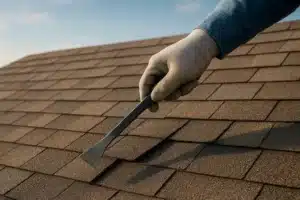
A roof can look fine from the ground, even when individual shingles have started to lift, curl, or loosen.
After a strong windstorm, you may notice a shingle edge sticking up, a curled corner, or a section that no longer lays flat. These changes can happen for several reasons, including wind, age, moisture, installation, or previous damage.
The important thing is to understand why the shingle changed and whether the rest of the roofing system was affected.
In this guide, we’ll explain what can cause shingles to lift or curl, what homeowners can safely look for after a storm, and when a professional inspection may help.
What Causes Shingles to Lift or Curl?
Storms can expose existing weaknesses in a roofing system, but wind is not always the only cause of lifted or curled shingles.
Wind Uplift
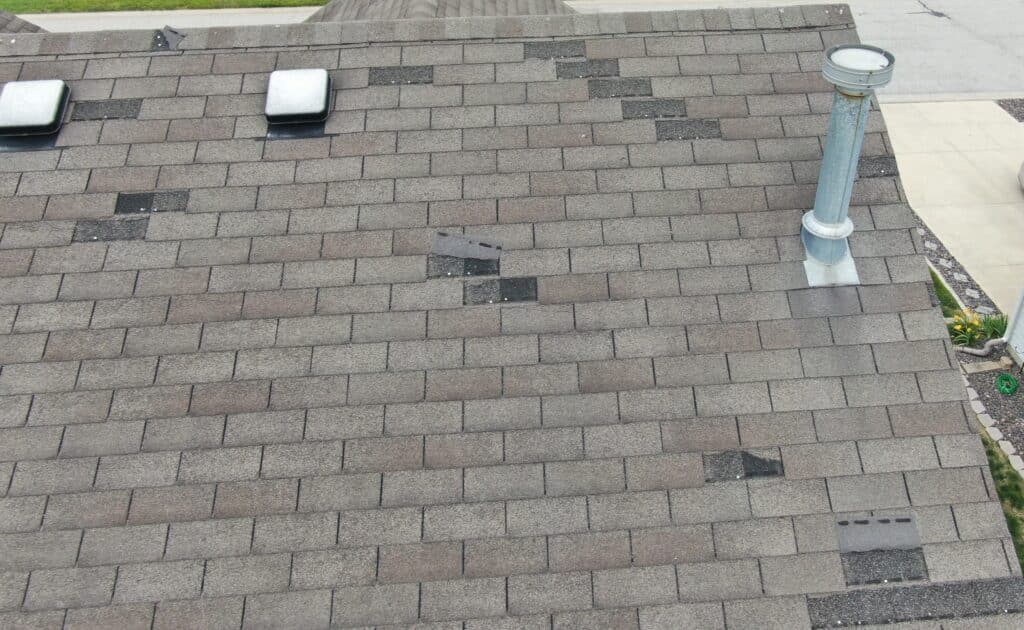
Strong winds can create pressure across a roof and around its edges. That pressure can lift shingle edges or loosen shingles that have become more vulnerable over time.
Asphalt shingles are designed to work together as part of a roofing system. Each shingle overlaps the one below it, while adhesive strips and fasteners help hold the materials in place.
If a shingle lifts during a storm, it does not automatically mean the entire roof has failed. It does mean the affected area deserves a closer look.
Installation and Fasteners
Proper installation matters.
Shingles are installed according to the manufacturer’s instructions, including requirements for fastener placement, alignment, and sealing. If those requirements were not followed, the roofing system may be more vulnerable to wind.
However, it can be difficult to determine the cause of a lifted shingle from the ground. A professional inspection can help identify visible signs of installation issues or other contributing factors.
Age and Weather Exposure
Roofing materials change as they are exposed to the weather.
Years of sunlight, heat, cold, rain, snow, and wind can affect asphalt shingles. As shingles age, they may become more likely to show signs of wear such as curling, cracking, or granule loss.
The adhesive that helps shingles seal together can also be affected by age and weather exposure.
Moisture and Previous Damage
Moisture can contribute to some roofing problems, while previous hail or wind damage may leave certain areas more vulnerable during a later storm.
Attic ventilation can also be part of the picture. Excessive heat or moisture in an attic can contribute to premature aging, although ventilation is only one factor to consider when shingles curl.
The cause is not always obvious from one shingle. Looking at the roofing system as a whole provides a better picture.
What Does Lifted or Curled Shingle Damage Look Like?
From the ground, homeowners may notice:
- Shingle edges that appear raised
- Corners that curl upward
- Shingles that look out of alignment
- Missing shingles or portions of shingles
- Exposed underlayment or roof decking
- Loose-looking materials around roof edges
- Damaged flashing around roof penetrations
- Granules or roofing debris collecting in gutters or around the home
A pair of binoculars can make a ground-level inspection easier.
Do not climb onto the roof to inspect storm damage yourself. Wet, damaged, or steep roofing surfaces can be unsafe to walk on.
Where Should You Look After a Storm?
Wind and weather do not affect every part of a roof in the same way. If you are checking from the ground, pay particular attention to:
Roof Edges and Corners
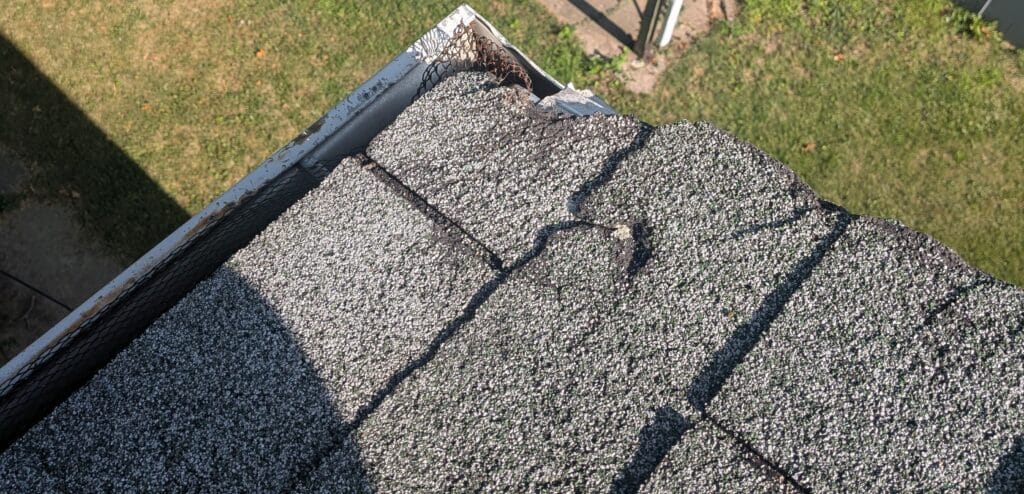
These areas can experience greater wind exposure. Look for raised shingle edges, missing materials, or anything that looks different from the surrounding roof.
Valleys
A roof valley is where two roof slopes meet. Valleys help direct water toward the gutters, making them an important part of the roofing system.
Flashing and Roof Penetrations
Flashing is used around chimneys, vents, skylights, and other roof penetrations.
Damage in these areas may not look like a lifted shingle, but it can still affect how water moves across the roof.
Areas With Previous Repairs
If your roof has been repaired before, those areas may deserve additional attention after a storm.
The goal is not to assume there is damage. It is to notice anything that looks different and have it evaluated when appropriate.
What Should You Check Inside the Home?
Some roofing problems are easier to notice from inside the home than from the ground.
If you have safe access to your attic, look for:
- Water stains
- Damp or wet insulation
- Visible moisture
- Staining around roof penetrations
- Signs of previous leaks
You can also check ceilings and upper walls for new water stains.
Interior signs do not always show exactly when or how a problem started. They are useful information to share with a roofing professional if an inspection is needed.
What Happens During a Professional Inspection?
A professional inspection can provide a closer look at areas that are difficult to evaluate from the ground.
Depending on the situation, an inspection may include:
- Looking for lifted, curled, missing, or damaged shingles
- Checking visible flashing and roof penetrations
- Looking at roof edges, valleys, and other areas of concern
- Examining accessible attic areas for signs of moisture
- Looking for signs of previous repairs or wear
- Documenting visible damage with photographs
- Explaining what was found and what options may be available
A good inspection should answer a basic question: What is actually happening with the roof?
That may mean identifying storm damage, normal wear, an installation concern, a moisture issue, or some combination of factors.
Does a Lifted Shingle Mean You Need a New Roof?
Not necessarily.
A small, isolated problem may be repairable. More widespread damage may require a larger repair or, depending on the overall age and condition of the roof, replacement.
There is no single age or number of damaged shingles that automatically determines the right solution.
A professional evaluation may consider:
- How much of the roof is affected
- The type and extent of the damage
- The age of the roofing system
- Existing wear and deterioration
- Previous repairs
- The condition of the shingles and other roofing components
- Whether the affected area can be properly repaired
The condition of the roof should guide the recommendation—not a predetermined sales goal.
If a repair makes sense, homeowners should understand that option. If replacement is needed, they should understand why.
What If the Storm Damage Involves Insurance?
If you believe your roof was damaged by a storm, you can review your homeowners insurance policy and contact your insurance company about the claims process.
Coverage depends on the specific policy and circumstances of the loss. The insurance company determines coverage under the policy.
A roofing contractor can help with the physical side of the process by documenting visible roofing damage, explaining what was found, and providing repair information.
If an insurance adjuster visits the home, Edwards & Sons can be present to answer technical questions about the roofing system and the damage observed.
The homeowner remains in control of the insurance claim and decisions about the property.
What Should You Do If Your Shingles Lift or Curl?
If you notice lifted or curled shingles after a storm:
1. Look From the Ground
Use binoculars if needed, but avoid walking on the roof.
2. Take Photos
Photograph anything unusual from a safe location. You can also photograph new interior water stains or other visible signs of moisture.
3. Consider a Professional Inspection
If you are unsure what you are seeing, a roofing professional can take a closer look and explain what they find.
4. Ask Questions
Make sure you understand whether the issue appears isolated or whether other parts of the roofing system may need attention.
5. If Insurance May Be Involved, Review Your Policy
Contact your insurance company to understand the claims process. Your roofing contractor can provide documentation about the physical condition of the roof.
Most importantly, you do not need to assume the worst. Start by finding out what actually happened.
How Can Homeowners Help Protect Their Roof?
No roof can be completely protected from severe weather, but regular attention can help homeowners stay aware of changes.
Watch for Changes After Major Storms
A ground-level check after significant weather can help you notice missing shingles, lifted edges, or visible debris.
Keep Gutters and Downspouts Clear
Gutters are part of the home’s exterior drainage system. Keeping them reasonably clear helps water move away from the roof and home.
Pay Attention to Attic Ventilation
If a roof shows signs of premature aging or moisture concerns, attic ventilation may be one part of the evaluation.
A roofing professional can help determine whether ventilation appears to be contributing to a roofing problem.
Address Concerns When You Notice Them
If a shingle looks loose, curled, or damaged, having it evaluated can help you understand whether it is an isolated issue or part of a larger roofing concern.
The Bottom Line
Lifted or curled shingles can have several causes, including storm winds, normal aging, moisture, installation, and previous damage.
The best place to start is with the actual condition of the roofing system.
A safe, professional evaluation can help identify what changed, whether other areas were affected, and whether a repair or replacement makes sense.
At Edwards & Sons Roofing, our approach is simple: find the problem, explain what we find, and help you understand your options.
We’ve been serving homeowners across Southern Illinois and the St. Louis Metro East for more than 50 years, with a focus on straightforward communication and quality roofing work.
Get A Free Roof Inspection