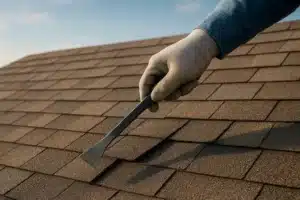
High winds can tear shingles from roofs across Missouri and Illinois. When that happens, homeowners are often left wondering what went wrong and what they should do next. But wind is not always the only reason shingles blow off. Several things can play a part, including wind speed and direction, how the roof was installed, the age of the shingles, and which parts of the roof are most exposed. Understanding these factors can help you decide whether your roof may need a repair or a closer inspection after a storm.
How Wind Damages Shingles
Wind does more than push against shingles. Strong wind can create uplift pressure that lifts the edges of shingles away from the roof. When wind gets under a shingle, it can pull against the adhesive strip that helps hold the shingle in place. The stronger the wind, the more stress is placed on the shingle and its seal. Not every wind event causes shingle damage. The amount of damage depends on the strength of the wind, the condition of the roof, how the shingles were installed, and the design of the roof. Wind direction also matters. Wind can create more pressure around roof edges and corners, where the air moves around the home. This is why two homes in the same storm may have very different amounts of damage.
Installation Quality: An Important Part of the Picture
Sometimes shingle loss has less to do with the wind and more to do with how the roof was installed.
A properly installed shingle roof should have:
- Nails placed in the correct nail area
- Nails driven firmly without being too deep or too high
- Shingles installed with the correct overlap
- Adhesive strips that can properly seal
- Underlayment installed correctly
If nails are placed too high or too low, the shingle may not hold as well as it should. If nails are driven too far into the shingle, they can damage the material. If they are not driven far enough, the shingle may not be held securely. Underlayment also plays an important role. It sits below the shingles and adds another layer of protection for the roof. After a windstorm, it is helpful to look at more than just how many shingles are missing. The pattern of the damage can give clues about what happened. That is why a professional inspection can be useful after a major wind event.
Roof Age: Why Older Roofs May Lose Shingles First
Asphalt shingles age over time. Sun, heat, cold, rain, and changing temperatures can slowly affect the materials and the adhesive that helps hold shingles in place.nAs a roof gets older, the shingles may become more brittle and the seal may become weaker. You may also notice more granules in your gutters or areas where the asphalt surface is becoming more exposed. This does not mean every older roof needs to be replaced. It simply means age is one factor to consider when looking at wind damage. For example, an older roof may react differently to the same storm than a newer roof in good condition. A roof inspection can help determine whether the damage is limited to a few shingles or whether there are other concerns that should be addressed.
Vulnerable Areas: Where Shingles May Blow Off First
Wind damage is not always spread evenly across a roof. Some areas are more exposed to wind pressure than others.
Roof Edges and Corners
The edges and corners of a roof can take more wind pressure. This is often where shingle damage starts.
Ridge and Hip Lines
The highest parts of the roof can also be exposed to strong wind. Ridge cap shingles may be affected during a major storm.
Dormers and Roof Openings
Chimneys, vents, skylights, and dormers change the shape of the roof. Wind can move around these areas differently and may cause damage nearby.
Windward Sides
The side of your home facing the strongest wind can take more impact during a storm.
Low-Slope Roof Areas
Lower-slope areas may also react differently to strong winds. The design and roofing material used in these areas are important when looking at wind resistance.
When It’s Just Wind—and When There May Be More to the Story
When shingles blow off, it is easy to assume that the wind was the only cause. Sometimes it is. But other factors may also be involved.
Strong Wind
Very strong winds can damage even a roof that was properly installed and in good condition. You may see shingles missing from exposed edges and corners, along with other storm damage.
Wind and an Older Roof
If an older roof loses shingles during moderate or strong winds, the age and condition of the shingles may be part of the reason. The adhesive may have become weaker over time, making the shingles more likely to lift.
Wind and an Installation Problem
If damage is limited to certain rows or sections of the roof, the installation may be worth looking at. Incorrect nail placement, poor sealing, or other installation problems can affect how well shingles hold up during wind.
A Smaller Wind Event
If shingles come loose during a lower-wind event, it may be worth having the roof inspected. The roof’s age, condition, installation, and other factors may help explain why the shingles came loose. The important thing is not to guess. A professional inspection can look at the shingles, nails, adhesive, and other parts of the roof to help determine what may have caused the damage.
What to Do After High Winds
If you notice missing shingles after a storm, it is a good idea to have the roof checked. A missing shingle can leave part of the roofing system exposed to rain and other weather. Until the roof can be inspected and repaired, temporary protection may be needed to help keep water out.
During an inspection, ask the contractor to look at:
- The pattern of the missing shingles
- Nail placement on nearby shingles
- The condition of the adhesive
- Any visible damage to the roof decking
- Signs of water damage
- The entire roof, including areas that may not be easy to see from the ground
Drone photos can also help show the condition of the roof from above.
Does a Repair Make Sense?
Not every roof with missing shingles needs to be replaced. If the damage is limited and the rest of the roof is in good condition, a repair may be an option. If the roof is older or has damage in several areas, replacement may be worth discussing. The right choice depends on the age and condition of the roof, the amount of damage, and the cost of the needed work. That is why an inspection should come before making a decision.
What Can Help Keep Shingles in Place?
If you are building a new roof or replacing an older one, several factors can affect wind resistance.
Quality Roofing Materials
Different shingles are made with different designs and features. The right roofing material depends on the home, roof design, local weather, and other factors.
Professional Installation
Installation matters. Proper nail placement, correct shingle overlap, and good attention to the manufacturer’s installation instructions all help create a sound roofing system. Experienced roofing crews should follow the manufacturer’s requirements for the roofing materials being installed.
Underlayment and Ventilation
Underlayment provides another layer of protection below the shingles. Proper attic ventilation can also help manage heat and moisture in the attic. Both are important parts of a complete roofing system.
Roof Design
Roof pitch, roof edges, overhangs, and roof openings can all affect how wind moves across a roof. A professional can look at these areas when checking a roof’s condition and wind resistance. The good news is that a roof does not have to be replaced simply because a storm has passed through. If you are concerned about your roof, an inspection can help you understand its current condition and what, if anything, needs attention.
The Bottom Line
When shingles blow off during high winds, there may be more than one reason. Wind strength and direction matter, but so do the age of the roof, installation quality, roof design, and the condition of the shingles. If your roof has lost shingles after a storm, it is worth having the damage checked before deciding what to do next. At Edwards & Sons Roofing, we believe homeowners should understand what is happening with their roof before making a decision. We provide roof inspections and can use drone photos when helpful to document what we find.
If your roof needs a repair, we will explain that. If we find damage that may call for more work, we will explain what we see and discuss your options. If you are considering an insurance claim, we can help document the damage and communicate with your insurance adjuster. Your insurance company makes the final decision about coverage under your policy. For more than 50 years, Edwards & Sons has helped homeowners across Illinois and Missouri with roofing repairs, inspections, and replacements. Our approach is simple: look at the roof, explain what we find, and help you understand your options.
Get A Free Roof Inspection