Yes. Hail can damage a roof without leaving large holes or missing shingles. When most homeowners think about hail damage, they picture broken shingles, holes, or dented gutters. But roof damage is not always easy to see from the ground. A shingle can look fine but still have damage from a hail impact. Small cracks, bruising, or lost granules may not be easy to spot. Over time, damaged shingles may allow water to get under the roof surface. That is why a roof can look fine after a storm and still need a closer look.
At Edwards & Sons Roofing, we inspect roofs across the St. Louis and Metro East area after storms. We know that some damage is easy to see, while other damage takes a closer inspection to find. This guide explains what hail can do to your shingles, what hidden damage may look like, and when a roof inspection may be a good idea.
What Hail Does to Shingles
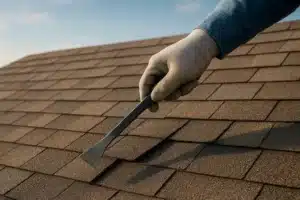
Asphalt shingles are made to handle normal weather, but strong hail can damage them. When hail hits a shingle, it may not make a hole. Instead, it can leave a bruise in the shingle. This is an area where the layers of the shingle have been pressed or damaged by the impact. The top of a shingle has small mineral granules. These help protect the shingle from the sun and weather. A strong hail hit can knock some of these granules loose or damage the material underneath. A hail bruise may look like a dark or slightly sunken spot. Some damage can be hard to see, especially from the ground. A damaged shingle may also have cracks or weak areas that are not easy to notice without a closer inspection.
Why does that matter? Shingles are designed to move water down the roof and away from your home. If a shingle is damaged, water may find its way under the shingle and reach the layers below. If water gets into the roof system, it can lead to moisture damage over time.
Why Hail Damage Can Get Worse Over Time
One of the tricky things about hail damage is that problems may not show up right away. Your roof may look fine after a storm. You may not see a leak, and you may not notice anything inside your home. Then, weeks or months later, heavy rain may expose a problem.
Here’s how that can happen:
- Water can get under damaged shingles. If a shingle is cracked or damaged, water may get into areas that should stay dry.
- The roof decking can get wet. The decking is the wood layer under your shingles. If water reaches it, the wood can absorb moisture.
- Wood can weaken over time. If the decking stays wet, it may begin to soften or deteriorate.
- Moisture can reach the attic. If water gets into the attic, it may leave stains or create conditions where mold or mildew can grow.
This is why it can be helpful to have your roof checked after a hail storm. An inspection can help find damage before it turns into a larger repair.
What a Professional Inspection Can Find
Looking at your roof from the ground is a good first step, but it does not tell the whole story. During a roof inspection, Edwards & Sons looks for signs such as:
Signs on the Roof
- Bruised or dented shingles
- Areas where granules are missing
- Cracks or damaged shingles
- Damaged flashing around vents and chimneys
- Lifted or damaged roofing materials
Signs Below the Roof
When it is safe and accessible, an attic inspection can also help identify:
- Water stains on the underside of the roof
- Signs of moisture
- Damaged or weakened decking
- Mold or mildew
- Signs of older repairs
Photos and Documentation
Photos can also help show what was found during an inspection. Depending on the roof and the property, drone photos may be useful for getting a closer look at areas that are difficult to see from the ground. If storm damage is found, clear photos and notes can help homeowners understand the condition of their roof and provide information for their insurance company.
Understanding the Insurance Claim Process
If you think your roof may have hail damage, you may wonder whether you should file an insurance claim. Before filing, it can be helpful to have the roof inspected first. A roofing contractor can document the damage they see and provide that information to you. If you decide to file a claim, that documentation can be useful when speaking with your insurance company and its adjuster. It is important to remember that your insurance company makes the final decision about coverage under your policy. At Edwards & Sons, we can help homeowners document storm damage and communicate with the insurance adjuster during the process. Our role is to explain what we find and help make sure the condition of the roof is clearly documented. We do not determine what an insurance policy will or will not cover.
The Hidden Cost of Damaged Roof Decking
Sometimes the biggest surprise during a roofing project is finding damage under the shingles. Roof decking is the wood layer underneath the shingles. If water gets through damaged roofing materials and reaches the decking, the wood may become soft or damaged over time. This type of damage is not always visible during a quick look at the roof. When old shingles are removed, the decking can be inspected more closely. If damaged wood is found, it may need to be replaced before new shingles are installed. The cost depends on how much decking needs to be replaced and the materials and labor involved. This is where clear communication matters.
A good roofing contractor should:
- Look for signs of decking damage during the inspection.
- Tell you about any concerns they find.
- Take photos when possible.
- Explain if additional wood repair may be needed.
- Clearly explain any added work and costs before moving forward when possible.
At Edwards & Sons, we believe homeowners should understand what is happening with their roof. If we find signs of damaged decking, we will explain what we see and discuss the repair options with you.
How to Check Your Roof Safely
You do not need to climb onto your roof to look for signs of damage. A quick check from the ground can help you decide if you should have your roof inspected.
From the Ground
Look for:
- Missing or damaged shingles
- Dark or unusual spots
- Granules collecting in your gutters
- Damaged or loose gutters
- Damaged flashing
- Other changes you did not notice before the storm
From the Attic
If you can safely access your attic, look for:
- Water stains
- Dark or discolored areas
- Signs of moisture
- Mold or mildew
- Signs of an older leak or repair
Do not walk on your roof unless you have the proper training and safety equipment. And remember: not seeing damage does not always mean there is no damage.
When Should You Get a Professional Roof Inspection?
A roof inspection may be worth considering after a hail storm, especially if you notice signs of damage. You should also consider an inspection if you see:
- New granules in your gutters
- Water stains on your ceiling or in your attic
- Damaged or missing shingles
- Dented gutters or metal roofing parts
- Cracks or other visible roof damage
Before Selling Your Home
Your roof is an important part of a home sale. If a home inspector notices possible roof damage, a roofing inspection can provide more information about the condition of the roof and any repairs that may be needed.
After Winter
Winter weather can be hard on roofs. Snow, ice, and repeated freezing and thawing can put stress on roofing materials. A spring inspection can help you find problems before they become bigger issues.
After a Storm
If a hail storm has passed through your area, an inspection can help you understand whether your roof has visible or less obvious damage. At Edwards & Sons, we offer no-cost roof inspections with no obligation. We look at the roof, check accessible areas of the attic when appropriate, and document what we find. If your roof only needs a repair, we will explain that. If we find damage that may require more work, we will explain what we see and go over your options. Our goal is simple: help homeowners understand the condition of their roof so they can make an informed decision about what to do next.
The Bottom Line
Hail damage is not always easy to see. A roof can have damaged shingles without large holes or missing pieces. Over time, damaged roofing materials may allow water to reach the layers underneath. That is why an inspection after a hail storm can be helpful, even when your roof looks fine from the ground. If you have recently had a hail storm in your area or noticed signs of roof damage, consider having your roof inspected before a small problem becomes a bigger repair. At Edwards & Sons Roofing, we believe homeowners deserve a clear look at what is actually happening with their roof—not pressure to buy a roof they may not need.
Get A Free Roof Inspection