When severe weather rolls through the Midwest, the aftermath usually brings two things: concern about the condition of your home and a flood of roofing contractors knocking on your door. If you are standing in your driveway right now, looking at a few missing shingles and wondering what to do next, you are in the exact position thousands of homeowners find themselves in every storm season.
One of the biggest challenges isn’t just the damage—it’s knowing what to do next. Does your roof need a simple repair or a full replacement? Is the damage serious enough to file an insurance claim? And how do you choose a contractor you can trust to give you a straightforward assessment?
At Edwards & Sons Roofing, we’ve taken a repair-first approach since 1974. If your roof can be repaired, we’ll tell you. If it needs to be replaced, we’ll explain why.
In this guide, we’ll explain how wind damages a roof, the warning signs to look for, when a repair may be enough, when replacement makes sense, and what to expect if you decide to file an insurance claim.
Understanding Wind Damage: What Actually Happens to Your Roof?
Wind damage isn’t always obvious. While a fallen tree or missing shingles are easy to spot, some of the most important damage can be difficult to see from the ground. Strong winds don’t just blow against your roof—they can lift shingles, loosen seals, and create openings that allow water to get underneath your roofing system.
Depending on the strength of the storm and the condition of your roof, wind damage typically falls into three common categories.
Lifted Shingles (The Invisible Threat)
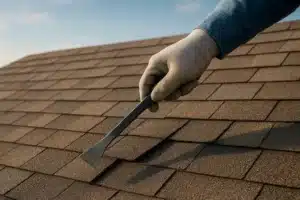
Every asphalt shingle is held in place by both nails and a strip of adhesive sealant. During strong winds, that adhesive seal can break, allowing the shingle to lift. When the wind dies down, the shingle may settle back into place and look perfectly normal from the ground. But once the seal has been broken, the roof is more vulnerable to future wind damage, and wind-driven rain can work its way beneath the shingle. Over time, this can lead to leaks, damage to the roof deck, and moisture problems inside your home.
Creased Shingles (The Structural Weakness)
If a shingle is lifted and folded back by strong, sustained winds, it can develop a sharp horizontal crease. This crease often knocks the protective granules off the surface and can damage the shingle beneath them. Once a shingle is creased, it has been compromised and is much more likely to allow water intrusion over time. In most cases, a creased shingle should be replaced rather than repaired. It is no longer a question of if it will leak, but when.
Complete Blow-Offs (The Emergency)
When strong winds tear shingles completely away, the underlayment and roof decking beneath them may be exposed to rain and moisture. If this happens, it’s important to have the damage inspected promptly. A professional may recommend emergency tarping to help protect your home from additional water damage while permanent repairs are scheduled.
Repair vs. Replacement: Making the Right Call
One of the biggest questions homeowners have after a windstorm is whether their roof can be repaired or if it needs to be replaced. The answer depends on several factors, including the extent of the damage, the age of the roof, and the condition of the existing shingles.
In many cases, isolated wind damage can be repaired without replacing the entire roof. However, when damage affects a large portion of the roofing system or the existing shingles have become too brittle to repair properly, a full replacement may be the better long-term solution.
Every roof is different, which is why a thorough inspection is so important. Our approach is simple: recommend the solution that best fits the condition of your roof. If a repair is the right choice, we’ll explain why. If a replacement makes more sense, we’ll walk you through our findings so you can make an informed decision.
Professional Restoration Techniques
When we handle a wind-specific repair, we don’t just slap a new shingle over the old one. Proper restoration requires carefully breaking the seals of the surrounding intact shingles, removing the damaged pieces and nails without harming the underlying moisture barrier, and integrating the new shingles flawlessly.
Because we specialize exclusively in residential asphalt roofing, siding, and gutters, we know exactly how to color-match and feather-in repairs so your roof maintains its aesthetic and structural integrity.
Navigating the Insurance Maze
After a major windstorm, many homeowners aren’t just dealing with roof damage—they’re also trying to understand the insurance process. Between scheduling inspections, reviewing documentation, and communicating with their insurance company, it can quickly become overwhelming.
Choosing a contractor who communicates clearly and provides thorough documentation can make the process much easier. Our role is to inspect your roof, document the wind-related damage we observe, and explain our findings in clear, straightforward terms.
If requested, we can meet with your insurance adjuster to answer questions about the roofing damage and the repairs we recommend. We also provide documentation of our inspection and help explain the repair process so you have the information you need to make informed decisions throughout your claim.
Our goal is simple: to provide an honest assessment, keep you informed throughout the process, and help you understand your repair options so you can move forward with confidence.
Choosing a Contractor Who Won’t Ghost You
The contractor you choose can have a significant impact on your overall experience. Beyond quality workmanship, it’s worth considering how a company communicates, manages your project, and cares for your property throughout the process.
After three generations in this business, we know that how a contractor treats your property is just as important as how they nail a shingle.
When you choose Edwards & Sons Roofing, you are protected by three non-negotiable standards:
- Respect for Your Property: Roofing projects can be messy, but cleanup should never be an afterthought. We end every job by removing debris, using magnetic tools to help collect stray fasteners, and taking extra steps to leave your yard and driveway as clean as possible.
- The Communication Standard: You’ll hear from us every step of the way—even when we’re just waiting on materials. You will never be left guessing about the status of your project.
-
Quality Materials & Workmanship: A quality roof depends on both the materials being installed and how they’re installed. Ask about the products being used, who will oversee the project, and how the contractor helps ensure the work is completed according to manufacturer guidelines.
Frequently Asked Questions (FAQ)
How much does it typically cost to repair wind damage?
The cost of wind damage repairs depends on several factors, including the extent of the damage, the age of your roof, and whether the damage is limited to a small area or affects the larger roofing system. Minor repairs may involve replacing a few damaged shingles, while more extensive damage may require additional repairs or a full replacement.
Can I inspect my roof for wind damage myself?
We strongly advise against climbing on your roof after a storm. Not only is it dangerous, but walking on damaged shingles can make the damage worse. Instead, look for ground-level signs: pieces of shingles in your yard, granular debris in your gutter downspouts, or water stains on your indoor ceilings.
What if my insurance adjuster says there isn’t enough damage?
Storm damage is not always obvious, and different inspections may focus on different aspects of your roof. If you have concerns about an insurance assessment, we can perform a thorough inspection, document the damage we observe, and explain our findings clearly.
We can provide documentation of our inspection and answer questions about the roofing damage and recommended repairs, giving you the information you need to make informed decisions throughout the process.
Why do some roofers say they can’t repair my roof and must replace it?
Not every roof can be repaired, but not every damaged roof needs to be replaced either. The right recommendation depends on several factors, including the extent of the damage, the age of the roof, and the condition of the existing shingles.
In some cases, older shingles may have become too brittle to repair without causing additional damage to the surrounding area. In other situations, a small repair may be all that is needed to address the problem.
At Edwards & Sons Roofing, our approach is simple: provide an honest assessment and recommend the solution that best fits your roof. If a repair is the right choice, we’ll explain why. If replacement makes more sense, we’ll walk you through our findings so you can make an informed decision.
The Next Step Toward Peace of Mind
Wind damage shouldn’t force you into a stressful, high-pressure sales process. You deserve a contractor who will provide an honest assessment, respect your home, and help you understand your options.
If you suspect a recent storm has compromised your roof, don’t wait for a leak to confirm it. Reach out to Edwards & Sons Roofing today for an honest, thorough inspection. We’ll evaluate the damage, walk you through your options, and help you make the best decision for your home and your budget.
Get A Free Roof Inspection