Roof ventilation is one of those home systems that operates invisibly—until it doesn’t. Most homeowners never think about it until a contractor mentions it during an inspection, or worse, until they notice water stains on a ceiling or black mold in the attic. But ventilation isn’t complicated. It’s simply the flow of outside air through your attic space, and it serves one critical purpose: managing heat and moisture that would otherwise damage your roof from the inside out.
In this guide, we’ll explain how attic ventilation actually works, why it matters for your roof’s longevity, and what you need to know to keep yours functioning properly. We’ll skip the oversimplification that ventilation alone determines how long your roof lasts—because it doesn’t. But we’ll also show you why it’s still worth understanding and maintaining.
The Three Problems Roof Ventilation Solves
Your attic faces three simultaneous challenges: excessive heat buildup, moisture accumulation, and temperature fluctuations. Ventilation addresses all three.
Heat Buildup
During summer, an unventilated attic can reach temperatures of 150°F or higher. This heat radiates down into living spaces, forcing air conditioners to work harder and driving up energy costs. More importantly, sustained heat accelerates the aging of roofing materials—especially asphalt shingles, which begin to deteriorate faster when chronically exposed to extreme temperatures. Proper ventilation allows hot air to escape, keeping attic temperatures closer to outside air temperatures and reducing thermal stress on your roof deck and shingles.
Moisture Accumulation
Moisture enters your attic from three sources: warm, humid air rising from living spaces below, bathroom and kitchen exhaust vents (if vented into the attic instead of outside—a common mistake), and outside air that carries humidity. When that moisture-laden air meets cold surfaces—especially in winter or early spring—it condenses into water droplets. Over time, this condensation soaks into insulation, supports mold growth, and rots roof framing, decking, and sheathing. Continuous air circulation prevents moisture from settling and pooling.
Temperature Fluctuations
Winter brings another challenge: ice dams. When warm air in an unventilated attic melts snow on the roof’s upper sections, that meltwater runs down and refreezes at the roof’s cold edges, creating a dam. Water backs up behind it, seeps under shingles, and leaks into the house. Proper ventilation keeps the attic cold in winter, preventing this cycle. Conversely, ventilation also moderates spring thaw cycles, reducing the stress of rapid temperature swings on roofing materials.
How Attic Ventilation Actually Works: The Air Cycle
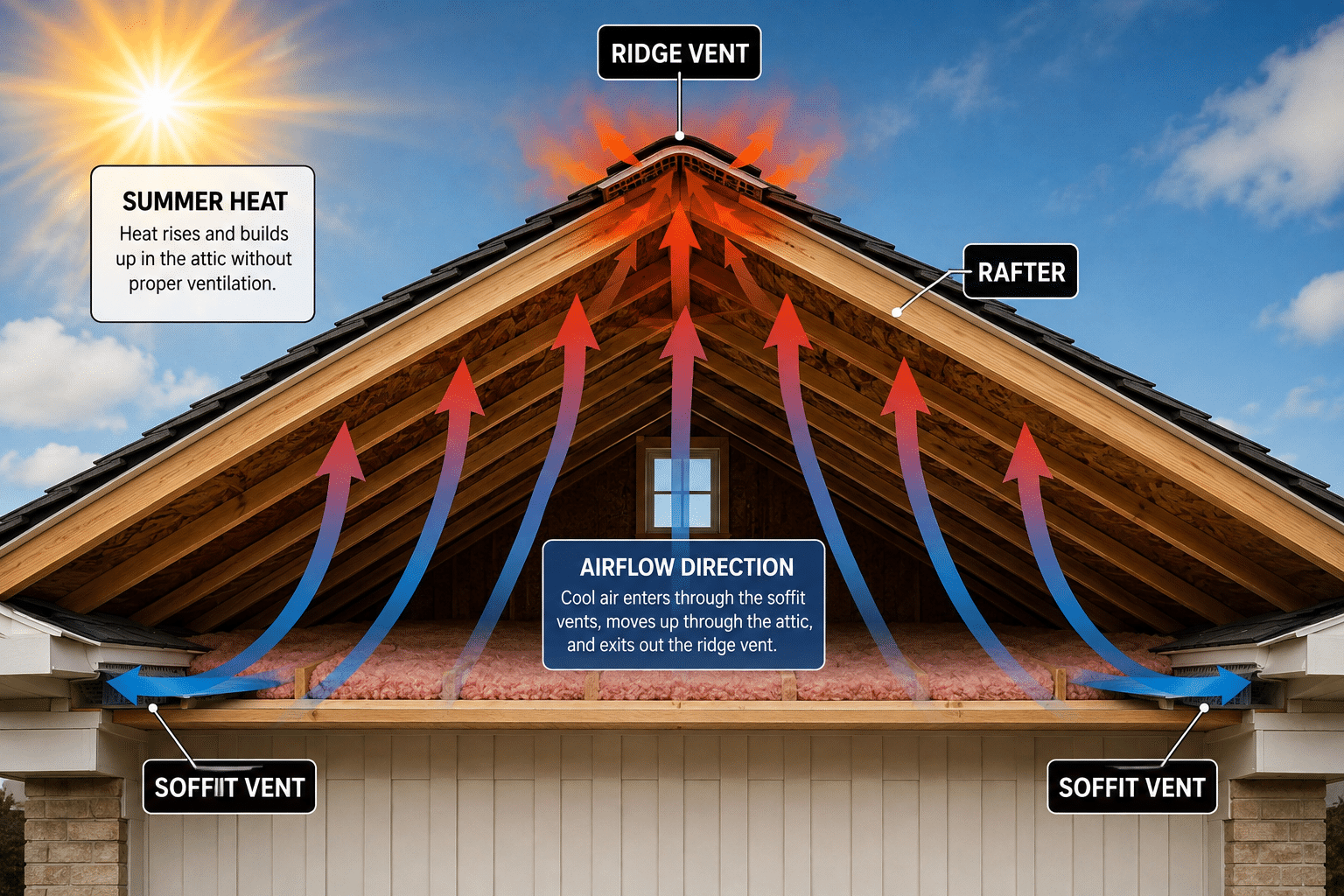
Roof ventilation is fundamentally simple: air enters low on the roof (through soffit vents), travels through the attic space, and exits high on the roof (through ridge vents, gable vents, or roof vents). This continuous flow is driven by two natural forces.
Stack Effect (Hot Air Rise)
Hot air is less dense than cool air, so it naturally rises. During the day, when sunlight heats the roof and attic, warm air naturally wants to escape through upper vents. This upward movement pulls cooler, drier outside air in through lower vents, creating a continuous circulation. This is the primary driver of ventilation during warm months.
Wind Effect
Wind creates pressure differences across your roof. When wind hits the windward side of your house, it creates positive pressure; on the leeward side, it creates negative pressure that pulls air out. This pressure difference accelerates air movement through vents, especially on breezy days. Wind effect is particularly important during cooler months when the stack effect weakens.
Together, these two forces keep air moving. The goal is continuous, unobstructed circulation—not stagnant air or dead zones where moisture can collect.
The Ventilation Balance: Intake and Exhaust
The most common ventilation problem isn’t a lack of vents—it’s an imbalance between intake and exhaust.
Soffit Vents (Intake)
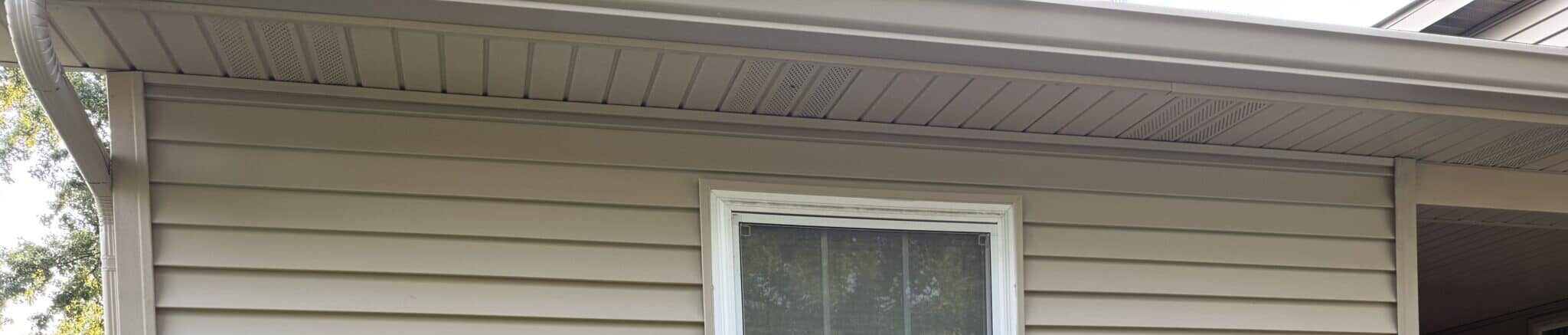
Soffit vents are small openings located under the eaves, running along the perimeter of your roof. They’re the intake points for outside air. Air enters here because it’s cooler and drier than attic air. The soffit is an ideal location because:
- It’s protected from direct rain exposure by the overhang
- It’s positioned low, where natural stack effect can draw air upward
- It’s far from the exhaust points, maximizing the distance air travels through the attic
Many attics are undersized on soffit vents or have vents blocked by insulation pushed against the soffits during initial installation. Without adequate intake, the exhaust vents can’t pull enough air through, and the system fails.
Ridge Vents and Exhaust Points
Ridge vents run along the peak of the roof, where hot air naturally accumulates. They’re the most effective exhaust points because they’re positioned at the highest, hottest part of the attic. Alternative exhaust options include gable vents (on the sides of the attic) and roof vents (small circular or rectangular vents punched through the roof surface itself).
The ideal ratio is equal intake and exhaust—typically expressed as a ratio of net free area. For example, if your attic needs 10 square feet of total ventilation, you should have approximately 5 square feet of intake vents (soffit) and 5 square feet of exhaust vents (ridge or roof vents). If you have 10 square feet of ridge vents but only 2 square feet of soffit vents, the system can’t function—air can’t enter fast enough to exit, and moisture lingers.
Moisture and Condensation: The Silent Threat
Understanding ventilation’s role in moisture control is critical because structural rot often progresses invisibly for years before it becomes visible.
How Moisture Enters the Attic
Your home naturally generates humidity. A family of four produces roughly 24 pounds of water vapor daily through cooking, bathing, laundry, and simply breathing. Warm air inside your home rises and escapes into the attic through ceiling gaps, recessed lights, exhaust vents, and wall cavities. This air carries its moisture with it.
Additionally, if bathroom or kitchen exhaust fans are vented into the attic instead of outside (a code violation now, but common in older homes), they dump warm, humid air directly into the space. Some of this moisture is absorbed by insulation; some condenses on cold surfaces.
The Condensation Cycle
In winter or during cool spring mornings, attic surfaces (roof decking, framing, rafters) are much colder than the moisture-laden air that’s risen from below. When warm air contacts these cold surfaces, the moisture condenses—just like water beading on a cold window. This is where the damage begins:
- Condensation soaks into insulation, reducing its R-value and trapping moisture against the roof deck
- Wet wood attracts mold and mildew, which spreads across framing and decking
- Prolonged moisture exposure causes wood rot, weakening structural members
- Rust forms on metal fasteners and flashing
All of this happens without a single leak. It’s purely an internal moisture problem, and ventilation is the primary defense against it.
Ventilation’s Role
Continuous air circulation removes moisture before it can condense. Drier outside air entering through soffit vents picks up moisture from the attic’s warm air, then carries it out through exhaust vents. The faster this air moves through the space, the less time moisture has to settle and condense. In a well-ventilated attic, the air is continuously refreshed, preventing moisture accumulation.
Temperature Control and Shingle Longevity
Heat doesn’t destroy a roof overnight, but it accelerates degradation significantly.
How Heat Ages Shingles
Asphalt shingles are made of a fiberglass or organic mat coated with asphalt and topped with colored mineral granules. The asphalt binder holds everything together. When chronically exposed to high temperatures, the asphalt oxidizes—a chemical process that hardens and brittles the material. Brittle shingles become inflexible, lose their water-resistance properties, and are more prone to cracking and tearing.
The material Edwards & Sons uses—are engineered to resist this degradation, but no shingle is immune to heat aging. Every 10°F increase in sustained attic temperature accelerates this aging process.
Ventilation’s Protective Effect
A properly ventilated attic keeps temperatures 10–15°F cooler than an unventilated one during summer peak hours. This seemingly small difference compounds over years. A roof exposed to consistent 150°F attic temperatures ages significantly faster than one with attic temperatures maintained at 135°F. While ventilation can’t reverse the aging process, it meaningfully extends the useful life of your shingles.
What Ventilation Cannot Do—And Why Other Factors Matter
Here’s what’s critical: ventilation alone does not determine how long your roof lasts. Several other factors have equal or greater impact on roof longevity.
Material Quality
A premium shingle with proper ventilation will outlast a budget shingle with excellent ventilation.
Installation Quality
Even excellent materials installed incorrectly will fail prematurely. Improper nailing (too high, too low, or at an angle), inadequate sealing at overlaps, and poor flashing installation around penetrations are the primary causes of premature roof failure in this market. Ventilation won’t fix a botched installation.
Roof Deck and Structural Integrity
If the plywood or OSB decking beneath your shingles is rotted or compromised—whether from prior water damage, poor ventilation, or construction defects—no amount of ventilation going forward will restore it. The decking must be replaced before reroofing. This is why drone inspections that reveal the condition of the deck before pricing are so valuable; hidden rotted wood can add thousands to a project’s cost if discovered during installation.
Climate and Weather Exposure
Spring hail storms, high winds, UV exposure, and freeze-thaw cycles all stress roofing. A roof in a severe climate will age faster than one in a mild climate, even with identical ventilation, materials, and installation.
Maintenance
Regular gutter cleaning prevents water backup and ice dams. Timely shingle repairs prevent small issues from becoming major ones. Removal of debris, moss, and algae prevents moisture retention on the surface. Ventilation handles moisture inside; maintenance handles moisture on top.
All of these factors work together. Ventilation is one critical piece of the longevity puzzle, not the entire puzzle.
Signs Your Attic Ventilation Isn’t Working
If you suspect ventilation problems, watch for these red flags:
Interior signs:
- Drywall or ceiling stains appearing in spring or after heavy rain (indicates active moisture or leaking)
- Black mold or dark discoloration visible on rafters or roof decking (inspect during the day with a flashlight)
- Musty odors in the attic (smell of moisture and mold)
- Sagging insulation with dark wet spots (indicates condensation saturation)
Exterior signs:
- Missing or damaged soffit vents (visible from the ground or a ladder)
- Insulation visible from outside the soffit (sign that insulation has been pushed against the vents, blocking intake)
- Ice dam formation along the roof edge in winter (indicates insufficient ventilation and warm attic air melting snow)
- Visible moss, algae, or mold growth on shingles (often indicates poor drying conditions from inadequate ventilation)
Performance signs:
- Unusually high summer cooling costs (unventilated attics force A/C units to work harder)
- Rafters or decking that feel soft or spongy to the touch (advanced rot)
- Visible sagging in the roof line (structural member failure)
If you notice any combination of these, an inspection by a licensed contractor is warranted. Ventilation problems often compound over years, and early intervention is far cheaper than dealing with structural rot or mold remediation.
Ventilation Retrofit: When You Need to Improve Yours
If your roof lacks adequate ventilation or it’s been compromised (blocked soffit vents, damaged ridge vent, insulation piled against intake vents), you have several options.
Clear Existing Vents
If soffit vents are blocked by insulation, carefully pull insulation back to restore airflow. You can also use baffles—plastic or foam channels installed between rafters—to maintain an air gap and prevent insulation from re-blocking vents. This is inexpensive and often solves condensation problems immediately.
Upgrade Ridge Vent Coverage
If your roof has only gable vents or roof vents and no ridge vent, adding a ridge vent during reroofing significantly improves exhaust capability. Ridge vents are nearly invisible from the ground and work with the roof’s natural peak geometry to maximize air movement.
Add Soffit Vents
Soffit vents can be retrofitted into existing soffit runs, though this requires careful carpentry to avoid damaging fascia or gutters. If your soffit is already perforated but vents are obstructed, simply clearing them (and ensuring insulation stays back) is the first step.
Install Roof Vents
If a ridge vent isn’t feasible (flat or low-slope roofs, architectural constraints), roof vents (often called “turtle vents” or “mushroom vents”) can be added. These are less efficient than ridge vents but still improve exhaust airflow. They’re more visible and can look bulky, so ridge vents are generally preferred on pitched roofs.
Reroofing as an Opportunity
When you’re replacing your roof anyway, ventilation improvements should be part of the plan. A reroofing project is the ideal time to install or upgrade ridge vents, seal off any interior exhaust ducts venting into the attic, ensure soffit vents are clear and properly sized, and install baffles to protect insulation from blocking intake vents. This is when ventilation work is least expensive and most effective.
Working With a Contractor on Ventilation
When you have a roof inspection, expect a thorough contractor to assess ventilation as part of the evaluation. A quality inspection includes an attic walk-through to check for:
- Moisture stains or soft spots on decking
- Mold or discoloration on framing
- Adequacy and condition of existing vents
- Whether insulation is blocking intake vents
- Signs of ice dam activity or poor drainage
A contractor should photograph or document findings and explain recommendations in plain language. If ventilation work is recommended, ask why—what specific problem is it addressing? Request a clear explanation of how the work will improve air circulation and what you should expect to see or feel afterward (cooler attic, reduced mold risk, lower summer cooling costs).
Edwards & Sons includes a comprehensive attic inspection during roof evaluations and provides drone photography showing decking condition and ventilation status before any work begins. This transparency ensures you understand the full scope of work and why each component—including ventilation upgrades—is necessary for long-term roof performance.
The Takeaway: Ventilation Is Essential, But Not Enough
Roof ventilation is an unglamorous but essential system. It quietly manages heat and moisture, protecting your roof from the inside out. Without it, even quality materials fail prematurely. With it, you create the conditions for maximum roof longevity.
But ventilation works best as part of a complete system: quality materials, expert installation, regular maintenance, and proper ventilation all reinforce each other. If one breaks down, the others can’t fully compensate.
The best time to think about ventilation is before problems develop—which means during a roof inspection or when planning a replacement. If you notice any signs of ventilation failure (ceiling stains, attic moisture, or ice dams), don’t wait. Moisture damage spreads quickly once it starts, and the longer you wait, the more expensive repairs become.
If you’re in the St. Louis metro area and have questions about your roof’s ventilation or want a comprehensive inspection to evaluate attic conditions, Edwards & Sons Roofing offers free inspections with no commitment. We’ll walk your attic, document findings with drone photography, and explain exactly what’s working, what needs attention, and why. You’ll get an honest assessment and a clear estimate within 48 hours—or we’ll credit you $100. Call today to schedule.