Your roof does more than keep rain and snow out of your home. It also needs to manage heat and moisture, especially in the attic.
One of the components that helps with this is a ridge vent. Ridge vents are installed along the peak of a roof to allow warm, moist attic air to escape. But a ridge vent works best when it is part of a complete ventilation system that also includes adequate intake ventilation.
For homeowners in Illinois and Missouri, understanding how roof ventilation works can help you spot potential problems and ask better questions when your roof is inspected or replaced.
At Edwards & Sons Roofing, we believe homeowners should understand why a roofing recommendation is being made—not just what work is being proposed.
What Is a Ridge Vent?
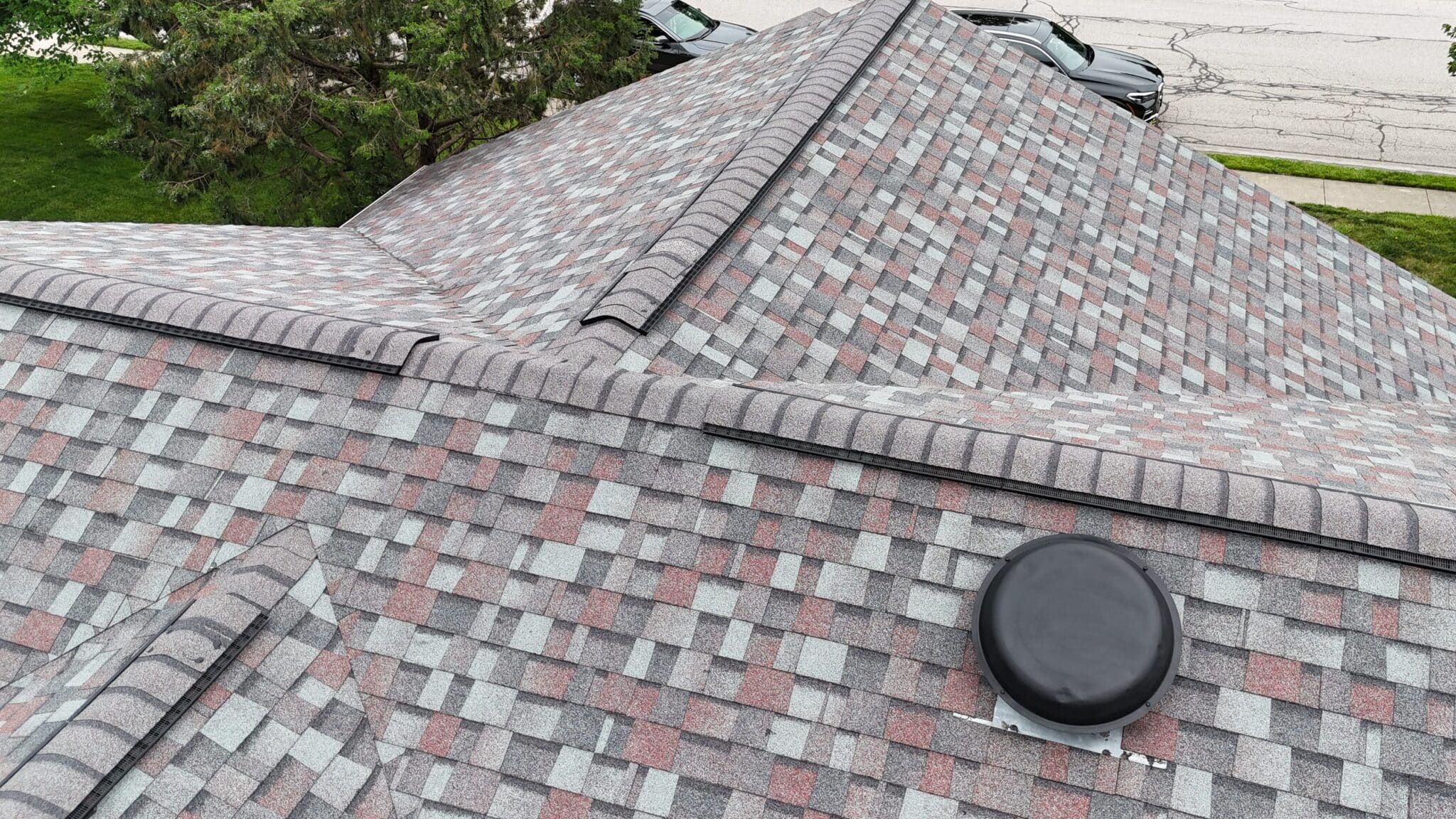
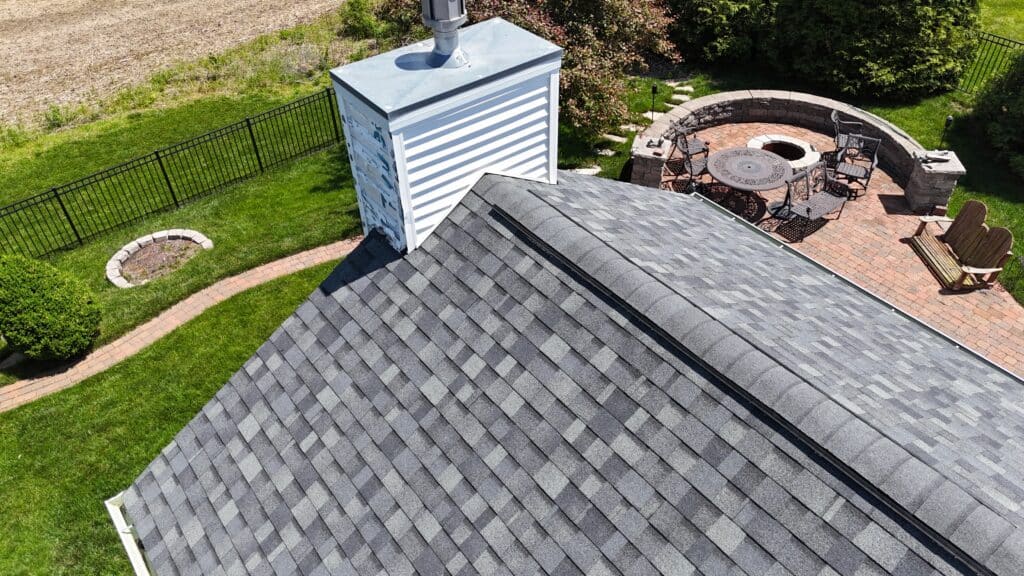
A ridge vent is a ventilation opening installed along the ridge, or highest point, of a roof. It provides a pathway for warm and moist air in the attic to move outside.
Ridge vents are typically installed beneath ridge cap shingles, which helps them blend into the roof rather than standing out as a separate fixture.
Many ridge vents use internal baffles or other features designed to allow air to escape while helping limit the entry of rain and wind-driven moisture when properly installed.
There are several types of ridge vents, including:
- Shingle-over ridge vents: Designed to be covered with matching ridge cap shingles for a finished appearance.
- Rigid or solid ridge vents: Manufactured in sections that are installed along the roof ridge.
- Roll-style or flexible ridge vents: Flexible materials that can be adapted to different roof configurations.
The specific type of ridge vent is less important than whether it is properly sized, installed, and connected to an effective intake system.
Ridge Vent vs. Intake Vent
These two parts of the ventilation system have different jobs.
Ridge vent: Allows air to leave the attic at or near the highest point of the roof.
Intake vents: Allow outside air to enter the attic, usually through the soffits or lower portions of the roof.
Think of the system as a continuous path:
Outside air enters through intake vents → moves through the attic → warm, moist air exits through the ridge vent.
Without an adequate intake path, the exhaust side of the system may not perform as intended.
Where Is a Ridge Vent Installed?
A ridge vent is installed along the peak of a roof where two roof slopes meet.
If a home has multiple separate roof ridges, the ventilation layout may be more complicated than simply placing one vent across the highest visible peak. The roof’s design, attic configuration, insulation, and existing ventilation all need to be considered.
During a typical roof replacement, installation may involve:
- Removing the existing ridge cap shingles to expose the roof deck.
- Creating the appropriate ventilation opening along the ridge where the vent will be installed.
- Installing and securing the ridge vent according to the manufacturer’s requirements.
- Installing ridge cap shingles over the vent to create the finished roof appearance.
The exact installation method can vary depending on the roofing system and the type of ridge vent being used.
This is one reason ventilation should be evaluated as part of the entire roofing system rather than treated as an isolated component.
How Does a Ridge Vent Work?
The basic idea behind roof ventilation is fairly simple: air enters at a lower point and exits at a higher point.
Warm air naturally tends to rise. When a properly designed ventilation system provides an intake path and an exhaust path, air can move through the attic.
Here’s the basic process.
1. Heat and moisture enter the attic
Attics can become warm during sunny summer weather. At the same time, moisture can enter the attic from sources such as indoor humidity, air leakage, or improperly vented exhaust fans.
During winter, differences between indoor and outdoor temperatures can also contribute to attic moisture problems.
2. Air moves toward the higher portion of the attic
As warmer air rises, it moves toward the highest part of the attic.
A ridge vent provides an opening where that air can exit the attic.
3. Outside air enters through intake ventilation
As air leaves through the ridge vent, outside air can enter through intake vents, commonly located in the soffits.
This creates the airflow path that allows the ventilation system to operate.
4. Heat and moisture can be carried out of the attic
When the system is properly designed and functioning, ongoing air movement can help reduce excessive heat and moisture buildup.
That matters because excessive attic heat and moisture can contribute to problems involving roofing materials, insulation, and wood components.
Why Does Roof Ventilation Matter?
Proper attic ventilation is only one part of a healthy roofing system, but it can play an important role in managing attic conditions.
It can help manage attic heat
Attics can become significantly warmer than the outdoor air during sunny weather. Good ventilation can help move some of that accumulated heat out of the attic.
That doesn’t mean a ridge vent will eliminate attic heat or replace proper insulation and air sealing. Those components all work together.
It can help manage moisture
Moisture is one of the bigger concerns in an attic.
If warm, humid air remains trapped against cooler surfaces, condensation can occur. Over time, repeated moisture exposure can contribute to deterioration of wood components and other attic materials.
Ventilation can help move moisture-laden air out of the attic, while proper air sealing and insulation help address where that moisture is coming from.
It can help reduce conditions associated with ice dams
Illinois and Missouri homeowners are familiar with winter weather and freeze-thaw cycles.
Ice dams can form when portions of a roof become warm enough to melt snow while colder areas near the eaves allow that water to refreeze.
Ventilation is one part of managing attic and roof temperatures, but it is not a guarantee that ice dams will never occur. Roof design, insulation, air sealing, weather conditions, and snow accumulation can all play a role.
Why Intake Ventilation Matters
Installing a ridge vent does not automatically mean an attic has proper ventilation.
The ridge vent is the exhaust side of the system. It needs an adequate source of outside air entering through the lower portion of the roof.
In many homes, that intake comes from soffit vents.
Common intake ventilation types include:
- Soffit vents
- Continuous soffit vents
- Gable vents, depending on the roof and attic design
- Drip-edge or overhang intake systems on some roofing systems
The amount and type of ventilation needed depends on the specific attic and roof design.
That is why a simple rule such as “every roof needs a ridge vent” isn’t always the right way to look at the question.
The goal is a properly balanced ventilation system—not simply adding another vent.
What Can Block Intake Vents?
Even when a home has soffit vents, the ventilation system may not be working as intended.
Common problems include:
- Insulation blocking the intake openings
- Paint covering vent openings
- Pest screens restricting airflow
- Improperly installed insulation
- Older or damaged soffit materials
- Roof or attic designs that provide limited intake ventilation
During a roof inspection, it’s worth looking beyond the shingles and checking how the attic ventilation system is actually configured.
Common Ridge Vent Misconceptions
“A ridge vent means my roof can’t leak.”
A properly installed ridge vent is designed to help ventilate the attic, not to make the roof completely leak-proof.
Roof leaks can result from many different conditions, including damaged shingles, flashing problems, penetrations, improper installation, storm damage, or other roof components.
A ridge vent should be installed according to the roofing and vent manufacturer’s requirements so that it functions as part of the roof system without creating unnecessary pathways for water intrusion.
“If I have a ridge vent, I automatically have good ventilation.”
Not necessarily.
A ridge vent is only the exhaust portion of the system. Adequate intake ventilation is also important.
A roof should be evaluated as a complete ventilation system rather than based on whether one particular vent is present.
“More ventilation is always better.”
Not necessarily.
Ventilation needs to be appropriate for the attic’s size, layout, insulation, air sealing, and roof design.
Adding vents without considering the rest of the system may not solve the underlying problem.
“Older roofs don’t need to be evaluated for ventilation.”
Older homes can have a variety of ventilation systems, including box vents, turbines, gable vents, and other configurations.
That doesn’t automatically mean those systems need to be replaced with a ridge vent.
If you’re replacing an older roof, it makes sense to have the existing ventilation evaluated and determine whether changes would improve the overall roof system.
“A ridge vent replaces proper insulation and air sealing.”
It does not.
Ventilation, insulation, and air sealing have different jobs.
A well-performing attic generally needs the different components to work together. If warm, conditioned air is escaping into the attic because of air leaks, simply adding a ridge vent may not address the source of the problem.
What Should a Good Ridge Vent Installation Include?
If a ridge vent is appropriate for your roof, there are several details worth paying attention to.
Proper placement
The vent should be installed in the appropriate location along the roof ridge and according to the manufacturer’s requirements.
Adequate intake ventilation
The exhaust side of the system should have an appropriate source of intake air.
Proper installation
The ridge vent, fasteners, and ridge cap shingles should be installed correctly and integrated with the rest of the roofing system.
Clear ventilation pathways
Intake openings should not be unnecessarily blocked by insulation, paint, debris, or other materials.
Consideration of the entire attic
A good evaluation doesn’t stop at the ridge.
The attic’s insulation, air sealing, existing vents, roof design, and signs of moisture should all be considered when determining whether changes are appropriate.
Signs Your Attic Ventilation May Need Attention
Ventilation problems don’t always have an obvious symptom.
During an inspection, homeowners may want to ask about conditions such as:
- Excessive moisture or condensation in the attic
- Dark staining on wood components
- Damp or compressed insulation
- Signs of mold or mildew
- Persistent winter ice-dam problems
- Unusually high attic temperatures
- Blocked or missing soffit vents
- An attic ventilation system that does not appear to have both intake and exhaust paths
These signs don’t automatically mean the solution is a new ridge vent.
They are reasons to look more closely at the attic and roof system to determine what is actually happening.
Does Every Roof Need a Ridge Vent?
No.
A ridge vent can be an effective part of a roof ventilation system, but the right ventilation setup depends on the home.
Roof design, attic construction, existing vents, insulation, air sealing, and available intake openings all matter.
That’s why we don’t believe homeowners should be told they need a particular roofing component simply because it is commonly used.
The condition and design of the roof should guide the recommendation—not a predetermined sales goal.
That approach is especially important when an existing roof is being replaced. A roof replacement is an opportunity to evaluate the ventilation system, but it doesn’t mean every home needs the same solution.
How Edwards & Sons Approaches Roof Ventilation
At Edwards & Sons Roofing, we believe a roof inspection should be about more than looking at shingles.
When appropriate, we look at the roof’s overall condition and the factors that can affect its performance, including ventilation.
If we find a concern, we’ll explain what we’re seeing and why it matters. If the existing system is working properly, we’ll tell you that too.
Our goal is not to recommend the most work possible. It’s to help you understand the condition of your roof so you can make an informed decision about what, if anything, should be done next.
If a ridge vent or another ventilation improvement makes sense, we’ll explain the reasoning behind the recommendation. If the issue is something else—such as blocked intake ventilation, insulation, air leakage, or another roof component—we’ll explain that instead.
The Bottom Line
A ridge vent is an exhaust opening along the peak of a roof that helps warm and moist attic air escape.
But a ridge vent works as part of a complete ventilation system. Adequate intake ventilation, proper installation, insulation, and air sealing all play important roles in how an attic performs.
If you’re replacing your roof, it’s worth asking how the new roofing system will handle attic ventilation.
And if you’re noticing moisture, condensation, staining, or other concerns in your attic, don’t assume the answer is automatically a new ridge vent. A professional evaluation can help identify what’s actually causing the problem.
Edwards & Sons Roofing has been serving Illinois and Missouri homeowners for more than 50 years. We believe in explaining what we find, recommending work based on the condition of the home, and helping homeowners make decisions they can feel good about.
If you’d like to have your roof and ventilation system evaluated, you can schedule a roof inspection with our team. We’ll explain what we find and help you understand your options—without recommending work simply because we can.
Get A Free Roof Inspection