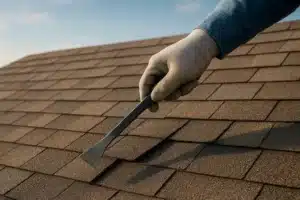
Wind damage is one of the more common types of storm damage a roof can experience. The tricky part is that it isn’t always easy to see from the ground.
A storm may leave behind missing shingles, lifted edges, creases, or damage around roof edges and flashing. Some problems are easy to spot, while others may require a closer inspection.
Knowing what to look for after a windstorm can help you identify potential problems early and decide when it makes sense to have your roof inspected.
In this guide, we’ll cover the most common signs of wind damage, where to look, and what to do if you think your roof may have been affected.
Missing Shingles
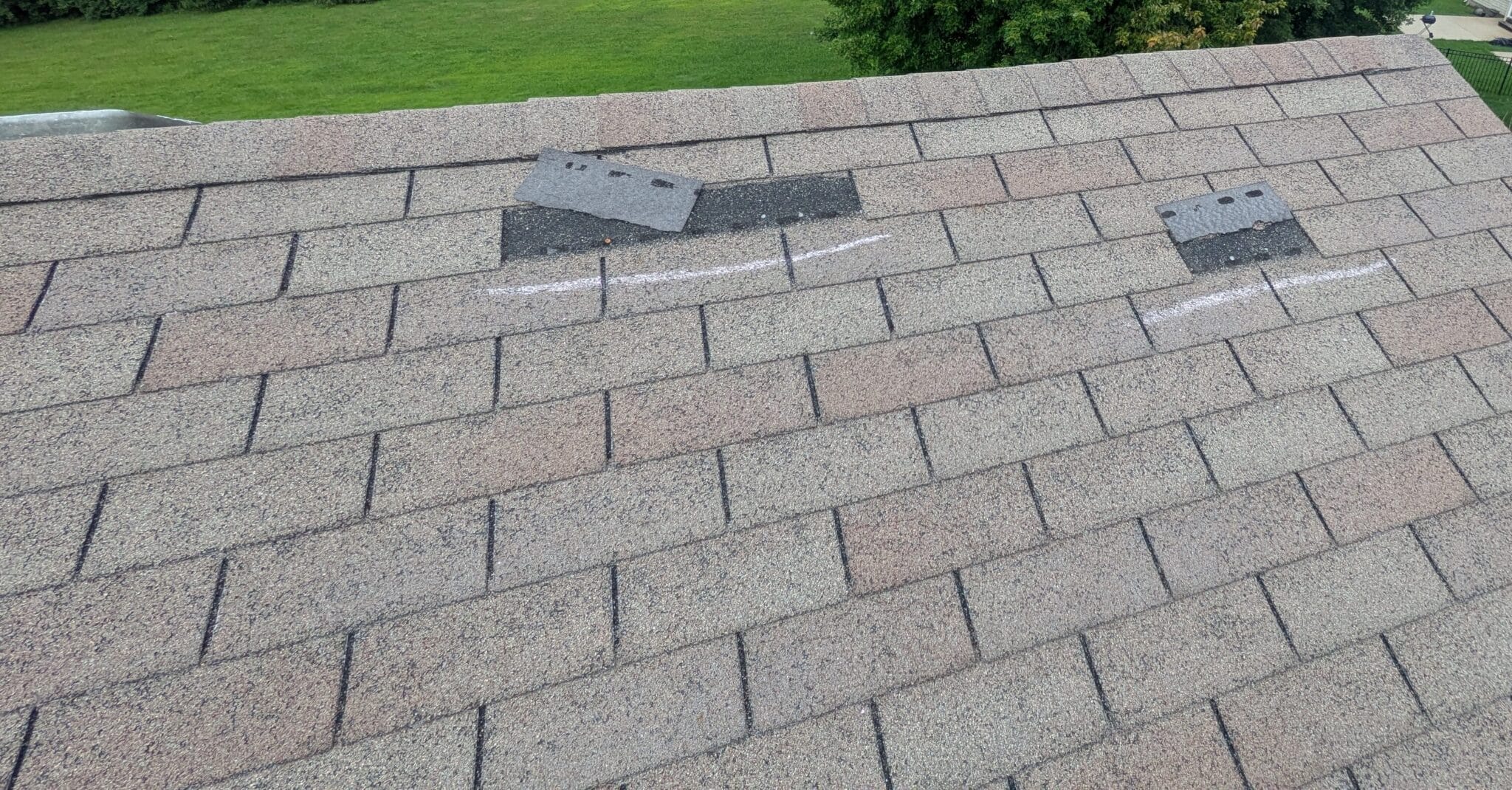
Missing shingles are one of the easiest signs of wind damage to recognize.
Strong winds can loosen or remove shingles, leaving parts of the roof exposed to the weather. Missing shingles may be most noticeable along roof edges, ridges, or other areas that experience higher wind exposure.
What to look for
From the ground, look for:
- Bare or noticeably different areas on the roof
- Shingles that are missing from an otherwise consistent pattern
- Roofing material or debris in the yard
- Areas where the underlayment or roof deck may be visible
If you notice missing shingles after a storm, it’s a good idea to have the area inspected. Even a small damaged area can allow water to reach roofing materials underneath.
Lifted or Loose Shingles
Wind damage doesn’t always mean a shingle is completely gone.
A shingle may remain in place but have lifted, loosened, or lost part of its seal. These problems can be difficult to see from the ground, especially if the shingle settles back down after the storm.
What to look for
Look for shingles that:
- Don’t appear to be lying flat
- Have raised edges or corners
- Look different from the surrounding shingles
- Appear loose or displaced
Areas near roof edges, ridges, and penetrations can be especially important to check.
Because loose shingles can be difficult to evaluate safely from the ground, a professional inspection may be helpful if you suspect wind damage.
Creased or Buckled Shingles
Creasing is another type of roof damage that isn’t always obvious.
A shingle can develop a visible crease, wrinkle, or fold while remaining attached to the roof. Depending on the type and location of the damage, a closer inspection may be needed to determine whether the shingle has been compromised.
What to look for
Watch for:
- Wrinkles across a shingle
- Visible folds or creases
- Raised or uneven areas
- Shingles that don’t lie flat with the surrounding roof
If you notice an unusual pattern after a storm, take a photo from a safe location and have the roof evaluated rather than trying to walk across it yourself.
Exposed Underlayment or Roof Decking
Your shingles are only one part of your roof system. Beneath them are additional layers that help protect the home from weather.
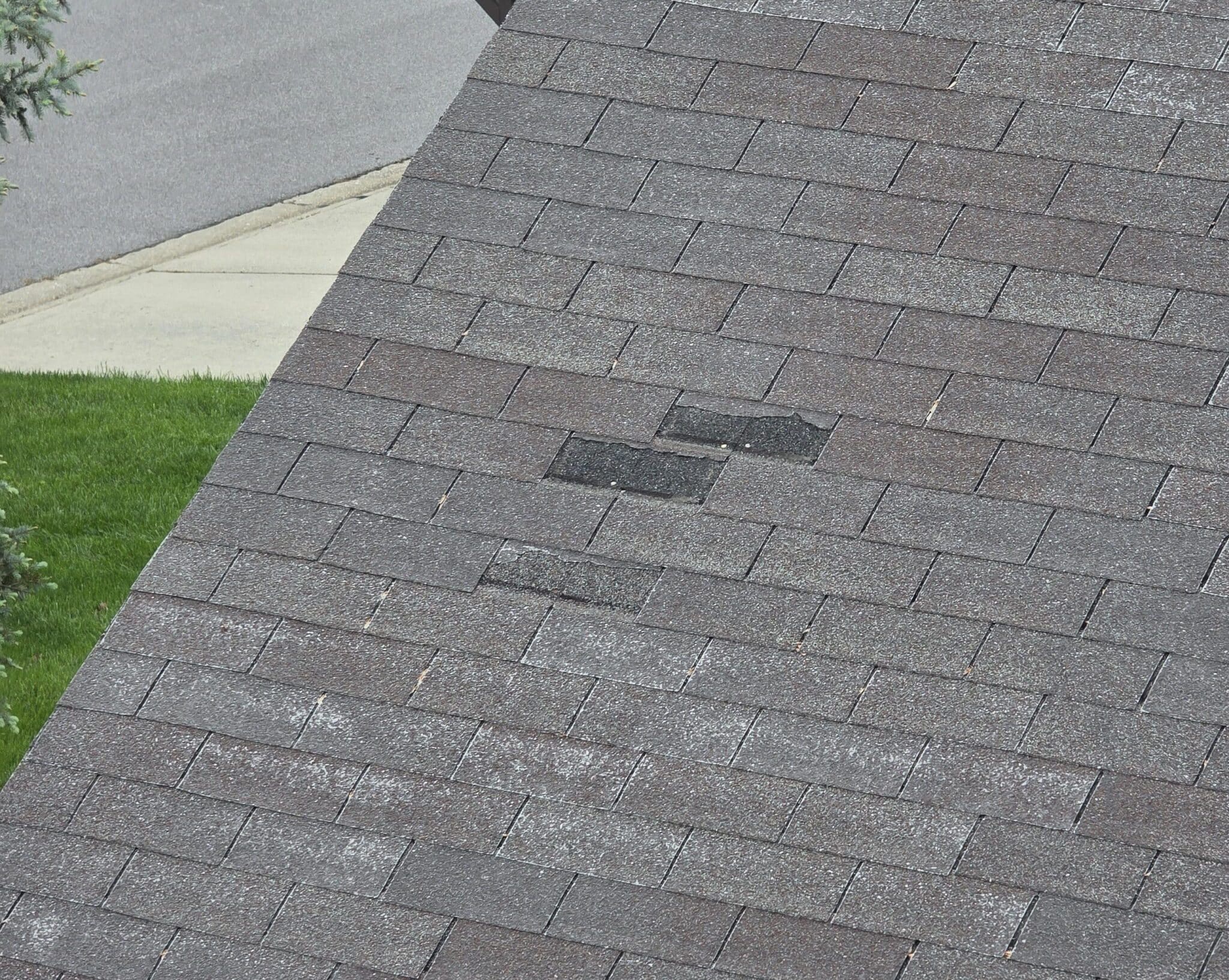
If you can see underlayment or wood decking where shingles should be covering the roof, the roofing system has been compromised.
What to look for
From the ground, look for:
- Bare areas where shingles appear to be missing
- Dark underlayment showing through
- Visible wood decking
- Gaps around roofing materials
Exposed roofing materials should be evaluated promptly, especially if rain is expected.
A professional can determine the extent of the damage and whether temporary protection or permanent repairs are needed.
Check Roof Edges, Valleys, and Flashing
Wind doesn’t affect every part of a roof in exactly the same way. Roof edges, ridges, valleys, and areas around flashing are important places to look after a storm.
Flashing is used around areas such as chimneys, walls, vents, and other roof penetrations. Damage or movement in these areas can contribute to leaks.
What to look for
Pay attention to:
- Lifted or missing shingles near roof edges
- Damaged shingles around valleys
- Loose or displaced flashing
- Gaps around vents or other roof penetrations
- Roofing materials that look different from the surrounding area
These areas can be harder to evaluate from the ground, so don’t put yourself at risk trying to get a closer look.
How to Check Your Roof After a Windstorm
You don’t need to climb onto your roof to start looking for potential storm damage.
Start from the ground
Use a safe location to look at the roof’s edges, ridges, and visible slopes. Binoculars can help you see details without climbing.
Look for:
- Missing shingles
- Lifted or uneven shingles
- Creases or buckling
- Exposed roofing materials
- Damaged flashing
- Roofing debris in the yard or gutters
You can also compare areas of the roof that are visible from the ground. An area that looks noticeably different from the surrounding shingles may be worth having inspected.
Take photos
If you see something unusual, take photos from a safe location.
Photos can help document what you noticed and provide a useful reference when discussing the roof with a roofing professional.
Don’t walk on a damaged roof
A roof can be slippery, unstable, or more damaged than it appears from the ground. Walking on it can also cause additional damage to roofing materials.
If you suspect storm damage, it’s safer to have a qualified professional inspect the roof.
What About Water Damage?
Not every damaged roof will leak immediately.
Water may enter through a damaged area without creating an obvious ceiling stain right away. That’s one reason it’s helpful to address suspected storm damage before a small roofing problem becomes a larger one.
After a storm, watch for:
- Water stains on ceilings or walls
- Damp areas in the attic
- Dripping water
- Wet insulation
- New discoloration around roof penetrations
If you notice water entering your home, address the source promptly and have the roof evaluated.
When Should You Call a Roofing Professional?
Consider scheduling a professional roof inspection if you notice:
- Missing shingles
- Lifted or displaced shingles
- Creasing or buckling
- Exposed underlayment or decking
- Damaged flashing
- Roofing debris around your property
- Signs of water intrusion inside the home
A professional inspection can help determine whether the roof has storm-related damage and what repairs, if any, may be appropriate.
The condition of the roof should guide the recommendation—not a predetermined sales goal. Sometimes a damaged area can be repaired. In other situations, the condition and age of the roof may make replacement a more practical option.
What If You Have a Homeowners Insurance Claim?
If you believe your roof was damaged by a covered storm event, you may want to contact your insurance company and review your policy.
Your insurance company determines coverage under the terms of your policy. A roofing contractor can provide information about the condition of the roof, document visible damage, and explain what repairs may be needed.
At Edwards & Sons Roofing, our role is to help homeowners understand what we find during an inspection and provide clear documentation of the roof’s condition. We don’t determine coverage or make insurance decisions for you.
Keeping the homeowner in control of the process helps ensure that decisions are based on the actual condition of the home.
The Bottom Line
Wind damage isn’t always dramatic. A missing shingle may be easy to spot, while a lifted edge or crease can be much harder to notice.
After a significant windstorm, take a few minutes to look over your roof from the ground. Check for missing or displaced shingles, exposed roofing materials, damaged flashing, and other changes that weren’t there before the storm.
If something doesn’t look right, a professional inspection can help you understand what happened and whether repairs are needed.
At Edwards & Sons Roofing, we believe homeowners deserve a clear explanation of their roof’s condition and their available options. We won’t recommend replacing a roof when a repair is the appropriate solution.
Get A Free Roof Inspection