When you look up at the edge of your roof, you’re seeing two critical components working together to protect your home: the soffit and the fascia. Most homeowners don’t think about these parts until something goes wrong—a sagging soffit, peeling paint, or worse, water damage creeping into the walls. But understanding what soffits and fascia do, and how they connect to your roof’s overall health, can save you thousands in repairs down the road.
In this guide, we’ll break down exactly what these components are, why they matter for your roof’s longevity, and how they fit into your home’s ventilation and weatherproofing system.
What Is Fascia?
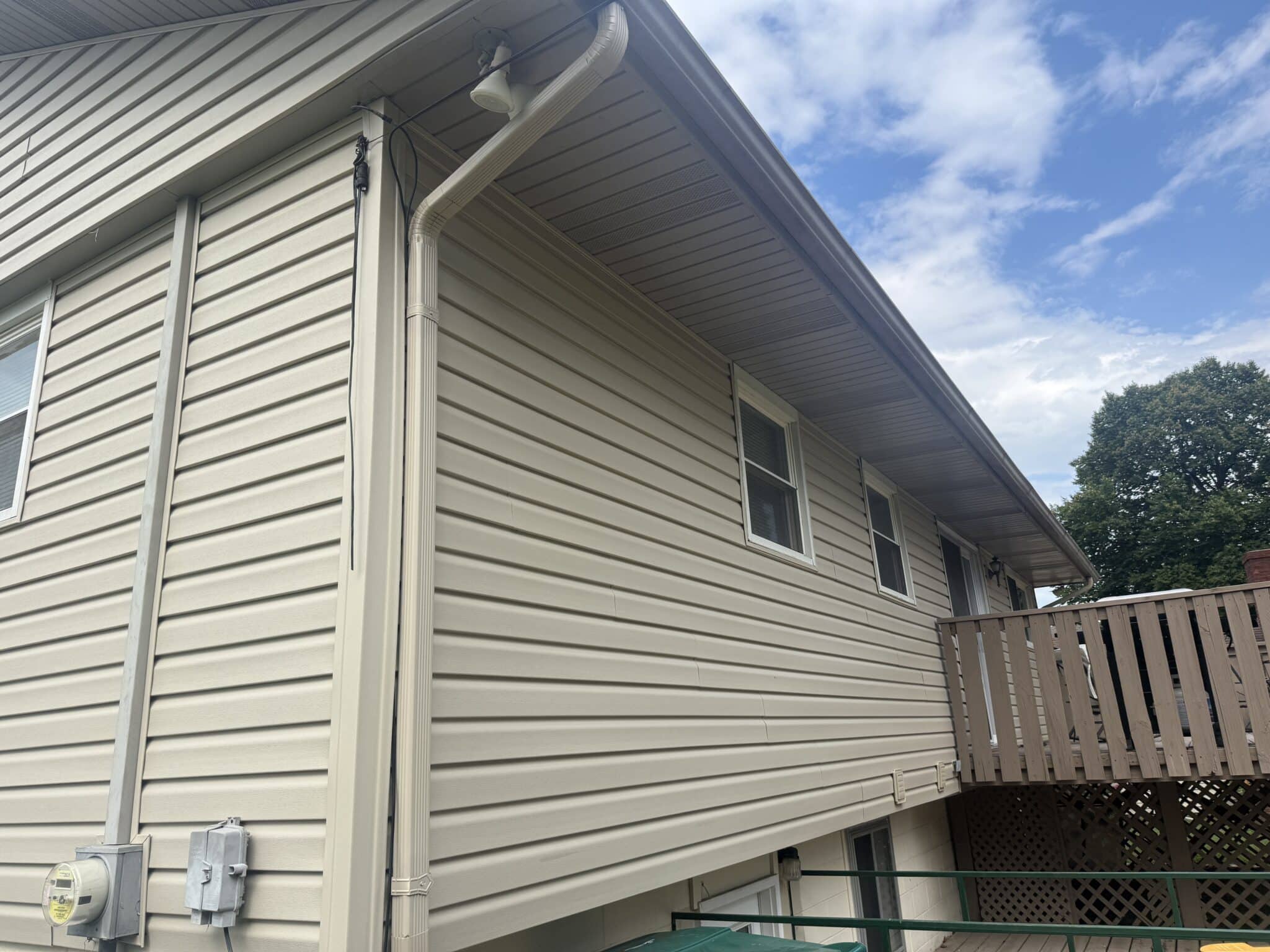
Fascia is the horizontal board that runs along the edge of your roof, just below the shingles. It’s the visible trim that closes off the open ends of your roof rafters and provides a finished look to the roofline. Think of it as the “face” of your roof edge—it’s literally what you see when you look up at your gutters.
Fascia boards typically measure 6 to 12 inches wide and serve three core purposes:
-
- Structural support — They hold up your gutters and direct water runoff away from your home
-
- Weatherproofing — They seal the gap between your roof and your exterior walls, preventing wind and rain from entering the rafter space
-
- Aesthetic finish — They give your roofline a clean, complete appearance and protect the rafter tails from the elements
Most fascia boards are made from wood, fiber cement, aluminum, or vinyl. In the St. Louis and Metro East area, many homes feature wooden fascia that can rot if not properly maintained or if your gutters overflow and water pools against it.

What Is a Soffit?
Soffit is the underside surface that closes off the space between your fascia and the outer wall of your home. If you stand back and look at the overhang beneath your roof edge, you’re looking at the soffit. It’s the “ceiling” of your roof’s overhang.
Soffits perform two essential functions:
-
- Ventilation — Perforated or vented soffits allow fresh air to flow into your attic, which is critical for controlling moisture, regulating temperature, and extending roof and insulation lifespan
-
- Exterior protection — They shield the gap between your roofline and walls from pests, weather, and water infiltration
Like fascia, soffits are available in wood, aluminum, vinyl, or fiber cement. Vented soffits have small holes or slots that allow air to enter; solid soffits do not. Most building codes require vented soffits to maintain proper attic airflow.
How Soffits, Fascia, and Gutters Work Together
Your gutter system cannot function properly without healthy fascia and soffit. Here’s the relationship:
-
- Fascia holds the gutter in place and receives water runoff from the shingles
-
- The gutter channels that water toward downspouts
-
- The soffit protects the space behind the gutter from wind-driven rain and pest entry
When any one of these components fails, the others are at risk. For example, if your soffit develops a hole from pest damage or rot, water can enter the rafter space. If your fascia rots and sags, your gutter pulls away from the roofline, and water spills behind it—pooling against your exterior walls and seeping into the foundation.
This damage is why many homeowners discover soffit and fascia problems only after noticing water stains on interior ceilings or finding granules from shingles backing up in the gutter.
The Role of Soffits in Attic Ventilation
Proper attic ventilation is non-negotiable for roof longevity. Heat and moisture trapped in your attic accelerate shingle deterioration, warp decking, promote mold growth, and shorten the life of your insulation.
A healthy ventilation system follows this pattern:
-
- Fresh air enters through soffit vents (intake)
-
- Air circulates through the attic space
-
- Warm, moist air exits through ridge vents or roof vents (exhaust)
If your soffits are blocked by debris, clogged insulation, or solid panels installed over vented ones, airflow stops. Your attic becomes a moisture trap. Over time, this leads to:
-
- Shingles curling and cracking prematurely
-
- Roof decking warping and rotting
-
- Increased energy bills (your AC works harder to cool a hot attic)
-
- Mold and mildew growth in rafter spaces
-
- Shortened lifespan of your roofing materials
When Edwards & Sons Roofing inspects a roof, we pay close attention to soffit venting. Many times, we’ve discovered that previous contractors installed solid soffits or inadvertently blocked vents during gutter repairs—creating a “silent killer” that was slowly destroying the roof from the inside out.
Signs Your Soffits and Fascia Need Attention
Watch for these red flags:
Visual damage:
-
- Peeling or flaking paint on fascia boards
-
- Visible rot, soft spots, or discoloration on wood fascia
-
- Sagging soffit panels
-
- Holes, cracks, or separation in soffit material
-
- Missing fascia trim
Water-related signs:
-
- Water stains on interior ceilings or upper walls
-
- Gutters pulling away from the roofline
-
- Moisture or mold growth in the attic
-
- Granules or debris accumulating in gutters
Pest or weather damage:
-
- Visible holes in soffit panels (often from birds or squirrels)
-
- Daylight visible from inside the attic
-
- Nests or droppings near soffit vents
-
- Fascia boards splitting or warping after storms
Ventilation concerns:
-
- Hot, humid attic in summer
-
- Ice dams forming along the roofline in winter (a sign of inadequate ventilation and heat loss)
-
- Musty odors coming from the attic
If you notice any of these signs, a free inspection can identify whether repair or replacement is needed. Many homeowners assume soffit and fascia damage requires replacing the entire roof, but in many cases, targeted repairs can resolve the issue.
Materials: Which Soffit and Fascia Option Is Best?
Your material choice affects durability, maintenance, and long-term cost.
Wood Fascia and Soffit
Pros: Classic appearance, easy to paint, relatively affordable upfront
Cons: Requires regular painting and caulking; vulnerable to rot, especially in humid climates; prone to insect damage; requires ongoing maintenance
Best for: Homeowners committed to regular maintenance and older homes with historic character
Aluminum Fascia and Soffit
Pros: Durable, low-maintenance, resists rot and pests, won’t dent easily, available in many colors, excellent ventilation options
Cons: Can dent from impact, noisier in heavy rain, more expensive than wood, requires professional installation
Best for: Most homeowners in the St. Louis area; aluminum withstands humid springs and summer storms well
Vinyl Fascia and Soffit
Pros: Low-maintenance, won’t rot, inexpensive, available in colors, lightweight
Cons: Can warp or crack in extreme temperature swings, less durable than aluminum in high-impact situations, harder to repair
Best for: Budget-conscious homeowners in stable climates
Fiber Cement
Pros: Extremely durable, won’t rot, resists impact, long lifespan, paintable
Cons: Heavy, expensive, requires professional installation, brittle if not handled carefully
Best for: High-end homes or areas with extreme weather
Edwards & Sons recommends matching soffit and fascia materials to your existing roofing system and your home’s architectural style. A free inspection can help you understand which option makes sense for your home’s age, exposure to weather, and maintenance preferences.
How Storm Damage Affects Soffits and Fascia
Spring and early summer hail storms across the region frequently damage soffit and fascia without homeowners realizing it. High winds can rip fascia boards away from the roof edge. Hail can puncture or dent aluminum soffit panels. Water-driven by wind can force its way behind loose or damaged soffit, creating the conditions for hidden moisture damage in your rafter space.
The critical step: After any storm with high winds, hail, or heavy rain, a professional roof inspection should include a close look at soffit and fascia integrity. Many insurance claims cover soffit and fascia damage, but only if the damage is documented and included in the claim. Adjusters sometimes overlook these components unless they’re specifically pointed out.
If you’ve experienced a recent storm, look for:
-
- Soffit panels that are cracked, dented, or pulled away from the fascia
-
- Fascia boards that are split, cracked, or hanging loose
-
- Gaps between the soffit and fascia where wind or water could enter
-
- Visible water staining on the fascia or soffit underside
Edwards & Sons works along with you during the insurance claim process for storm-damaged roofs, including soffit and fascia damage. We attend adjuster visits, document damage with drone photography, and provide detail documentation.
Maintenance Tips to Extend Soffit and Fascia Life
Regular maintenance prevents small problems from becoming major expenses:
-
- Keep gutters clean — Clogged gutters cause water to back up and pool against your fascia. Clean gutters in spring and fall, or consider installing gutter guards to reduce debris accumulation.
-
- Inspect after storms — High winds and hail can loosen soffit panels or crack fascia boards. A quick visual check after weather events catches damage early.
-
- Paint and caulk wood fascia every 3–5 years — This prevents water from penetrating the wood and starting rot. Use high-quality exterior paint and caulk.
-
- Check for pest entry — Squirrels, birds, and insects can chew holes in soffit panels. Seal any holes or gaps promptly, and consider installing soffit covers in vulnerable areas.
-
- Trim tree branches — Branches hanging over your roof can trap debris in gutters and rub against soffit or fascia during storms. Keep trees trimmed back by at least 6 feet.
-
- Ensure soffit vents aren’t blocked — Attic insulation sometimes settles over soffit vents, cutting off airflow. A contractor can check soffit venting during a routine roof inspection and clear blockages if needed.
When to Repair vs. Replace Soffit and Fascia
Repair makes sense if:
-
- Damage is localized to one or two sections
-
- The rest of the soffit and fascia is in good condition
-
- You’re addressing a specific problem (e.g., one rotted board, a pest hole)
Replacement is necessary if:
-
- Rot or damage is widespread across multiple sections
-
- Material is deteriorating due to age (wood fascia older than 20 years is often a candidate)
-
- You’re re-roofing and want to update soffit and fascia at the same time
-
- Existing material is inadequate for your climate (solid soffit blocking necessary ventilation)
Many homeowners choose to replace soffit and fascia during a roof replacement or major repair. This ensures that your new roofing system is supported by materials in good condition, maximizes ventilation, and eliminates the risk of hidden damage that could have been missed.
Edwards & Sons includes a soffit and fascia assessment in every free roof inspection. If replacement is needed, we provide a transparent quote and can often complete soffit and fascia work the same day as a roof tear-off and install.
Protecting Your Investment: The Full Picture
Your roof is more than just shingles. The soffits and fascia form the foundation of a healthy roofing system. They protect your attic from moisture and pests, support your gutters, and seal the critical boundary between your roof and your home’s exterior.
Neglecting these components can cost you thousands in water damage, mold remediation, and premature roof replacement. Maintaining them—or addressing damage promptly after a storm—protects your investment and extends the life of your entire roofing system.
If you’re uncertain about the condition of your soffit and fascia, a professional inspection is the best first step. Edwards & Sons has inspected over 5,000 roofs across the St. Louis area and can tell you exactly what you’re dealing with. We’ll show you drone photos of any damage, explain what needs attention, and give you an honest assessment of whether repair or replacement makes sense for your home.
Ready to get your roof edge system checked? Contact Edwards & Sons Roofing for a free, no-obligation inspection. We’ll assess your soffit, fascia, gutters, and roof in one visit and deliver a transparent estimate. Call today or request an inspection online.