Architectural shingles are a common choice for residential roofing. They offer a thicker, more dimensional appearance than traditional 3-tab shingles and are available in a wide range of weather-performance ratings.
For homeowners in Illinois and Missouri, those options can be important. Roofs throughout the Metro East and greater St. Louis area can face strong winds, hail, heavy rain, summer heat, and winter weather.
But are architectural shingles right for your home?
That depends on the roof, the home, and what you want from your roofing system. Understanding how architectural shingles are made, how they compare with other asphalt shingles, and what matters during installation can help you make a more informed decision.
What Are Architectural Shingles?
Architectural shingles, also called dimensional shingles or laminated shingles, are asphalt shingles made with multiple layers.
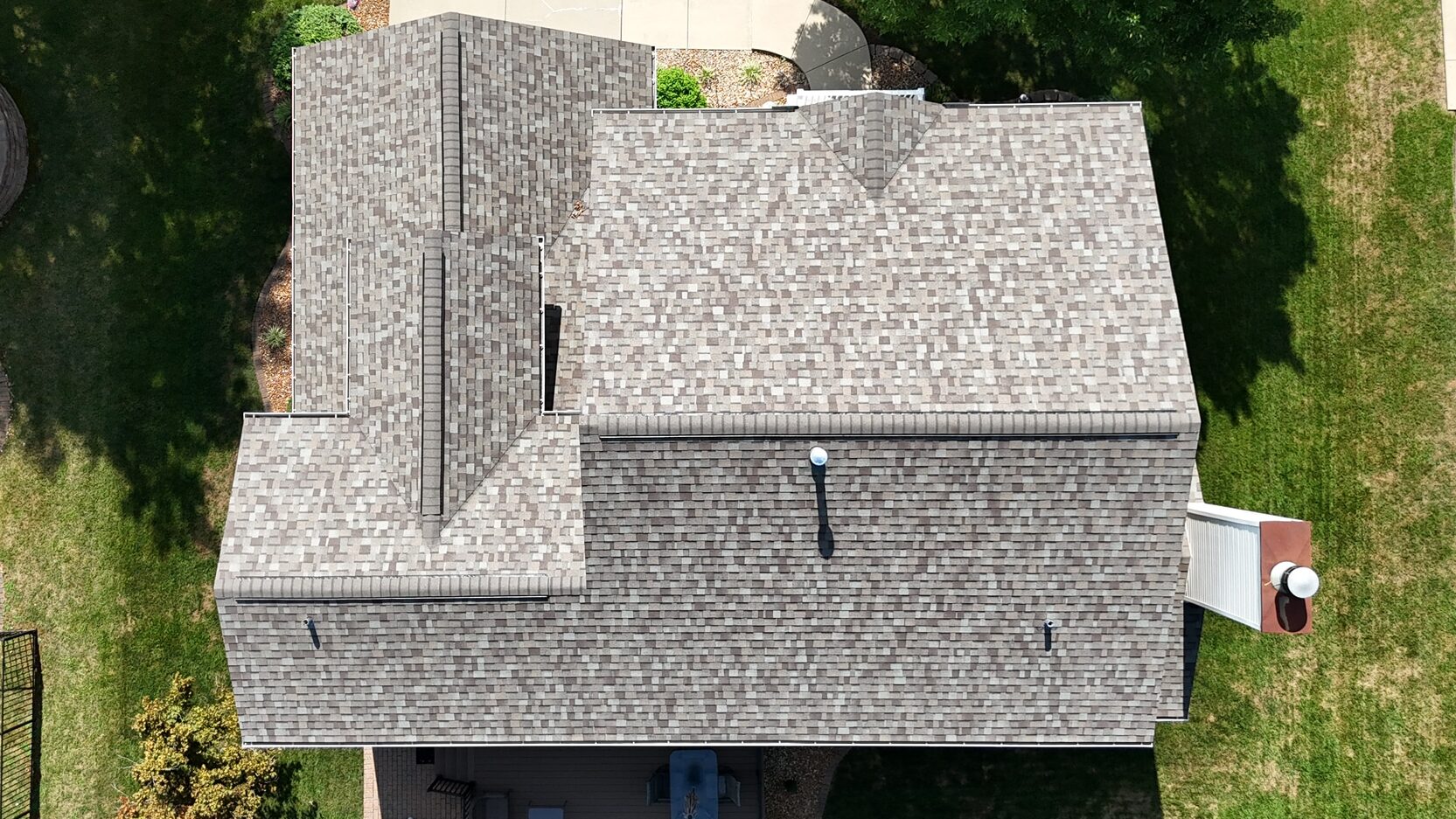
Unlike traditional 3-tab shingles, which have a flatter and more uniform appearance, architectural shingles are designed with varying shapes, patterns, and thicknesses. This gives the roof more depth and can create a look that resembles wood shakes or other premium roofing materials.
Most architectural shingles are made from the same basic materials found in other asphalt shingles:
- A fiberglass mat for strength and stability
- Asphalt for water resistance
- Mineral granules that protect the surface and add color
- A self-sealing adhesive strip that helps secure the shingles
The main difference is how these materials are combined and formed.
The additional material creates a thicker shingle with a more dimensional appearance and can contribute to durability, depending on the product.
How Are Architectural Shingles Made?
Understanding the layers of an architectural shingle helps explain why they look and perform differently from traditional 3-tab shingles.
1. Fiberglass Mat
The fiberglass mat forms the foundation of the shingle. It provides strength and helps the shingle maintain its shape during installation and normal weather exposure.
2. Asphalt
Asphalt is applied to the fiberglass mat to help make the shingle water-resistant. Modern shingles may also use different additives to improve flexibility and performance.
3. Mineral Granules
Small mineral granules cover the exposed surface of the shingle.
These granules help protect the asphalt from sunlight and weather exposure. They also provide much of the color and texture homeowners see from the ground.
4. Laminated Layers
Architectural shingles use additional layers of shingle material to create their dimensional profile.
These layers are combined during manufacturing and shaped to create different patterns and shadow lines.
5. Self-Sealing Strip
Most asphalt shingles include an adhesive strip designed to activate with heat from the sun.
Once properly installed and sealed, this helps hold the shingles together and provides additional resistance to wind.
The result is a shingle that looks different from a traditional 3-tab product while still using the familiar asphalt roofing system.
Architectural Shingles vs. 3-Tab Shingles
Both architectural and 3-tab shingles can be suitable roofing materials when properly selected and installed. The biggest differences are their construction, appearance, and available performance ratings.
Appearance
3-tab shingles:
- Have a flatter, more uniform appearance
- Use a repeating three-tab pattern
- Offer a simpler look
Architectural shingles:
- Have a thicker, dimensional appearance
- Use varied shapes and shadow lines
- Offer more visual depth and color variation
For many homeowners, appearance is one of the reasons to consider architectural shingles.
Construction
3-tab shingles are generally made with a flatter, more uniform profile.
Architectural shingles use laminated layers to create a thicker profile.
That additional material can contribute to durability, depending on the specific product and the conditions it experiences.
Wind Resistance
Wind ratings depend on the specific shingle and installation method.
Architectural shingles are available with a range of wind ratings, including products designed for high-wind performance.
However, the rating on the shingle package does not tell the entire story.
Proper installation matters just as much.
Correct nail placement, adequate fastening, proper starter shingles, and good roof-edge detailing all play a role in how a roof performs during high winds.
Hail Resistance
Architectural shingles are also available with different impact-resistance ratings.
Some products are tested to higher impact-resistance standards than others.
However, not every architectural shingle has the same hail performance. Homeowners should look at the specifications for the actual product being considered rather than assuming that every dimensional shingle has the same rating.
Even a shingle with a higher impact-resistance rating can experience damage from severe hail.
Why Architectural Shingles Are Common in Illinois and Missouri
Roofing materials need to handle the conditions where they are installed.
Here in Illinois and Missouri, homeowners can experience a wide range of weather throughout the year.
That includes:
- Strong spring and summer storms
- Hail
- High winds
- Heavy rainfall
- Snow and ice
- Temperature swings
- Long periods of summer heat and sun exposure
Architectural shingles are widely used because they combine a dimensional appearance with a range of durability and weather-performance options.
But the right roofing material should always be based on the individual home.
Roof pitch, ventilation, existing roof condition, local exposure, installation details, and the homeowner’s goals all matter.

Are Architectural Shingles More Durable?
In general, architectural shingles are built with more material than traditional 3-tab shingles.
That additional material can contribute to durability and weather resistance, depending on the product.
Many architectural shingles also have longer published manufacturer ratings than traditional 3-tab shingles.
But it is important not to treat a shingle’s rated lifespan as a guarantee.
A roof’s actual service life depends on many factors, including:
- Quality of installation
- Weather exposure
- Roof ventilation
- Roof pitch
- Maintenance
- Storm activity
- Attic moisture
- Product quality
- How quickly damage is addressed
A well-installed roof made with quality materials can perform very differently from a roof that uses similar shingles but has poor installation or ventilation.
The shingle is only one part of the roofing system.
What Makes a Good Architectural Shingle?
If you’re comparing roofing options, don’t look at appearance alone.
Here are some of the details worth reviewing.
Wind Rating
Look at the manufacturer’s published wind rating for the specific shingle.
Higher-rated products may be worth considering for homes that experience greater wind exposure, but installation still plays a major role in performance.
Impact Rating
If hail is a concern in your area, look at the shingle’s impact-resistance rating.
Some architectural shingles are available with higher impact ratings. These ratings can help you compare products, but they do not mean a roof cannot be damaged by severe hail.
Product Warranty
Review the manufacturer’s warranty carefully.
Warranties can differ based on the product, installation, location, and installer requirements. A longer warranty does not necessarily mean a roof will last that exact amount of time.
Understanding what the warranty actually covers is more useful than simply looking for the word “lifetime.”
Appearance
Architectural shingles come in many colors and patterns.
Consider how the roofing will work with your home’s siding, brick, stone, trim, and other exterior features.
A roof should complement the home rather than compete with it.
Installation Requirements
Different roofing products can have different installation requirements.
Before choosing a shingle, make sure the contractor understands the manufacturer’s installation instructions and the requirements for your particular roof.
Installation Matters as Much as the Shingle
Even a high-quality architectural shingle cannot make up for poor installation.
A roofing system needs to be installed correctly from the roof deck up.
Important details include:
Proper Fastening
Roofing nails need to be placed in the correct location and driven properly.
Nails that are too high, too low, overdriven, or underdriven can affect how the shingles perform.
Starter Shingles
The first row of shingles plays an important role in protecting the roof’s edges.
Proper starter materials help create the correct sealing and installation pattern.
Flashing
Flashing is used around areas where the roof meets another surface or where something passes through the roof.
This can include:
- Chimneys
- Plumbing vents
- Skylights
- Wall intersections
- Roof valleys
Poorly installed or damaged flashing can contribute to leaks even when the shingles themselves are in good shape.
Roof Ventilation
A properly designed ventilation system helps manage heat and moisture in the attic.
Poor ventilation can contribute to moisture problems and premature deterioration of roofing materials.
That’s why a good roof inspection should look at more than just the shingles.
Cleanup
A professional roofing project should also include careful cleanup around the home.
Roofing debris, nails, and other materials should be removed from the roof, driveway, landscaping, and other work areas.
The small details matter.
Do Architectural Shingles Make Sense for Every Home?
Not necessarily.
Architectural shingles are a good option for many homeowners, but there is no single roofing product that is right for every property.
For example, the best choice may depend on:
- The existing roof system
- The roof’s age
- The condition of the roof deck
- The home’s design
- Local weather exposure
- Ventilation
- The homeowner’s plans for the property
- The specific products available
Sometimes the best recommendation is a new architectural shingle roof.
Sometimes the better recommendation is a repair.
And sometimes the roof simply needs maintenance and continued monitoring.
The condition of the roof should guide the recommendation—not a predetermined sales goal.
That’s an important distinction when you’re making a decision that affects your home for years to come.
What If Your Roof Has Storm Damage?
Storm damage can make roofing decisions more complicated.
After a major storm, it’s common for homeowners to wonder whether they need a repair, a full replacement, or simply a professional inspection.
The first step should be understanding what actually happened to the roof.
A professional inspection can look for signs of:
- Hail impact
- Wind damage
- Lifted or displaced shingles
- Creasing
- Missing shingles
- Damaged flashing
- Granule loss
- Damage around roof penetrations
If damage is found, documentation can help you better understand what you are dealing with.
If you have homeowners insurance, you can then contact your insurance company and follow its claim process.
A roofing contractor can provide information about the physical condition of the roof and document visible damage. The insurance company determines coverage under the terms of your policy.
That distinction matters.
At Edwards & Sons Roofing, our role is to inspect the roof, document what we find, explain the condition of the roofing system, and help homeowners understand the information they may need as they make their own decisions.
Architectural Shingles and Roof Replacement
If your roof has reached the end of its useful life, architectural shingles may be one of the options worth considering.
But replacing a roof should not start with choosing a shingle.
It should start with understanding the roof itself.
A proper inspection can help answer questions such as:
- How old is the roof?
- Is the roof showing normal aging or actual damage?
- Are there areas that can be repaired?
- Is the roof deck in good condition?
- Are the flashing details sound?
- Is the attic properly ventilated?
- What type of roofing material makes sense for the home?
Once those questions are answered, you can make a more informed decision about the roofing material.

Choosing the Right Roofing Contractor
The material matters, but so does the company installing it.
When comparing roofing contractors, look for someone who is willing to explain what they see rather than simply telling you that you need a new roof.
Ask questions such as:
- Will you inspect the entire roofing system?
- Will you explain what you find?
- Can the roof be repaired instead of replaced?
- What products are you recommending?
- Why are you recommending them?
- How will the roof be ventilated?
- What is included in the installation?
- How will the property be protected during the project?
- What does the manufacturer’s warranty cover?
A trustworthy contractor should be comfortable answering those questions.
The Edwards & Sons Approach
At Edwards & Sons Roofing, we believe homeowners deserve clear information before making a roofing decision.
We’re a third-generation, family-owned roofing company serving Illinois and Missouri since 1974. Over the years, we’ve worked on thousands of roofs throughout the region and have seen how different materials and installation practices perform in Midwest weather.
Our approach is simple:
Inspect first. Explain what we find. Recommend what the roof actually needs.
If a repair can reasonably address the problem, we don’t believe a homeowner should be pushed into a full replacement.
If replacement is needed, we’ll explain why and help you understand the options available for your home.
Final Thoughts on Architectural Shingles
Architectural shingles are a common residential roofing choice because they combine a dimensional appearance with a range of available performance options.
Compared with traditional 3-tab shingles, they generally offer:
- A thicker, more dimensional profile
- Greater visual depth
- A wide range of colors and patterns
- A range of wind and impact-resistance ratings
But the shingle itself is only one part of the equation.
The condition of the existing roof, quality of installation, ventilation, flashing, roof design, and local weather exposure all affect how a roofing system performs.
If you’re considering architectural shingles, start by understanding the condition of your current roof. From there, you can compare materials and make a decision based on what your home actually needs.
Need to Know What Your Roof Needs?
If you’re unsure whether your roof needs repair, maintenance, or replacement, an honest inspection is a good place to start.
Edwards & Sons Roofing provides professional roof inspections for homeowners throughout our Illinois and Missouri service areas. We’ll inspect the roof, document what we find, and explain the condition of the roofing system so you can make an informed decision.
You don’t have to decide on a new roof before you know whether you actually need one.
Contact Edwards & Sons Roofing to schedule a professional roof inspection and get a clear understanding of your roof’s condition.
Get A Free Roof Inspection