When you’re standing in your driveway looking up at roof damage or planning a replacement, one of the first terms you’ll hear is “3-tab shingles.” They’re the most common roofing material in residential neighborhoods across the Midwest, but many homeowners don’t fully understand what they are, how long they last, or whether they’re the right choice for their home.
This guide explains exactly what 3-tab shingles are, how they compare to architectural shingles, and the key considerations that should inform your decision when you’re ready to invest in a new roof.
What Are 3-Tab Shingles?
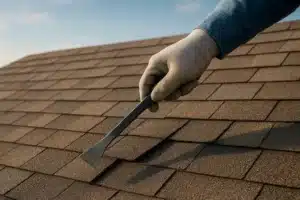
3-tab shingles are the most affordable and widely installed residential roofing material in the United States. They’re called “3-tab” because each single shingle is manufactured with two notches that create the visual appearance of three separate tabs or shingles when installed on your roof.
Here’s how they work: A single 3-tab shingle measures approximately 12 inches wide by 36 inches long and weighs about 215 pounds per square (100 square feet of roof coverage). The material itself is a fiberglass mat coated with asphalt and embedded with mineral granules — the small, colored particles that give the shingle texture and UV protection.
When installed, the notches align to create a uniform, straight-line appearance across your roof. Each shingle is nailed to the roof deck in a consistent pattern, with the upper portion of the shingle overlapping the one below it. This overlap — typically 5 to 6 inches — is what sheds water down and away from your home.
The mineral granules serve a critical purpose: they protect the asphalt underneath from UV rays and weather damage. Without them, the asphalt would degrade rapidly, and your shingles would fail in 5 to 10 years instead of 15 to 20.
How 3-Tab Shingles Differ From Architectural Shingles
The moment you start researching roof replacement, you’ll hear about architectural shingles as the “upgrade” option. Understanding the differences helps you make an informed choice about what’s right for your home and budget.
Appearance and Visual Impact
3-tab shingles create a flat, uniform appearance across your roof. The notches between tabs are symmetrical and visible from the ground, giving your roof a clean, straightforward look. If you drive through a typical residential neighborhood, the majority of homes with standard roofs are covered in 3-tab shingles.
Architectural shingles (also called laminated or composite shingles) have multiple layers of material glued together, creating a dimensional, textured appearance. The shingles are thicker, with varied tab sizes and staggered patterns that mimic the look of traditional slate or wood shake roofing. From the curb, an architectural roof catches light differently and appears more upscale.
If curb appeal and visual distinction matter to you — especially if you’re planning to sell — architectural shingles make a noticeable difference. Your roof becomes a design feature, not just functional infrastructure.
Durability and Lifespan
3-tab shingles typically last 15 to 20 years under normal Midwest weather conditions. The asphalt and fiberglass materials are durable enough to handle rain, snow, and moderate temperature swings, but they’re more susceptible to wind damage and UV degradation over time.
High-quality 3-tab shingles manufactured by brands like Owens Corning come with manufacturer warranties that back their performance. For example, Owens Corning Duration 3-Tab Shingles carry a lifetime coverage warranty (limited, non-prorated after the first 10 years) and wind resistance ratings up to 130 mph, meaning they can withstand significant storm conditions.
Architectural shingles typically last 20 to 30 years — or longer — depending on the product. The extra material layers and dimensional design help them resist UV damage and weather exposure more effectively. Many architectural shingles from premium manufacturers carry 30-year or lifetime warranties.
In the Midwest, where spring hail storms are common, durability matters. The thicker material in architectural shingles provides better resistance to hail impact damage compared to the thinner 3-tab alternative.
Weight and Roof Deck Capacity
3-tab shingles weigh approximately 215 pounds per square (100 square feet). Most residential roof framing can accommodate this load without reinforcement, which is one reason they’ve become the standard for homebuilders and replacements.
Architectural shingles typically weigh 250 to 350 pounds per square due to their multi-layer construction. Before installing architectural shingles, roofers must verify that your roof deck can support the additional weight. Older homes, homes with lower-pitch roofs, or structures with aging framing may require reinforcement — an added cost that offsets some of the durability advantage.
Cost
3-tab shingles are the most affordable roofing option. Material costs typically range from $100 to $150 per square installed, depending on the brand and your location. Total project costs for a typical 2,000-square-foot home range from $3,000 to $5,000, making this the entry-level choice for budget-conscious homeowners.
Architectural shingles cost 20 to 50 percent more — typically $150 to $250 per square installed. The same 2,000-square-foot roof project might run $5,000 to $7,500 or higher for premium brands.
For storm-damaged homeowners working with insurance coverage, this price difference can mean the difference between a full replacement covered by the claim and out-of-pocket costs. For budget replacements, 3-tab shingles remain the practical choice.
Key Considerations Before Choosing 3-Tab Shingles
1. Your Climate and Weather Exposure
The Midwest — particularly the St. Louis metro area — experiences specific weather challenges that affect shingle performance.
Spring hail storms are the primary threat. Hail impact can crack or dent shingles, creating pathways for water infiltration. While modern 3-tab shingles are engineered to resist hail (many carry UL 2218 Class 4 impact ratings, the highest available), they’re still more vulnerable than thicker architectural shingles.
Heavy rainfall in spring and summer puts stress on shingles. If granules are missing or shingles are already deteriorating, rain can accelerate leaks. Look for signs of granule loss in your gutters — that’s a warning sign your shingles are degrading faster than normal.
Temperature swings from below zero in winter to 90+ degrees in summer cause expansion and contraction. Over time, this weakens the adhesive seals on shingles, especially as they age. Older 3-tab shingles are more prone to curling and lifting in extreme heat.
If your home is in an area prone to severe hail or high winds, you should ask your roofer about wind-rated 3-tab shingles (130+ mph ratings) and consider whether architectural shingles’ durability advantage justifies the extra cost.
2. Home Age and Roof Deck Condition
Before installing any new shingles, a professional inspection should assess the condition of the roof deck — the wood framing underneath.
Rotted decking is common in older homes, especially after water damage from a leak or a previous roof failure. Rotted sections must be replaced with new plywood before new shingles are installed. This is an additional cost that surprises many homeowners, but it’s non-negotiable for a long-lasting roof.
During a free inspection, a quality roofer like Edwards & Sons will send a drone up to document any problem areas and show you exactly what needs to be replaced before quoting the work. This transparency prevents surprise charges when the old roof comes off.
Roof pitch (steepness) also affects shingle performance. Low-pitch roofs (under 4:12 slope) drain water more slowly, leaving shingles wet longer and increasing the likelihood of leaks. If your roof is low-slope, architectural shingles or even membrane roofing systems may be better long-term choices than 3-tab shingles.
3. Your Timeline and Budget
If you have a leaking roof and need an emergency repair or replacement, 3-tab shingles are the fastest path to a functioning roof at the lowest cost. Professional installation typically takes a single day, and you can have a fully protected roof before the next storm.
If you’re planning ahead and budget allows, 3-tab shingles are still a smart choice for an additional 15–20 years of protection. The cost-per-year of protection is hard to beat.
If you’re selling your home soon or prioritizing curb appeal, architectural shingles justify the extra investment because they significantly enhance the roof’s visual appearance and perceived value.
4. Insurance Coverage After Storm Damage
This is critical: if your roof was damaged by a storm and you’re filing an insurance claim, check your policy’s depreciation rules.
Insurance typically covers the full cost of replacement with current materials. If your policy covers a 3-tab shingle replacement at $4,000, that’s what you get — whether you choose 3-tab or architectural. If you want to upgrade to architectural shingles, you’d pay the difference out of pocket.
Some homeowners use this moment to invest in a premium, longer-lasting roof system since the initial tear-off and labor costs are already covered by insurance.
Signs Your 3-Tab Shingles Are Failing
Knowing when to replace your roof is easier than you might think. Watch for these warning signs:
- Missing or cracked shingles: Visible damage from storms or fallen branches.
- Granule loss: Excessive small particles in gutters or downspouts (some granule shedding is normal on new roofs; significant loss indicates aging).
- Curling or lifted edges: Shingles that cup upward at the corners, allowing wind and water to get underneath.
- Water stains on ceilings: Interior stains indicate active leaks, often from missing granules or deteriorated seams.
- Sagging roof line: Indicates structural damage or severe water saturation of the decking.
- Moss or algae growth: Not inherently dangerous but indicates moisture retention, which accelerates deterioration.
If you notice any of these signs, don’t wait. A roof inspection is free and can catch problems before they become expensive interior damage.
The Bottom Line: Is 3-Tab Right for Your Home?
Choose 3-tab shingles if:
- You need an affordable, durable roof that lasts 15–20 years
- Your budget is limited and you want maximum coverage for the money
- Your home is not in an extreme weather zone or you’re willing to accept higher replacement frequency
- You’re addressing storm damage and insurance is covering most of the cost
- Your roof deck can support the standard weight without reinforcement
Consider architectural shingles instead if:
- You’re planning to stay in your home 20+ years and value the durability advantage
- Your area experiences frequent severe hail or high winds
- Curb appeal and visual impact are priorities (especially before selling)
- Your roof deck can handle the extra weight without reinforcement
Both are solid choices backed by proven performance. The decision comes down to your timeline, budget, and priorities for your home.
Ready to Inspect Your Roof?
If you’re noticing signs of damage or you’re planning a replacement, a professional roof inspection gives you a clear picture of what you’re dealing with — no pressure, no commitment.
Edwards & Sons Roofing offers free inspections across Illinois and Missouri, with detailed quotes delivered within 48 hours. If your roof has storm damage, we’ll document everything with drone photography to support your insurance claim. Our team has completed over 5,000 roofing projects and maintains an A+ BBB rating and 5.0 Google rating.
Schedule your free inspection today — we’ll tell you exactly what your roof needs and what it’s going to cost.
Get A Free Roof Inspection