Living in the Midwest means asking your roof to withstand harsh weather all year long. From summer hail storms to the heavy weight of winter snow and ice blocks, your home’s exterior is constantly under attack.
If you’re reading this, you are likely looking at the health of your roof right now. You might be wondering if that last storm caused hidden damage, or you’re simply trying to figure out what maintenance you can handle yourself and when you need to call a professional. You might also be dreading that phone call because a lot of companies operate on a simple, frustrating model: they only do full replacement.
Most roofers just want to push a sale. We want to fix your leak.
Research shows that proper, preventative roof maintenance can extend the lifespan of your asphalt shingle roof by up to 50%. But generic advice doesn’t work for Midwest homeowners. You need localized, actionable steps. Use this comprehensive seasonal guide to keep your roof in peak condition, evaluate damage early, and make confident decisions about your home’s exterior.
Why Midwest Weather Demands a Preventative Maintenance Strategy
In our region, reacting to a leak is often too late. By the time water stains appear on your ceiling, the structural damage has already begun. Industry data clearly indicates that conducting twice-yearly inspections—specifically in the spring and fall—is optimal for homes in our midwestern climate. Documenting these checks in a roofing log not only helps you track the health of your shingles but also becomes a critical asset for insurance claims and warranty discussions down the road.
Here is your seasonal blueprint for staying ahead of the weather.
Spring Roof Prep: Clearing Debris & Gutter Checks
Spring is the time to assess the toll winter took on your home. Ice, snowmelt, and fluctuating temperatures can compromise even the highest-quality shingles if left unchecked.
Your Spring Checklist:
- Inspect and clean the gutters: Ensure your gutters are firmly attached and free of winter debris so spring rains can flow safely away from your foundation.
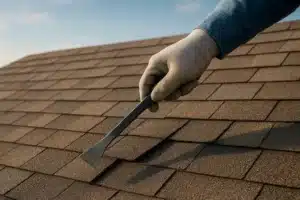
- Check for shingle damage: Look for cracked, curled, or missing asphalt shingles. High winter winds often lift shingles, breaking their seal.
- Examine roof flashing: The metal strips around your chimney, vents, and skylights are the most common cause for spring leaks. Ensure the caulking and seals are intact.
- Sweep the valleys: Remove accumulated leaves and pine needles from roof valleys where water tends to sit and speed up shingle decay.
If you spot an issue, this is the ideal time for an honest and thorough inspection. Many homeowners are surprised when we inspect their roof and let them know that all they need is a simple repair—or that no work is needed at all. We believe in giving honest recommendations, which means we’ll never try to sell you a new roof when a repair is the right solution.
Summer Storm Season: Post-Weather Inspection Tips
Summer in the Midwest brings severe thunderstorms, high winds, and hail. This is when your roof is most vulnerable to sudden, major impact.
Your Post-Storm Protocol:
- Perform a ground-level visual check: After a major storm, walk your property. Look for shingle granules in your downspouts (a sign of hail impact) or torn shingles in your yard.
- Check the attic for daylight: Go into your attic during the day and turn off the lights. If you see sunlight peeking through the roof boards, water is getting in.
- Document everything: If you suspect storm damage, take photos immediately and note the date and time of the storm in your maintenance log.
Your Insurance Process Partner: Meeting the Adjuster
When storm damage occurs, the insurance process can feel overwhelming. If your insurance company schedules an inspection, we can meet with the adjuster to answer questions about the condition of your roof, point out the damage we observed during our inspection, and explain the repairs we recommend. Our role is to provide accurate documentation and technical information so everyone clearly understands your roof’s condition. Coverage decisions remain the responsibility of your insurance company, while you remain in control of your claim.
Fall Roof Readiness: Preventing Winter Damage
Fall maintenance is all about defense. The work you do in October determines whether you’ll have an ice blocks flooding your ceiling in January.
Your Pre-Winter Checklist:
- Trim overhanging branches: Trimming tree branches away from your roof reduce water retention, prevents algae growth, and stops heavy, ice heavy limbs from crashing through your roof during a winter freeze.
- The second gutter sweep: Wait until the majority of the leaves have fallen, then clear your gutter systems completely. Clogged gutters are the number one cause of winter ice blocks.
- Evaluate attic ventilation and insulation: Proper airflow keeps your roof cool in the winter, which prevents the snow-melt-and-freeze cycle that destroys roof edges.
Winterizing Your Roof: Avoiding Ice Blocks and Heavy Snow Impacts
Winter is not the time for DIY roof walking. Frost and ice make shingles incredibly dangerous to navigate. Your winter focus should be entirely on observation.
Managing Winter Threats:
- Watch for ice blocks: Look for thick ridges of ice building up along the edges of your roof. While icicles might look picturesque, they are usually a warning sign that water is backing up under your shingles.
- Monitor snow load: Heavy midwestern snowfalls can stress the structure of your roof.
- Safely clear excess snow: Use a long-handled roof rake from the ground to pull snow off the lower edges of the roof. Never climb onto a snowy roof yourself.
DIY vs. Professional Help: Making the Right Assessment
As a homeowner, knowing where to draw the line between a weekend project and a professional call is important. Cleaning lower-level gutters and logging visual damage from the driveway are excellent DIY tasks. But getting onto a steep, weather-damaged roof to attempt patch jobs often leads to voided warranties and unnecessary safety risks.
When evaluating roofing contractors, you need to know what you are actually buying.
At Edwards & Sons Roofing, we have operated as a family-owned business for three generations for over 50 years. We back our work with a Lifetime Manufacturer’s Warranty and we maintain a strict communication standard. You’ll hear from us every step of the way—even when we’re just waiting on materials. Customers constantly highlight that we kept them informed during the whole process.
Furthermore, we believe in treating your property like our own. We perform a thorough cleanup, including removing roofing debris and making multiple magnetic sweeps to collect loose nails, so your property is left as clean as possible.
Frequently Asked Questions (FAQ)
How often should I realistically have a professional look at my roof?
We recommend a professional inspection once every two years, or immediately following a severe hail or wind storm. You can trust that our free inspections are exactly that—an honest assessment of your roof’s health, not a high-pressure sales pitch.
My roof is leaking, but I can’t afford a full replacement right now. What are my options?
Unlike companies that refuse smaller jobs, Edwards & Sons is built on a repair-first philosophy. If your shingles still have years of life left and the leak is isolated to small things, we will fix the leak.
Will my insurance premiums go up if I file a storm damage claim?
Before filing a claim, consider having your roof professionally inspected. We’ll document any damage we find, explain our observations, and discuss whether your roof’s condition appears consistent with storm damage. With that information, you can decide whether contacting your insurance company is the right next step.
Secure Your Home Before the Next Season Hits
Your roof is the only thing standing between your family and the unpredictable midwestern weather. Don’t wait until a minor maintenance issue becomes a major problem.
Whether you need a post-storm assessment, are looking to resolve an active leak, or want to explore high-quality siding and gutter solutions to fully weatherproof your home, Edwards & Sons Roofing is ready to help. Experience the difference of a roofing company that actually tells you when you don’t need a new roof.
Contact us today to schedule your free, no-obligation inspection and let our family protect yours.
Get A Free Roof Inspection