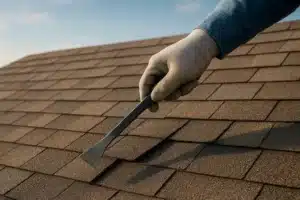
Roof valleys are where two sloping sections of a roof meet. They form a natural path that helps move rainwater and melting snow toward the edge of the roof and into the drainage system.
Because valleys collect water from two roof sections, they are an important part of the roofing system. They also deserve careful attention during inspections and maintenance.
Understanding what a roof valley does, what can affect it, and what signs to watch for can help you make informed decisions about your home without having to become a roofing expert.
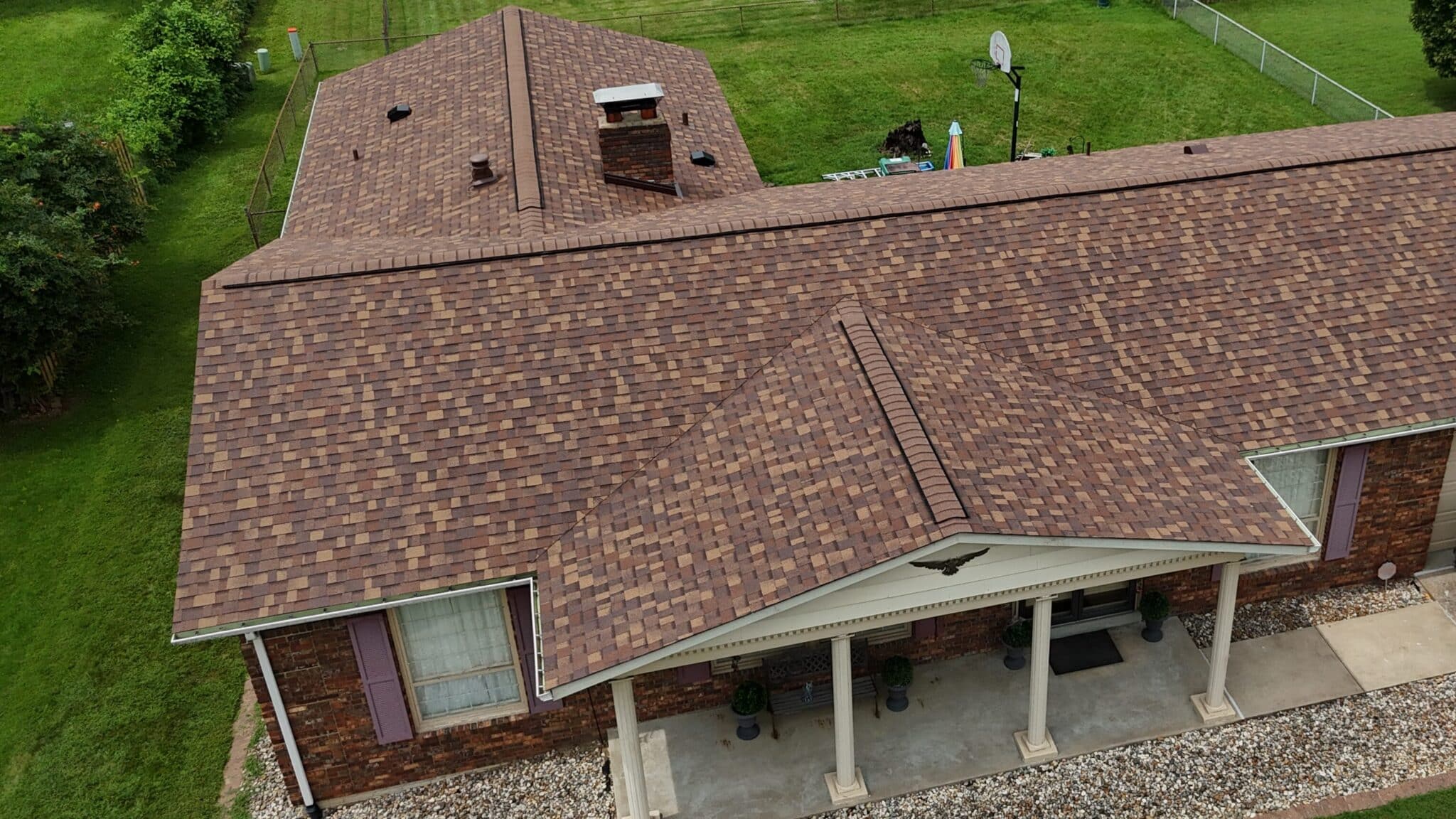
How Water Moves Through a Roof Valley
A roof valley has a simple but important job: help direct water off the roof.
When rain or melting snow lands on the roof, gravity moves the water downhill. Where two sloping roof sections meet, the valley creates a path for that water to continue toward the roof edge.
Because water from both roof sections can move through the same area, valleys need to be properly designed and installed. The materials surrounding the valley also need to work together to keep water moving in the right direction.
A problem in the valley does not always mean the valley itself is leaking. Water can move along roofing materials before it becomes visible inside the home, which is one reason finding the actual source of a leak can require a closer inspection.
Why Roof Valleys Can Develop Problems
Roof valleys can be affected by several things over time. Three common areas to pay attention to are installation, material wear, and debris.
Installation and Workmanship
A valley needs to be installed correctly so water can move through it without getting underneath the surrounding roofing materials.
Depending on the roof design and installation method, valleys may use different combinations of shingles, underlayment, and flashing.
Problems can develop when materials are not installed correctly, when flashing is damaged, or when shingles do not properly direct water through the valley.
These issues may not always be obvious from the ground. They can also become more noticeable after periods of heavy rain, strong winds, or repeated freeze-thaw cycles.
Age and Material Wear
Roofing materials are exposed to sunlight, rain, snow, ice, wind, and changing temperatures year after year.
Over time, shingles and other valley materials can show signs of wear.
You may notice:
- Worn or missing granules
- Cracked or damaged shingles
- Curling or lifting
- Deteriorated sealant
- Damaged flashing
- Visible corrosion on some metal components
Not every sign of wear means a leak is occurring. The condition of the surrounding roofing system matters, too.
That’s why it’s better to evaluate the condition of the valley rather than assume a particular repair or replacement is needed based on one visible symptom.
Debris and Vegetation
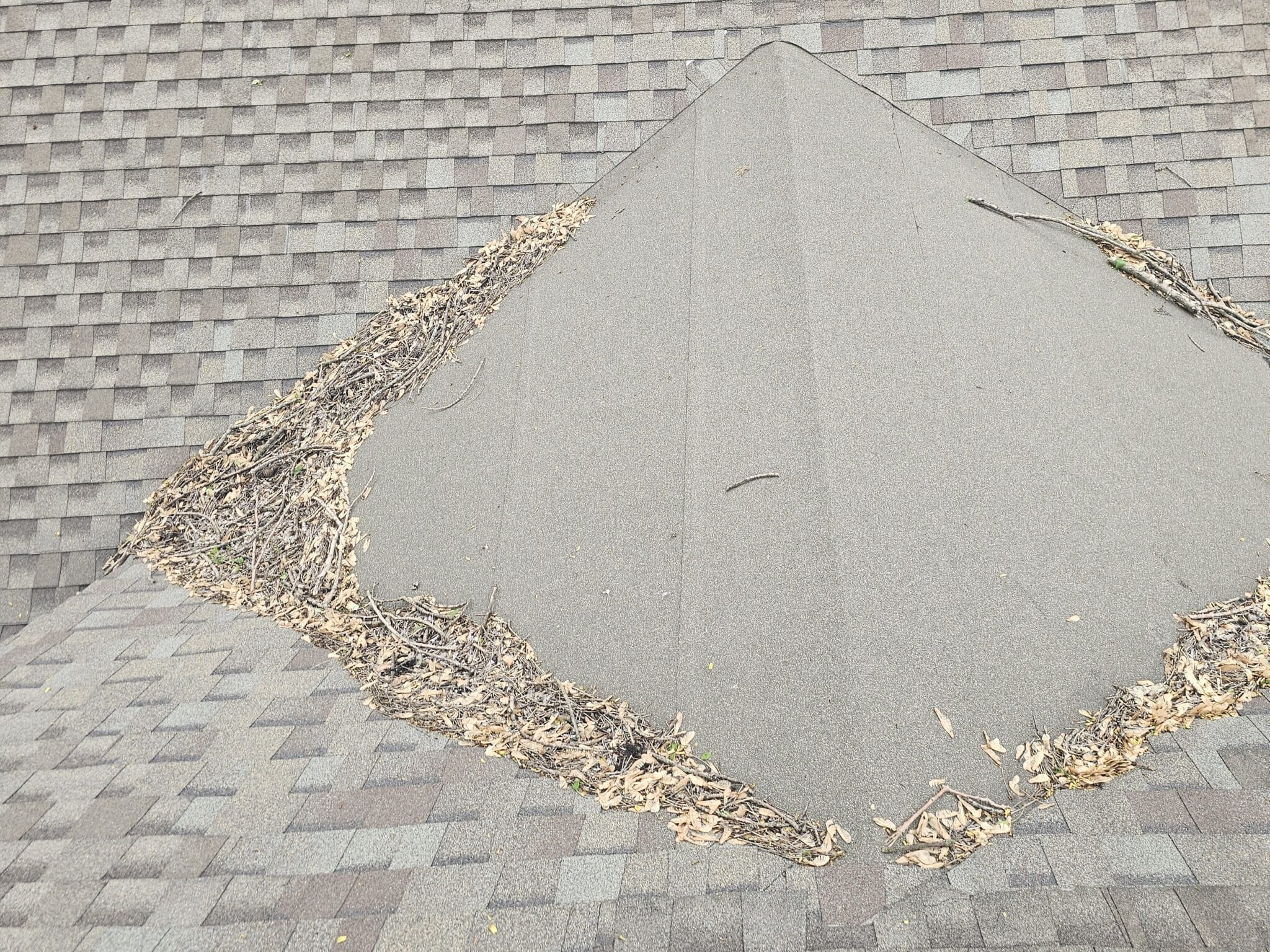
Valleys can naturally collect leaves, twigs, dirt, and other debris.
When debris builds up, it can interfere with normal water flow. Organic material can also hold moisture against roofing materials.
Moss or other vegetation may develop in areas that stay damp or receive limited sunlight.
Keeping roof drainage areas reasonably clear can help water continue moving as intended.
Homeowners should avoid climbing onto the roof to clean or inspect a valley. A roof can be difficult to navigate safely, especially when wet or covered with debris.
Why Valleys Deserve Attention During a Roof Inspection
A professional roof inspection should consider the entire roofing system, including its valleys.
An inspection may look at:
Valley and Flashing Condition
A roofer can look for visible damage, separation, deterioration, or other conditions that could affect how water moves through the valley.
Shingle Condition
The shingles around a valley can show signs of weathering or damage. Their condition should be considered along with the rest of the roof.
Signs of Moisture Inside the Home
If water has entered the home, an inspection may include the attic and other interior areas for signs of moisture.
Water stains, damp materials, or other changes can provide useful information about what may be happening above.
It’s important to remember that the location of an interior stain does not always identify the exact point where water entered the roof.
Debris and Drainage
A professional can also look for debris or other conditions that may interfere with normal water flow.
The goal is not simply to identify a damaged component. It’s to understand the condition of the roofing system and determine whether anything needs attention.
The Edwards & Sons Approach to Valley Inspections
At Edwards & Sons Roofing, we believe homeowners deserve to understand what is happening with their roof before deciding what to do next.
When we inspect a roof, we look at the condition of the roofing materials and the areas around them, including valleys and other places where water needs to move properly.
We may document what we find with photographs so you can better understand the condition of your roof.
If a valley appears to be contributing to a leak, we explain what we found and discuss the available options.
Sometimes a problem may be limited to a specific area and a repair may make sense. In other situations, the condition of the surrounding roofing system may call for more extensive work.
The condition of your roof should guide the recommendation—not a predetermined sales goal.
Signs Your Roof Valley May Need Attention
You don’t need to climb onto your roof to notice signs that something may deserve a closer look.
Watch for:
- Water stains on ceilings or walls
- Missing, cracked, or damaged shingles
- Visible deterioration around roof valleys
- Unusual amounts of granules in your gutters
- Moss or vegetation growing in a valley
- Debris collecting in areas where water drains
- Water entering the attic
- Changes in the roofline or other visible areas of concern
None of these signs automatically means your roof needs to be replaced.
They simply mean it may be worth finding out what’s happening.
What About Valley Problems After a Storm?
Illinois and Missouri roofs experience a wide range of weather throughout the year.
Heavy rain, hail, strong winds, snow, ice, and repeated freeze-thaw cycles can all affect roofing materials.
After a significant storm, it’s reasonable to look at your home from the ground for visible changes. You may notice missing shingles, damaged roof edges, or debris around the property.
If you believe your roof may have storm damage, a professional inspection can help document the condition of the roofing system.
If you decide to contact your insurance company, you remain responsible for your insurance claim and communication with your insurer. A roofing contractor can provide information about the physical condition of the roof and document observed damage, but the insurance company determines coverage under your policy.
At Edwards & Sons, our role is to help you understand what we find on your roof so you can make informed decisions about what comes next.
Protecting Your Roof Valleys Over Time
Good roof care starts with paying attention to the condition of the entire roofing system.
A few practical steps can help:
Keep Gutters and Drainage Areas Clear
Gutters and downspouts should be kept reasonably clear so water can move away from the home.
Watch Your Roof After Severe Weather
You don’t need to climb onto the roof. A visual check from the ground can help you notice obvious changes or damage.
Pay Attention to Interior Warning Signs
Water stains, damp areas, or other signs of moisture inside your home are worth investigating.
Have Concerns Evaluated
If something doesn’t look right, getting an informed opinion can help you understand whether you’re looking at normal wear, a maintenance issue, a repair, or something more extensive.
What If You Suspect a Roof Valley Leak?
If you notice a water stain or another possible sign of a roof leak, the first step is figuring out where the water is coming from.
That can be more difficult than it sounds.
Water may enter at one location and travel along roofing materials or framing before becoming visible inside the home. A stain on the ceiling therefore does not necessarily mean the roof is leaking directly above that spot.
A professional inspection can help identify the likely source and evaluate the surrounding roofing materials.
Edwards & Sons Free Roof Inspections
Edwards & Sons Roofing offers free roof inspections to help homeowners understand the condition of their roofing system.
During an inspection, we’ll look at the areas that can help tell the story of what’s happening with your roof. If we find a concern involving a valley, we’ll explain what we see and why it may matter.
You don’t have to decide on a roofing project simply because you scheduled an inspection.
Our goal is to give you clear information about the condition of your roof so you can decide what makes sense for your home.
Do Roof Valleys Always Need Repair?
No.
A roof valley may show normal wear without requiring immediate repair. In other cases, there may be a specific problem that can be addressed without replacing the entire roof.
The right recommendation depends on factors such as:
- The condition of the valley
- The condition of surrounding shingles and materials
- Whether there are signs of active moisture
- The age and overall condition of the roof
- The extent of any damage
That’s why we believe in looking at the whole picture before recommending work.
Do Roof Valleys Always Leak?
No.
Valleys are designed to move water and are an important part of many roof designs. While they need proper installation and maintenance, having a valley does not mean your roof is destined to leak.
If you notice a problem around a valley, the best approach is to have the condition evaluated rather than assuming the cause or solution.
How Long Should a Roof Valley Last?
There isn’t one universal lifespan for every roof valley.
The materials used, installation quality, roof design, weather exposure, maintenance, and condition of the surrounding roofing system can all affect how a valley performs over time.
A professional can evaluate its current condition rather than relying only on the age of the roof.
Why Roof Valleys Matter
Roof valleys may not be the first part of your roof you notice, but they play an important role in moving water away from your home.
Because they bring together two sloping roof sections, they deserve careful attention when evaluating the condition of a roofing system.
If you notice damaged shingles, signs of moisture, debris buildup, or another concern around a roof valley, you don’t have to diagnose the problem yourself.
Start by understanding what’s actually happening.
At Edwards & Sons Roofing, we’ve been serving homeowners since 1974. As a third-generation, family-owned roofing company, we believe good roofing decisions start with honest information, clear communication, and careful work.
If you have questions about your roof, our free roof inspection can help you understand its current condition and what, if anything, may need attention.
Find the problem first. Then decide what makes sense.
Get A Free Roof Inspection