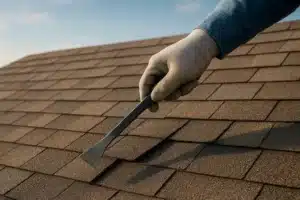
Your roof protects your home every day.
It keeps rain out, stands up to strong winds, helps keep your home comfortable, and protects everything underneath it. Most of the time, it’s easy to forget it’s even there.
Then one day you notice something.
Maybe you find what looks like black sand in your gutters. Maybe a few shingles are lying in the yard after a storm. Or maybe you see a water stain on the ceiling that wasn’t there yesterday.
It’s natural to wonder if something is wrong.
Many homeowners ask themselves the same questions:
“Is this normal?”
“Can it be repaired?”
“Should I be worried?”
The good news is that not every roofing problem is an emergency. Some signs are part of normal aging, while others may need attention sooner rather than later.
At Edwards & Sons Roofing, we’ve spent more than 50 years helping homeowners throughout Illinois and Missouri understand what’s happening with their roofs. We believe homeowners should have clear information before making important decisions.
Let’s take a closer look at some of the most common roofing problems we see and what they may mean for your home.
Your Roof Is a Complete System
Many people think of a roof as simply a layer of shingles. In reality, your roof is made up of several parts that all work together to protect your home.
These include:
- Shingles
- Roof decking
- Underlayment
- Flashing around chimneys and walls
- Roof vents
- Gutters and downspouts
If one part of the system stops working properly, water can sometimes find its way into places it shouldn’t.
That’s why a roof inspection looks at the entire roofing system—not just the shingles you can see from the ground.
Why Roof Problems Happen
Even the best roofing materials don’t last forever. Every season puts stress on your roof. Spring brings heavy rain and high winds. Summer brings heat and long hours of direct sunlight. Fall fills gutters with leaves. Winter brings freezing temperatures, snow, and ice. Year after year, these weather changes slowly wear down roofing materials.
Most roofing problems happen gradually, which is why routine inspections can be helpful. Finding a small issue early often gives homeowners more options than waiting until water enters the home.
Understanding Granule Loss
One of the first signs homeowners notice is small black or gray particles collecting in their gutters or near their downspouts. These tiny particles are called granules. Granules cover the surface of asphalt shingles and help protect them from everyday weather and sunlight.
Is Granule Loss Always a Problem?
Not always. If your roof is new, it’s normal to see a small amount of loose granules after the first few rainstorms. As your roof ages, some gradual granule loss is also expected. However, if you begin seeing large amounts of granules, or you notice areas where shingles appear smooth or worn, it may be time to have the roof inspected. Granule loss doesn’t always mean you need a new roof. It simply means it’s worth taking a closer look to understand the condition of the shingles.
Curling Shingles
Over time, some shingles begin to curl around the edges. This usually happens slowly and may not be noticeable until you look closely from the ground.
Curling shingles may happen because of:
- Normal aging
- Years of weather exposure
- Heat
- Wind
- Other roofing conditions
As shingles curl, they may become more vulnerable during strong winds because the edges can catch the wind more easily. An inspection can help determine whether only a few shingles are affected or whether the roof is showing more widespread signs of aging.
What Causes Roof Blistering?
Sometimes homeowners notice small raised bubbles on the surface of their shingles. This is called blistering. Blistering can happen for several reasons and often requires a closer inspection to determine the cause. Because different roofing issues can look similar from the ground, it’s important not to assume what caused the damage without having the roof evaluated. Understanding the cause helps determine the most appropriate solution.
Roof Leaks Don’t Always Start Where You See Water
Many people assume the roof leak is directly above the water stain on the ceiling. In many cases, that’s not true. Water often travels along framing, decking, or other building materials before it finally appears inside your home. That’s why finding the source of the leak is one of the most important parts of a roof inspection. Simply patching the area where water appears inside may not solve the real problem.
Signs Your Roof May Need Attention
You don’t have to climb onto your roof to notice changes. Walking around your home every few months can help you spot warning signs early.
Look for things like:
- Missing shingles
- Curled shingles
- Damaged flashing
- Granules collecting in gutters
- Sagging roof areas
- Pieces of roofing material in the yard
- Water stains inside your home
- Damp insulation in the attic
- Musty smells near the ceiling
These signs don’t automatically mean you need a new roof, but they are good reasons to have the roof inspected.
Don’t Forget About Your Gutters
Your gutters play an important role in protecting your roof. When rain falls, gutters help move water away from your roof, siding, foundation, and landscaping. When gutters become clogged with leaves, sticks, and other debris, water may not drain the way it should. Over time, standing water can increase the chance of moisture problems around the edge of the roof.
Cleaning gutters regularly and checking that downspouts are directing water away from your home are simple maintenance tasks that can help protect your roofing system.
What to Do After a Storm
Living in the Midwest means your roof experiences all kinds of weather. After a storm, it’s a good idea to walk around your property and look for changes.
You may notice:
- Missing shingles
- Bent gutters
- Tree branches on the roof
- Pieces of roofing material on the ground
- Water stains inside the home
Some storm damage is easy to see. Other types of damage aren’t visible from the ground.
If your neighborhood experienced high winds or hail, scheduling a professional roof inspection can help you better understand your roof’s condition. If storm damage is found and you decide to file an insurance claim, we can document what we observed, answer your questions, and meet you with your insurance adjuster during the inspection.
What Happens During a Professional Roof Inspection?
Many homeowners don’t know what happens during a roof inspection. Our goal is to understand the condition of your roof and explain everything in a way that’s easy to understand.
During an inspection, we may evaluate:
- The shingles
- Flashing
- Roof valleys
- Roof vents
- Gutters
- Drainage
- Areas showing normal aging
- Signs of wind or hail damage
- Areas where water may be entering the home
If it’s safe and appropriate, we may also inspect the attic for signs of moisture, ventilation concerns, or other conditions that may affect the roofing system. Once the inspection is complete, we’ll explain what we found, answer your questions, and discuss the options available based on your home’s needs.
Repair or Replacement?
One of the biggest questions homeowners ask is whether they need a repair or a replacement. Every roof is different.
Several factors help determine the best path forward, including:
- The age of the roof
- The overall condition of the roofing system
- The amount of damage
- Whether the problem is isolated or widespread
- The expected performance of the existing roofing materials
Sometimes replacing a few shingles or repairing flashing is all that’s needed. Other times, replacing the roof may provide the best long-term solution. Our goal is to help you understand your options so you can make the decision that’s right for your home.
Why Homeowners Have Trusted Edwards & Sons Roofing for over 50 years
We believe homeowners deserve more than an estimate. They deserve answers. That’s why we take the time to explain what we find, answer questions, and help homeowners understand the condition of their roofs. Whether your home needs a repair, has storm damage, or you’re simply looking for peace of mind, we’re here to help you make an informed decision.
Frequently Asked Questions
Why are there granules in my gutters?
A small amount can be normal, especially on newer roofs. Larger amounts or bare spots on shingles may be signs that your roof should be inspected.
Do curled shingles always mean I need a new roof?
Not necessarily. Curling can happen for several reasons. A roof inspection can help determine the condition of the roof and whether repairs or replacement should be considered.
Is every ceiling stain caused by a roof leak?
Not always, but ceiling stains should be investigated. Water can enter from several areas of the roofing system, so finding the source is important.
How often should I have my roof inspected?
Many homeowners choose to have their roof inspected every few years and after major storms. Regular inspections can help identify concerns before they become larger problems.
Let’s Help You Understand Your Roof
Your roof protects your home every day.
Giving it regular attention can help you catch small problems early, better understand its condition, and plan for future repairs or replacement when the time is right.
If you’ve noticed changes after a storm, have questions about your roof, or simply want to know how it’s holding up, we’re here to help.
We’ll inspect your roof, explain what we find, answer your questions, and help you understand the options available so you can make the best decision for your home.
Get A Free Roof Inspection