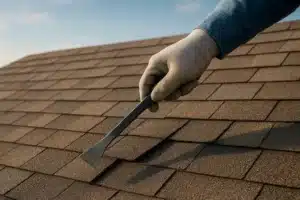
A strong spring storm moves through your neighborhood. The next morning, you look at your roof and wonder, “Did the storm damage my roof, or is this just normal wear?” It can be hard to tell. Hail damage and normal shingle wear can look similar at first. Both can cause missing granules, discoloration, or changes to your shingles. Knowing the difference can help you make a better choice about what your roof may need.
At Edwards & Sons Roofing, we believe homeowners should understand what is happening with their roof before making a decision. Most roofers just want to push a sale. We just want to fix your leak. That means we start with an honest inspection and look at the actual condition of your roof. If a repair is enough, we will recommend a repair. If more work is needed, we will explain what we found and why.
Why Is Hail Damage Hard to Spot?
One reason hail damage can be confusing is that it may not be easy to see from the ground.
Normal Shingle Wear
Shingles naturally change as they age. Years of sun, rain, wind, heat, and cold can cause:
- Granules to slowly wash away
- Shingles to curl or crack
- Colors to fade
- Small cracks to form
- Seals between shingles to weaken
These changes usually happen slowly over time.
Hail Damage
Hail damage happens during a storm. Hail can hit shingles hard enough to:
- Knock off protective granules
- Leave dents or marks
- Crack the shingle
- Damage the seal that holds the shingle down
- Loosen or remove shingles
The pattern of the damage can also tell an inspector a lot. Hail damage may appear in several areas across the roof, while normal wear often happens more evenly as the roof ages. Still, every roof is different. A professional inspection is the best way to understand what may have happened.
Signs That May Point to Hail Damage
If your area recently had a hailstorm, look for these signs from the ground.
Dents or Round Marks
Hail can leave small dents or round marks on shingles. These marks may appear across several nearby shingles.
Missing Granules
Shingle granules look like small pieces of sand or stone. They help protect the shingle from the sun and weather. A small amount of granule loss can happen as shingles age. Hail can cause larger areas of granule loss in a short amount of time.
Cracked Shingles
A hard hail hit can crack a shingle. Cracks may be easier to see up close than from the ground.
Loose or Lifted Shingles
Hail and strong winds can affect the seal that helps keep shingles flat. A damaged seal can make shingles easier to lift during future storms.
Missing Shingles
Strong wind can pull shingles away from the roof. Hail can also contribute to damage when it hits during a storm. If you notice missing shingles after a storm, it is a good idea to have the area checked.
Signs of Normal Shingle Wear
Not every damaged-looking shingle was damaged by a storm.
Granules Across the Roof
As shingles get older, they naturally lose some of their granules. You may notice granules in your gutters or near your downspouts. With normal aging, this wear is often spread across larger areas of the roof.
Curling or Cupping
Older shingles may start to curl at the edges. Long-term exposure to heat, sun, and changing weather can cause this type of wear.
Dark Streaks or Algae
Dark streaks on shingles are common on many homes. They can be caused by algae and are not always a sign of storm damage.
Small Cracks
Shingles expand and contract as temperatures change. Over time, this movement can lead to small cracks.
Aging Seals
The seal between shingles can weaken as the roof gets older. This may allow shingles to lift more easily during strong winds.
Common Mistakes Homeowners Make
It is easy to look at a roof and assume every mark came from the most recent storm. That is not always the case.
Assuming Every Dent Is Hail Damage
A dent could come from hail, but it could also come from another type of impact. Looking at the size, location, and pattern of the marks can help determine what may have caused them.
Mixing Up Wind and Hail Damage
Wind and hail can damage a roof in different ways. Wind often lifts, creases, or removes shingles. Hail may leave dents and areas where granules have been knocked away. A storm can also bring both high winds and hail, so a full inspection can help tell the story.
Mistaking Age for Storm Damage
An older roof may already have curling shingles, worn granules, or other signs of age. That does not mean the roof cannot have storm damage. It simply means the roof needs to be looked at carefully to separate normal wear from newer damage.
Waiting Too Long to Document Damage
If you think a recent storm may have damaged your roof, take photos from the ground and write down when you noticed the problem. Weather reports and other records can also help provide information about the storm that passed through your area.
Looking Only at the Roof
A major storm can affect more than your shingles. An inspection may also look at:
- Siding
- Gutters
- Downspouts
- Soffit
- Fascia
- Vents
- Other exterior areas
Looking at the whole exterior can give you a better picture of what happened.
When Should You Have Your Roof Inspected?
You do not need to wait for a leak before having your roof checked. A professional inspection can be especially helpful when:
A Storm Recently Hit Your Area
If your neighborhood experienced hail or strong winds, an inspection can help you understand whether your roof shows signs of storm damage.
You See Damage From the Ground
Missing shingles, loose shingles, or damaged gutters are good reasons to have a closer look.
You Are Not Sure How Old the Damage Is
An experienced roofing professional can look at the condition and pattern of the shingles and help you understand whether the damage appears consistent with storm impact or normal wear.
Your Roof Is Older
Older roofs naturally show more wear. If a storm recently passed through, an inspection can help separate existing wear from possible storm damage.
You Are Thinking About Filing an Insurance Claim
Before making a decision about an insurance claim, it can be helpful to understand what damage is actually present. At Edwards & Sons Roofing, we can document what we find and explain the difference between storm damage and normal wear. We can also answer questions about the inspection and help you understand the next steps.
The decision about whether to file a claim belongs to you.
You Notice Water Inside Your Home
A ceiling stain, damp attic, or active leak should not be ignored. Water can travel away from the spot where it enters the roof, so the visible stain may not be directly below the damaged area. A professional can help find the source and explain whether a repair or other work may be needed.
What Happens During a Roof Inspection?
A good inspection should be more than a quick look from the driveway. Depending on the roof and the situation, an inspection may include:
Looking at the Roof
A trained roofing professional will look closely at the shingles, flashing, vents, and other parts of the roof system.
Taking Photos
Photos can help show what was found and give you a record of the roof’s condition.
Checking for Signs of Water
If there are signs of a leak, the inspection may include looking at areas inside the attic or home where water may have entered.
Looking at the Rest of the Exterior
Siding, gutters, soffit, fascia, and other exterior areas may also be checked for signs of storm damage.
Explaining Your Options
Once the inspection is complete, you should understand what was found. If the roof can be repaired, a repair may be the right choice. If the roof has widespread damage or is near the end of its useful life, replacement may make more sense. At Edwards & Sons, we believe you should know why a certain solution is being recommended.
How to Prepare for an Inspection
You can make the inspection easier by doing a few simple things.
Take Photos
Take pictures of anything you can safely see from the ground.
Write Down the Storm Date
If you believe a storm caused the damage, note when it happened and when you first noticed the problem.
Check Inside Your Home
Look for ceiling stains, damp areas, or other signs of water.
Do Not Climb on the Roof
A damaged roof can be dangerous. You do not need to climb onto your roof to look for damage. Let a trained professional handle the roof inspection.
Ask Questions
A good roofing company should be willing to explain what they find, show you photos when available, and answer your questions.
Repair or Replacement? Let the Roof Tell the Story.
One of the most important things to remember is that storm damage does not automatically mean you need a new roof. A few damaged shingles may be repairable. A damaged vent, flashing area, or small section of the roof may also be handled with a targeted repair. On the other hand, a roof with widespread damage or serious age-related wear may need more work. There is no one answer for every home. At Edwards & Sons Roofing, our repair-first approach means we look at your roof before recommending a solution. We won’t sell you a roof if you just need a repair.Our goal is simple: give you an honest opinion, explain what we find, and help you decide what makes sense for your home.
What About Insurance?
If you believe your roof was damaged by hail or wind, you may have questions about insurance. Coverage depends on your policy, the cause of the damage, and other factors. A roofing contractor cannot promise that an insurance company will approve a claim or pay for a certain repair. What we can do is help you understand what we find during the inspection and provide documentation of visible damage when appropriate. If you decide to contact your insurance company, having a clear record of the roof’s condition can be useful.
The Edwards & Sons Approach
At Edwards & Sons Roofing, we have been serving homeowners for more than 50 years. As a third-generation, family-owned company, we believe roofing should be about more than selling a new roof. It should be about listening to homeowners, looking at the actual problem, and finding the right solution. Sometimes that means a repair. Sometimes it means planning for a replacement. And sometimes it means telling a homeowner that their roof is doing just fine. Most roofers just want to push a sale. We just want to fix your leak.
The Bottom Line
Hail damage and normal shingle wear can look similar, but they are not the same thing. Hail may leave dents, fresh areas of missing granules, cracked shingles, or other signs of a recent storm. Normal wear usually develops slowly and affects the roof over time. If you are unsure about your roof, you do not have to guess. A professional inspection can help you understand what is happening, what may have caused the damage, and whether your roof needs a repair or something more. If you are concerned about recent hail or wind damage, contact Edwards & Sons Roofing for an honest inspection. We’ll take a look, explain what we find, and help you understand your options—without the pressure to replace a roof that may not need replacing.
Get A Free Roof Inspection