How Hail Damages Asphalt Shingles: What Homeowners Should Know
A hailstorm can leave your roof looking much the same as it did before the storm. That doesn’t always mean nothing happened.
Hail can affect asphalt shingles in ways that are difficult to see from the ground. Some impacts may leave visible marks, while others may affect the shingle surface without creating an obvious hole or missing section.
Understanding how hail can affect your shingles can help you know what to look for after a storm and when a professional inspection may make sense.
How Does Hail Damage Asphalt Shingles?
Asphalt shingles are made from several layers that work together to protect the roof.
The surface includes protective granules embedded in asphalt. Beneath that is a fiberglass mat that provides structure to the shingle.
When hail strikes a shingle, the impact can affect the surface and the materials underneath it.
Depending on the size and force of the hail, an impact may:
- Dislodge or loosen granules
- Damage the asphalt surface
- Affect the fiberglass mat
- Leave a visible impact mark
- Damage the shingle enough to affect its ability to protect the roof
Not every hailstone causes damage, and not every impact will look the same.
The condition of the shingles before the storm can also affect how they respond to severe weather.
Why Hail Damage Isn’t Always Easy to See
One of the challenges with hail damage is that a roof may not look dramatically different after a storm.
A shingle can remain in place while still showing signs of impact.
From the ground, small areas of granule loss or other surface changes may be difficult to notice. That’s especially true on larger roofs or sections that are not easily visible from the yard.
This is why homeowners should avoid assuming that a roof is fine simply because there are no missing shingles or obvious holes.
A closer inspection can provide more information about the condition of the roofing materials.
What Does Hail Damage Look Like?
Hail can affect shingles in several ways.
Granule Loss
Granules are the small, protective particles that cover the surface of asphalt shingles.
After a hailstorm, you may notice areas where granules appear to be missing or disturbed.
Some granule loss is also a normal part of shingle aging, so granules in your gutters do not automatically prove that hail caused damage.
The location, pattern, and overall condition of the shingles are important when evaluating what happened.
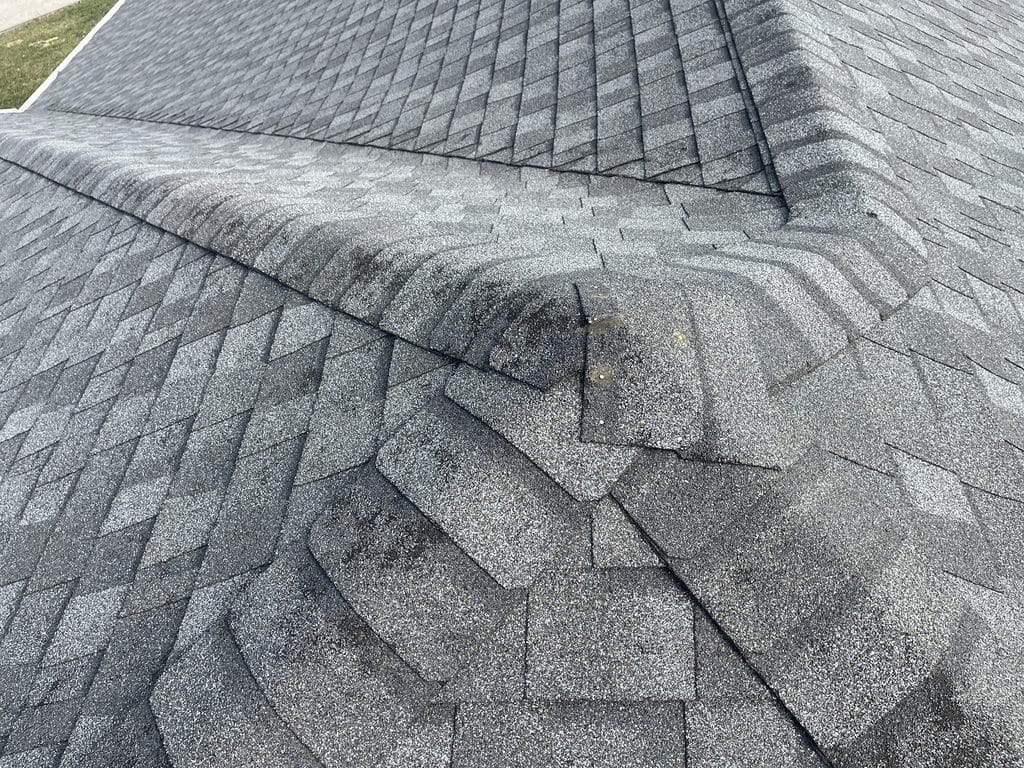
Impact Marks
Hail can leave marks on the surface of a shingle.
Depending on the severity of the impact, these marks may be difficult to see from the ground.
A professional inspection can provide a closer look at areas that appear unusual.
Cracking or Surface Damage
A stronger impact may cause visible damage to the shingle surface.
Cracks or other changes should be evaluated rather than assumed to be either storm damage or normal aging.
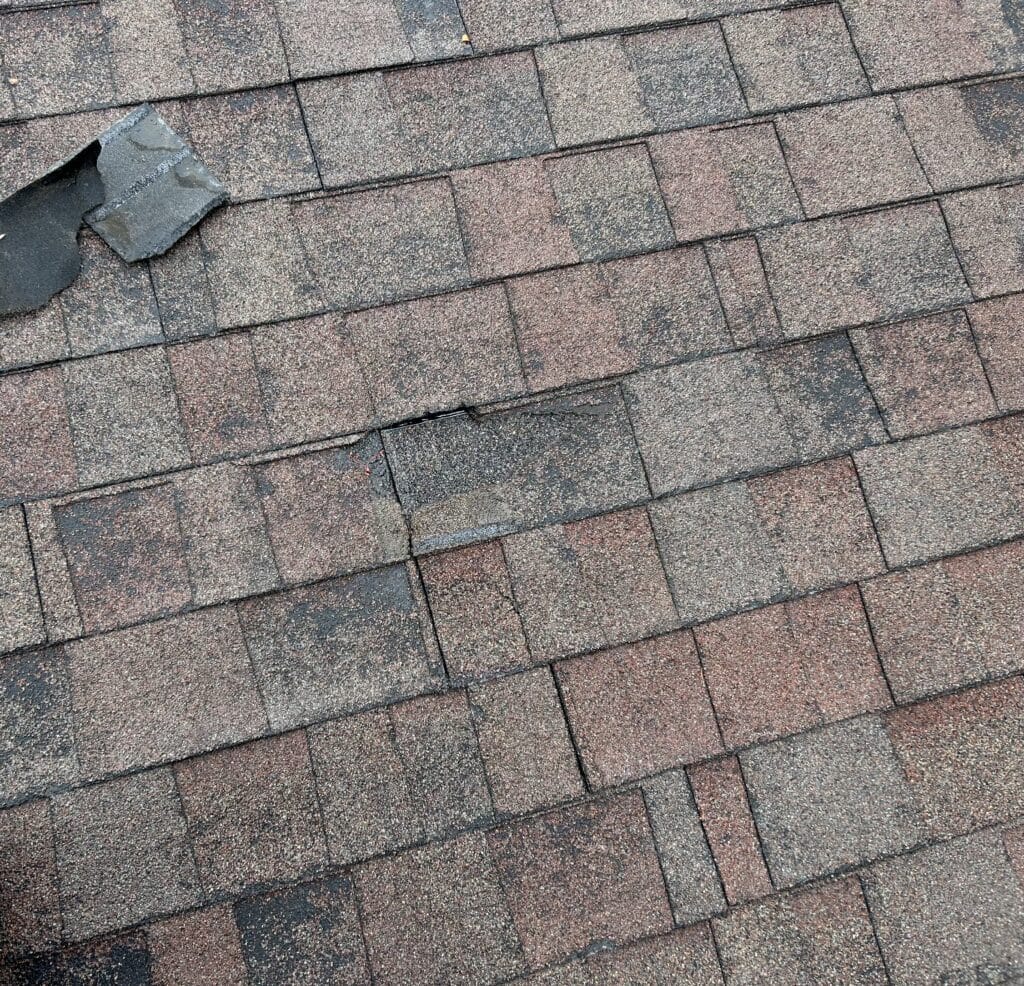
Damaged or Displaced Roofing Materials
In a more severe storm, hail may be accompanied by strong winds that affect shingles, ridge caps, flashing, or other roofing components.
When multiple types of damage are present, it can be helpful to evaluate the entire roofing system rather than focusing on one area.
Hail Damage vs. Normal Roof Aging
Hail damage and normal aging can sometimes look similar.
Asphalt shingles naturally change over time because they are exposed to sunlight, rain, wind, temperature changes, and other weather.
Normal aging may include:
- Gradual granule loss
- Faded or weathered areas
- Curling edges
- Cracking
- General wear
The important question is not simply whether a roof has granule loss or other visible changes.
It’s why those changes are there.
A professional evaluating the roof may consider the age of the shingles, the overall pattern of wear, the location of the changes, and whether a recent storm could have contributed to what is being observed.
Why Hail Size Isn’t the Only Factor
It can be tempting to judge a storm based only on the reported size of the hail.
Hail size is useful information, but it is not the only factor that can affect a roof.
Other factors can include:
- The condition and age of the shingles
- The angle of impact
- The location of the roof
- The roof’s slope and design
- Previous weather exposure
- Existing wear or damage
This is one reason a storm report alone cannot determine whether a particular roof has been damaged.
The actual condition of the roofing materials still needs to be considered.
Where Should Homeowners Look After a Hailstorm?
You do not need to climb onto your roof to look for possible problems.
From the ground, you may be able to notice:
- Changes in the appearance of shingles
- Missing or displaced roofing materials
- Damaged ridge caps
- Changes around roof edges
- Debris around the home
- Unusual amounts of granules in gutters
You can use binoculars or a phone camera with a zoom function to get a better view from a safe location.
If you see something unusual, take a photo and make a note of when you noticed it.
Do not climb onto the roof to investigate hail damage yourself.
Roofing surfaces can be slippery, and areas affected by a storm may not be safe to walk on.
Don’t Forget to Check Inside
A roof problem may eventually become noticeable inside the home.
After severe weather, keep an eye out for:
- Water stains on ceilings or walls
- Damp areas
- Signs of moisture in the attic
- Changes around skylights
- Moisture near chimneys or other roof penetrations
A water stain does not necessarily show exactly where water entered the roofing system.
Water can travel along roofing materials, framing, or other surfaces before becoming visible.
If you notice signs of moisture, the source should be evaluated rather than assumed.
What About the Roof Decking?
Roof decking is the structural surface underneath the roofing materials.
If moisture reaches the decking, it can affect the wood over time. However, the condition of the decking alone may not tell you when or how the moisture entered.
If damaged decking is discovered during roofing work, a homeowner should receive a clear explanation of what was found and why it may need to be repaired or replaced.
At Edwards & Sons Roofing, we believe homeowners deserve to understand what is being recommended and why.
What Should You Do After a Hailstorm?
If a strong hailstorm passes through your area, start with a safe visual check.
1. Look From the Ground
Check the roof, gutters, siding, windows, and surrounding property for obvious changes.
Do not climb onto the roof.
2. Take Photos
Photograph anything unusual from a safe location.
Photos can provide a useful record of what you noticed and when you noticed it.
3. Check for Signs of Moisture
Look inside the home for new water stains or other signs of moisture.
If you find water entering the home, addressing the source promptly can help prevent additional problems.
4. Consider a Professional Inspection
If you are unsure whether the roof was affected, a professional inspection can provide a closer look.
The goal should be to understand the roof’s actual condition rather than assume that every roof exposed to hail needs replacement.
What Happens During a Professional Roof Inspection?
A professional inspection can look at more than just the most obvious areas.
Depending on the roof and what can be safely evaluated, the inspection may include:
- Shingles and other roofing materials
- Roof edges and ridge areas
- Valleys
- Flashing
- Visible impact marks or surface changes
- Areas showing signs of age or wear
- Gutters and exterior components
- Accessible attic areas when appropriate
- Signs of possible moisture intrusion
Photos and other documentation may also help explain what was found.
At Edwards & Sons Roofing, we believe the condition of the roof should guide the recommendation—not a predetermined sales goal.
If a problem is limited and a repair makes sense, we’ll explain that.
If there are more extensive concerns, we’ll explain what we found and why additional work may be appropriate.
What About Insurance?
Hail damage and normal roof aging may be treated differently under an insurance policy, but coverage depends on the specific policy and the circumstances of the loss.
Your insurance company makes coverage decisions under the terms of your policy.
A roofing contractor can provide information about the physical condition of the roof, document visible findings, and explain recommended roofing work.
If you believe your roof may have been damaged by hail, you can contact your insurance company to discuss your policy and claim process.
If an insurance adjuster is scheduled to inspect the roof, Edwards & Sons Roofing can be present to answer technical questions about the roofing system and explain what our inspection found.
The homeowner remains in control of the insurance claim and decisions related to it.
Does Hail Damage Mean You Need a New Roof?
Not necessarily.
The appropriate recommendation depends on the condition and extent of the issues found.
A localized problem may be repairable. More widespread damage may require a different approach.
The important thing is to inspect the roof first and understand what is actually happening before deciding what work makes sense.
At Edwards & Sons Roofing, our approach is simple:
Find the problem first. Explain what we find. Then help you understand your options.
Why a Professional Evaluation Can Help
Hail damage is not always easy to identify from the ground.
Normal aging, previous weather exposure, installation issues, and storm damage can sometimes produce similar-looking changes.
A professional can look at the roof as a complete system and consider the condition of the surrounding materials rather than focusing on one isolated spot.
That information can help a homeowner make a more informed decision about whether the roof needs maintenance, repair, monitoring, or more extensive work.
The Bottom Line
Hail can affect asphalt shingles without leaving behind obvious damage.
Granule loss, impact marks, surface changes, and damaged roofing materials are all worth paying attention to after a severe storm. At the same time, some of these signs can also occur as a roof naturally ages.
The goal isn’t to diagnose your roof from the driveway.
Look from a safe location, document anything that looks unusual, and consider a professional inspection if you have questions about the roof’s condition.
Most importantly, hail exposure does not automatically mean roof replacement.
The condition of the roofing system should guide the recommendation.
At Edwards & Sons Roofing, we’ve been serving homeowners since 1974. As a third-generation, family-owned company, we believe good roofing decisions start with good information.
Understand your roof first. Then decide what makes sense.
Get A Free Roof Inspection