Your roof protects everything underneath it, but most homeowners don’t think much about it until they notice a leak or find shingles in the yard after a storm.
The good news is that you don’t have to climb onto your roof to spot many common problems. With a careful walk around your property and a quick look inside your attic, you can often catch small issues before they become expensive repairs.
This guide will show you how to safely inspect your roof, what warning signs to watch for, and when it’s time to have a professional take a closer look.
Safety Comes First
Before you begin, remember one important rule: don’t walk on your roof.
A steep roof can be dangerous, even when it looks dry and stable. Most homeowners can complete a useful inspection without ever leaving the ground.
Here are a few safe ways to check your roof:
- Walk around your home and look at the roof from different angles.
- Use binoculars to get a closer look at shingles, flashing, and roof vents.
- If you use a ladder, keep it on stable ground and only climb high enough to see the edge of the roof. Never step onto the roof itself.
- Check your attic with a flashlight. Sometimes the first signs of a roofing problem appear inside your home.
When Should You Inspect Your Roof?
A quick inspection a couple of times each year can help you stay ahead of problems.
It’s also a good idea to check your roof after:
- Strong windstorms
- Hail
- Heavy snow or ice
- Falling tree limbs
- Any severe weather that affects your neighborhood
Regular inspections don’t take long and can help you decide whether your roof simply needs monitoring or should be evaluated by a professional.
Start with a Walk Around Your Home
Begin by stepping back far enough to see your entire roof.
As you walk around your property, look for anything that seems out of place.
Watch for:
- Missing shingles
- Shingles that appear lifted or out of line
- Dark patches where roofing material may be missing
- Bent or damaged flashing around chimneys, walls, and vents
- Debris collecting in roof valleys
Your roof should have a consistent appearance. If one section looks noticeably different from the rest, it’s worth investigating further.
Check Your Gutters
Your gutters can reveal a lot about the condition of your roof.
Leaves and small twigs are normal, but pay attention to roofing material that has washed down with the rain.
A small amount of shingle granules is common as a roof ages. However, large amounts of granules collecting in your gutters may mean your shingles are wearing out and should be inspected.
While you’re there, make sure your gutters are securely attached and free of clogs so water can drain properly.
Look Inside the Attic
Some roofing problems are easier to spot from inside your home than from outside.
Take a flashlight into your attic and look for:
- Water stains on the wood
- Damp insulation
- Mold or mildew
- Sunlight coming through the roof decking
- Signs of active leaks after a rain
Finding one of these issues doesn’t always mean you need a new roof, but it does mean the source should be identified before more damage occurs.
Common Signs Your Roof May Need Attention
As roofs age, they naturally show signs of wear. Knowing what to look for can help you decide when it’s time to schedule an inspection.
Missing Shingles
Missing shingles leave part of your roof exposed to the weather. Even a single missing shingle can allow water to reach the layers beneath if it’s left unaddressed.
Curling or Cracked Shingles
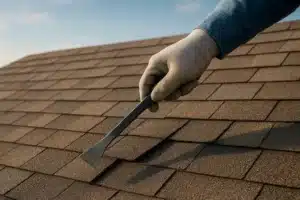
Older shingles may begin to curl along the edges or develop cracks. These are common signs that roofing materials are nearing the end of their service life.
Granule Loss
The rough surface on asphalt shingles helps protect them from sunlight and weather. If shingles begin to look smooth, shiny, or patchy, they may be losing that protective layer.
Damaged Flashing
Flashing helps keep water out around chimneys, skylights, vents, and roof edges. Loose, bent, or rusted flashing can allow water to enter areas that should stay dry.
Sagging Areas
Your roof should appear straight and even.
If you notice a section that dips or sags, it’s best to have it inspected promptly, as it could indicate damage beneath the roofing materials.
Signs It’s Time to Call a Professional
Some situations are better handled by an experienced roofing contractor.
Consider scheduling an inspection if you notice:
- Water stains inside your home
- Active leaks
- Multiple missing shingles
- Damage after hail or high winds
- Sagging sections of the roof
- Cracked flashing or deteriorated pipe boots
- Roofing materials that appear to be reaching the end of their life
A professional inspection can determine whether your roof needs a simple repair, routine maintenance, or a replacement.
Why Professional Inspections Matter
Even a careful homeowner can’t always see every issue from the ground.
A professional inspection includes checking areas that are difficult to evaluate safely, documenting any damage, and identifying concerns that may not yet be visible from inside your home.
In many cases, small repairs found early can help extend the life of your roof.
What You Can Expect from Edwards & Sons Roofing
At Edwards & Sons Roofing, we believe homeowners deserve honest answers—not pressure.
When we inspect your roof, we’ll carefully evaluate its condition, take photos of anything we find, and explain our recommendations in clear, straightforward language.
If a repair is the right solution, we’ll recommend a repair. If replacing the roof makes more sense, we’ll explain why so you can make an informed decision.
If your home has been affected by storm damage, we can document what we find, answer technical questions during the insurance process, and help you understand your next steps. Our goal is simple: give you the information you need to make the best decision for your home.
Frequently Asked Questions
Can I inspect my roof myself?
Yes. Many signs of roof wear can be seen safely from the ground or inside your attic. Avoid walking on your roof unless you have the proper training and safety equipment.
How often should I inspect my roof?
Most homeowners should inspect their roof in the spring and fall, as well as after severe storms.
Does finding one missing shingle mean I need a new roof?
Not necessarily. A missing shingle may only require a repair. The overall condition of the roof is what determines the best solution.
Should I have my roof inspected after a hailstorm?
Yes. Some storm damage isn’t obvious from the ground, and catching it early can help prevent additional problems.
Protect Your Home with Confidence
Taking a few minutes to inspect your roof each season is one of the easiest ways to stay ahead of costly repairs.
If something doesn’t look right—or if you’d simply like the peace of mind that comes with a professional opinion—Edwards & Sons Roofing is here to help.
We’ll provide an honest assessment, explain what we find, and help you understand your options so you can make the decision that’s right for your home.
Get A Free Roof Inspection