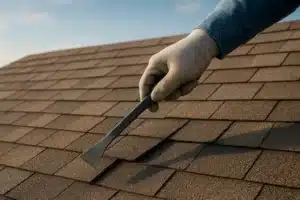
The first hard rain after the leaves come down tells you a lot. Water spills over the front of the gutter, a dark streak shows up on the siding, and a puddle sits by the foundation where there wasn’t one in July. You want to know what’s actually wrong before anyone hands you a quote.
Deciding between gutter repair or replacement usually comes down to three steps. Clean the gutters first, because overflow is often just debris. Repair when the problem is in one spot, like a loose hanger, a leaking seam or a clogged downspout, and the gutter and fascia are still sound. Replace when sagging, leaks, rust or pulling away show up along much of the gutter system, or the same repairs keep failing. Edwards & Sons Roofing recommends repair over full replacement whenever repair is enough.
In this article
- What Are Your Gutters Telling You From the Ground?
- When Is Cleaning All You Need?
- When Is a Gutter Repair Enough?
- When Should You Replace Gutters?
- Is the Real Problem the Fascia Board or the Roof Edge?
- How Long Do Gutters Last?
- Do Gutter Guards Help?
- Getting a Second Opinion
- Frequently Asked Questions
What Are Your Gutters Telling You From the Ground?
Most gutter problems show themselves from the yard, during or right after a rain, and reading them is the first step before you call a St. Louis gutter contractor. You don’t need a ladder to read them.
Walk around the house while it’s raining, or within an hour after. Look for these signs:
- Water spilling over the front edge: usually a clog, sometimes a slope problem or a gutter too small for the roof above it.
- Water dripping from a joint or corner: a leaking seam or end cap.
- A run that dips in the middle: sagging, often from a loose or failed hanger.
- A gap between the gutter and the house: the gutter is pulling away from the fascia board.
- Streaks or stains on the siding below the gutter: water has been running down the wall instead of through the gutter.
- Water pooling near the foundation: the downspout is clogged, disconnected, or letting out too close to the house.
- Peeling paint or dark, soft-looking wood behind the gutter: water may be getting behind it, into the fascia.
Take a few photos. They make the next step easier, whether you fix it yourself or call someone.
One rule for this stage: stay on the ground. Reading the signs is safe. Climbing up to poke at them is where people get hurt.
When Is Cleaning All You Need?
Cleaning is all you need when the gutters are full of debris but the metal, the seams and the hangers are in good shape. Clear them out, run a hose through, and if the water flows to the downspout and out the bottom without spilling or dripping, the problem was the clog.
That’s why cleaning comes first. A gutter packed with leaves and shingle grit overflows exactly like a gutter that’s sagging or sized wrong. You can’t tell the two apart until it’s clean.
Signs it was only debris:
- The overflow stops once the gutter and downspout are clear.
- Water runs along the whole length toward the downspout without stalling.
- No drips at the seams or corners when you flush it.
- The gutter sits tight to the house with no gaps.
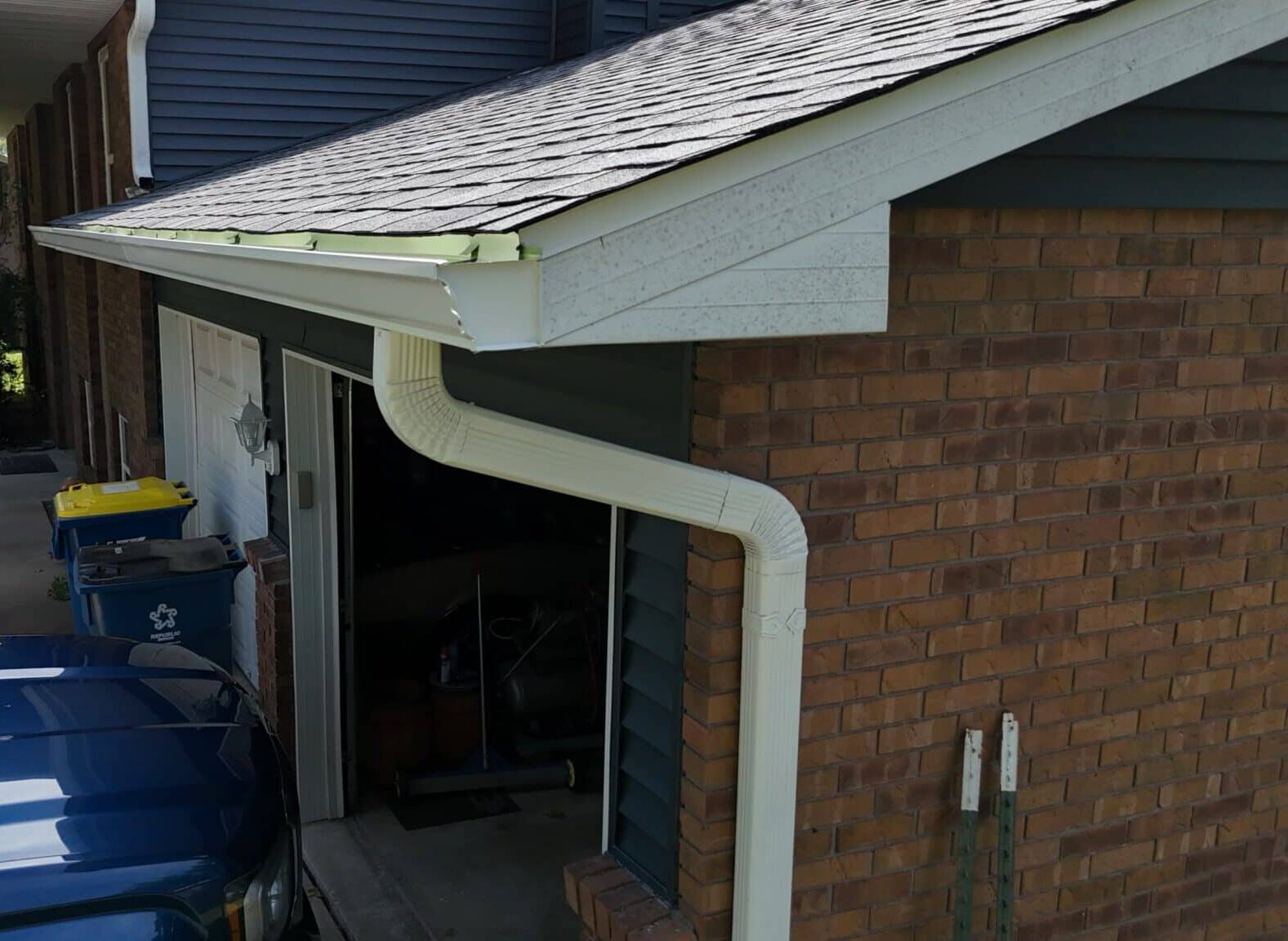
How often should gutters be cleaned in the St. Louis area?
For most homes around St. Louis, on both sides of the river, plan on cleaning at least twice a year: once in late spring and once in late fall, before the first hard freeze. If mature trees hang over the roof, three or four times a year is more realistic. Add a quick check after any severe storm.
The fall cleaning matters most. Wet leaves left in the gutter freeze in place, add weight to the hangers, and can back water up under the roof edge. Clearing them out in November is easier than chipping ice out in January.
If cleaning doesn’t fix the overflow, or the hose test turns up drips and dips, you’ve moved past debris. That’s the point to look at repairs.
When Is a Gutter Repair Enough?
A gutter repair is enough when the damage is limited to one spot and the gutter material and fascia around it are still solid. Most problems on a gutter that’s otherwise in good shape fall into this group.
Common fixes that put a gutter back in service:
- A loose or broken hanger: replace it or add one, fastened into sound wood. Hangers are typically spaced about every 2 feet, and some six-inch systems closer, around every 16 inches.
- A leaking seam or end cap: clean and dry the joint, then reseal it.
- A small hole: patch it with a compatible material and sealant.
- A sag in one section: reposition the gutter and add hangers.
- Poor slope: reset the run so it falls about 1/4 inch for every 10 feet toward the downspout. Water that sits in a flat gutter has nowhere to go.
- A clogged or detached downspout: clear it and reconnect it, and make sure it lets water out away from the house.
Each of these is a fix to one part, not a sign the whole system is done. If the downspout is the weak spot, our guide to keeping water away from your foundation covers where it should let out. Our stance hasn’t changed: if a repair will do the job, we’ll tell you so.
A repair has one condition, though. It only holds if the wood behind it can hold a fastener. If the fascia is soft, new hangers won’t stay put for long. More on that below.
When Should You Replace Gutters?
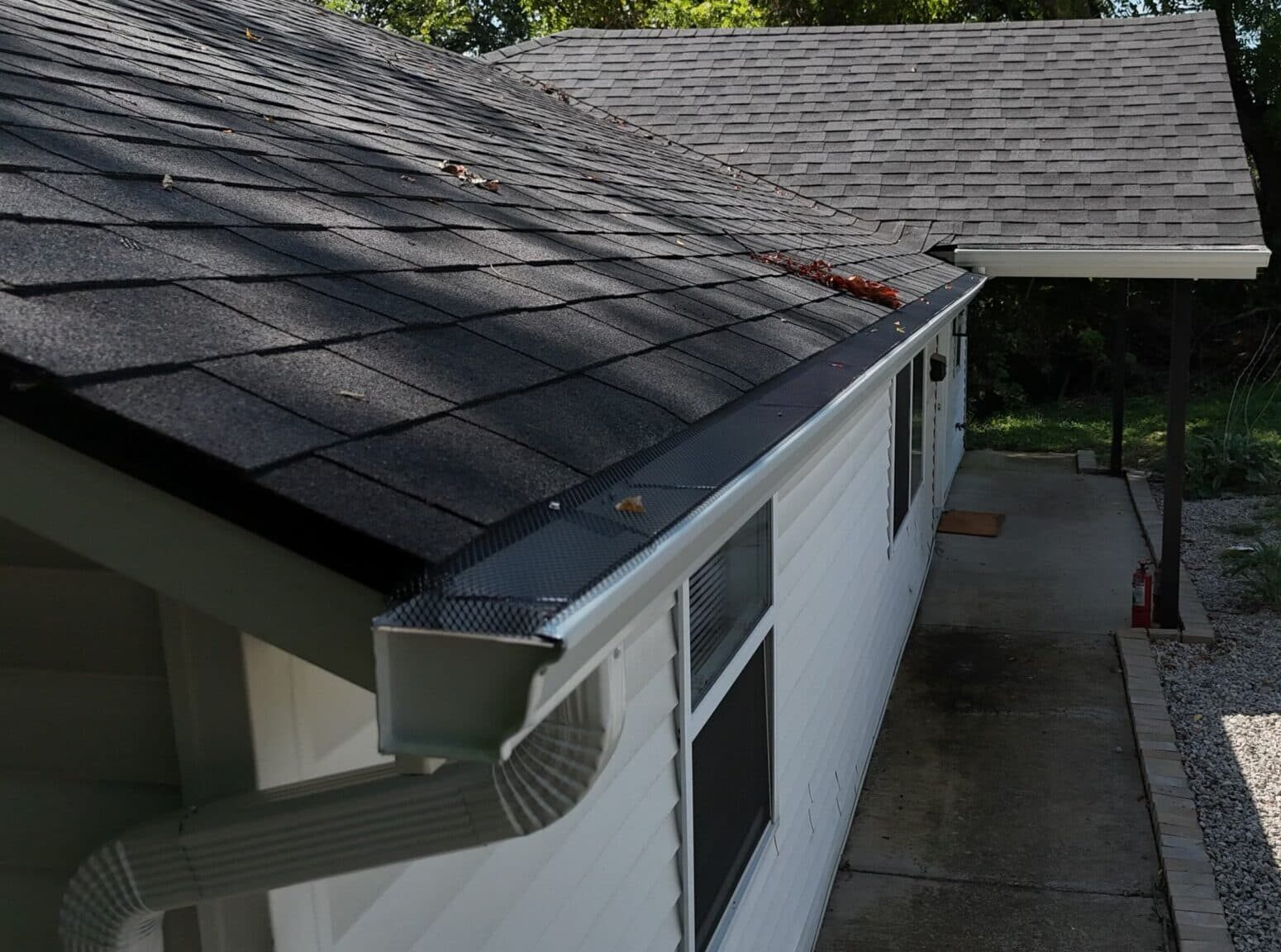
You should replace gutters when the problems are spread across the system instead of sitting in one spot, or when repairs keep coming back. At that point, patching becomes a cycle, and new gutters are usually the better use of your time and money.
Signs that point to replacement:
- Widespread sagging along several runs, not one loose section.
- Repeated leaks at seams you’ve already resealed.
- Rust that has eaten through the metal, or cracks and splits in more than a spot or two.
- Pulling away from the fascia in several places.
- Overflow even when the gutters are clean, which can mean the gutters are too small for the roof and the way it rains here now. Midwest storms tend to drop more rain in less time, so capacity is worth asking about when you replace.
- Age. A gutter system near the end of its typical life, with several of the signs above, is rarely worth patching again.
Hail and wind can also dent, crack or tear gutters loose. If storm damage is part of the picture, we work directly with your Insurance Company.
Here’s a quick way to sort what you’re seeing:
| What you see | Repair is usually enough | Replacement is usually better |
|---|---|---|
| Sagging | One section, one or two hangers | Sagging along several runs |
| Leaks | One seam or end cap | Leaks keep returning at many seams |
| Rust or holes | Surface rust, one small hole | Rust-through or cracks in many spots |
| Pulling away | One loose spot, sound fascia | Separation in several places |
| Overflow | Stops after cleaning | Continues even when clean |
| Downspout | Clogged or disconnected | Undersized for the whole system |
If most of what you see lands in the left column, a repair is likely all you need.
Is the Real Problem the Fascia Board or the Roof Edge?
Sometimes the gutter isn’t the problem at all. The fascia board, the wood trim the gutter hangs from, can rot when water keeps getting behind the gutter. Once it’s soft, no gutter will stay attached for long, new or old.
Check from the ground for these signs:
- Dark stains or peeling paint on the fascia behind the gutter.
- A gutter that pulls away at the hangers even though the hangers themselves look fine.
- Wood that looks swollen, cracked or crumbly at the corners.
If the fascia is soft, it has to be fixed before new hangers or new gutters go up. Putting new gutters on rotten wood just moves the failure down the road.
It helps to know how the parts at the roof edge work together:
- Shingles: shed water down the roof toward the edge.
- Drip edge: a metal strip at the edge of the roof that steers water into the gutter instead of behind it.
- Fascia board: the trim the gutter is fastened to.
- Gutter: catches the water and carries it to the downspout.
- Hangers: hold the gutter to the fascia and keep its slope.
- Downspout: carries water down and away from the foundation.
When gutters clog or fail, water backs up at the roof edge and can soak the fascia and the edge of the roof itself. So a gutter problem that has been going on for a while is worth a look at the roof edge too, and our piece on gutter maintenance and roof health explains why.
How Long Do Gutters Last?
Gutters last anywhere from about a decade to a few decades, depending on the material and how well they’re kept clean. These are typical ranges from contractor and industry sources, not guarantees:
- Aluminum: typically about 20 to 30 years with regular maintenance, sometimes longer.
- Galvanized steel: roughly 15 to 20 years.
- Vinyl: roughly 10 to 15 years, with some sources saying up to 20 years.
- Copper: can last 50 years or more, though it’s an uncommon choice on homes.
Aluminum gutters formed in one continuous piece, with no seams along the run, hold the largest share of the North American gutter market by material, according to industry reports.
Age alone doesn’t decide anything. A 25-year-old aluminum gutter that’s clean, tight and dry may have years left. A younger one that sags, leaks and rusts doesn’t. Use age as a reason to look closer, then go by what you see.
When you do replace, it’s also the time to think about size. Larger gutters, such as six-inch, are often chosen for big roofs and heavy rain, and a properly sized system is less likely to overflow in the kind of downpours that roll through the Midwest.
Do Gutter Guards Help?
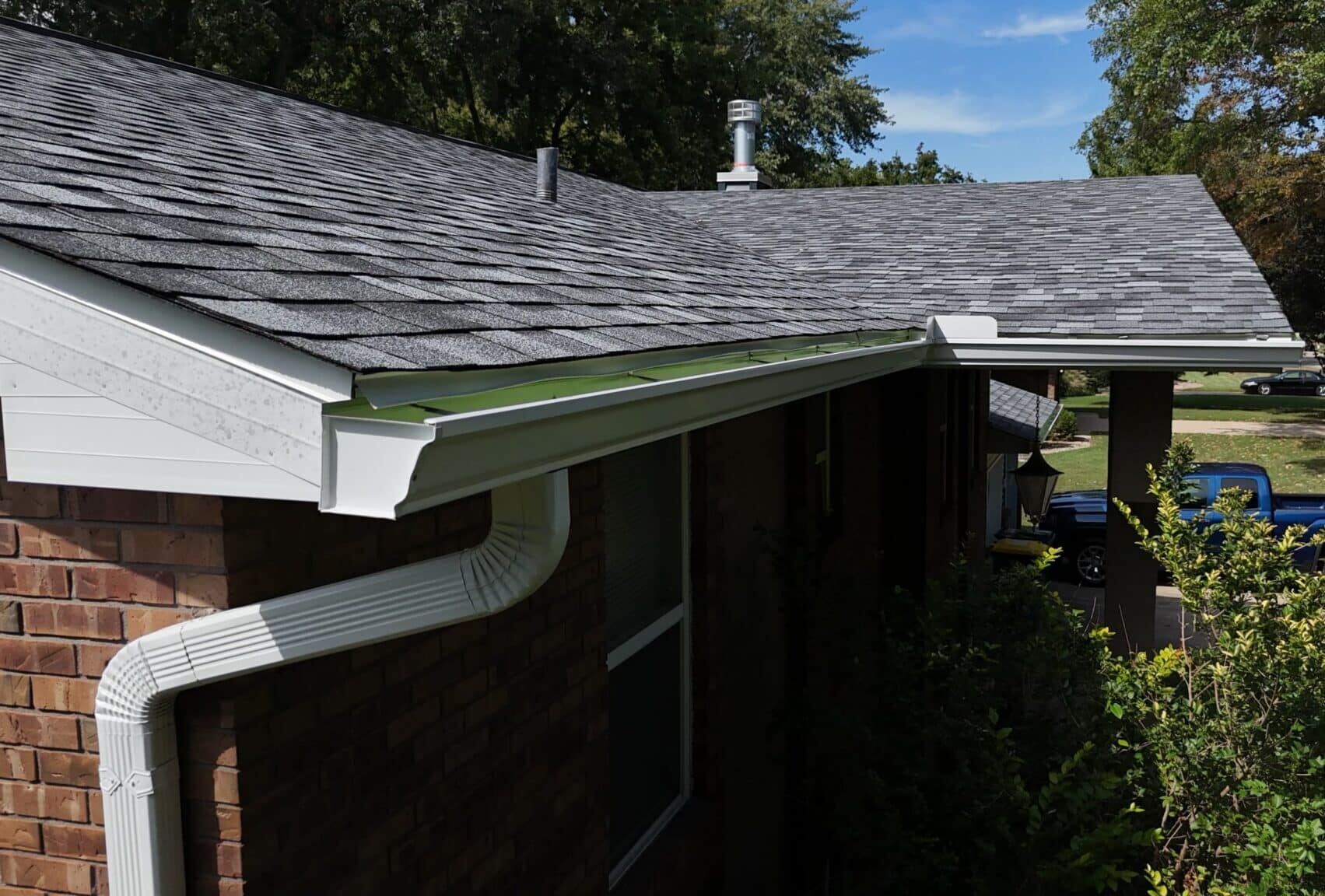
Gutter guards help keep leaves and larger debris out, which can mean fewer cleanings. They don’t make gutters maintenance-free.
Independent testing has found that guards still need checking and occasional cleaning, and some designs can let water overshoot the gutter in very heavy rain.
If you have big trees over the roof, guards may be worth a look. Just plan on still checking the gutters after storms and each fall.
Getting a Second Opinion
If you’re not sure whether you’re looking at a cleaning, a repair or a full replacement, a second set of eyes can settle it. We work on home exteriors, roofs, siding and gutters, and we’ll tell you what your gutters actually need, not what makes us the most money. If a cleaning or a small repair will do it, we’ll say so. Then we’ll go over the cost of what it does need.
We’ve been family-owned since 1974, and we’re A+ BBB rated and licensed, bonded and insured. Get a Free Roof Inspection. We come to you, no sales pressure.
Frequently Asked Questions
How do you fix gutters?
Start by flushing the gutter and downspout so you can see the real problem. For a clogged downspout, try running water up from the bottom first, then a hand auger if that doesn’t clear it. Let a seam dry fully before resealing it, or the sealant won’t bond. After any fix, run a hose at the far end and watch the whole length. Call a pro if the fascia is rotten, the gutter has come badly loose, or you can’t reach it safely.
How do you clean out your gutters?
Scoop the debris out by hand or with a gutter scoop, working toward the downspout so you don’t push the clog into it. Then flush the gutter with a hose and confirm water comes out the bottom of every downspout. If a downspout stays blocked, clear it from below before trying from the top.
How often are gutters replaced?
There is no set replacement schedule. Gutters get replaced when they fail, and on a well-kept aluminum system that can be decades out. The typical lifespans assume regular cleaning, so gutters left clogged winter after winter can fail sooner. If you’ve had the same section repaired more than once, that’s a better signal than the calendar.
Can a handyman do gutter cleaning?
Yes. A competent handyman, or you, can clean gutters, but ladder work carries real risk. According to the CDC’s National Institute for Occupational Safety and Health, about 40% of ladder injuries come from the base sliding out because the ladder was set at the wrong angle. Set an extension ladder at about 75 degrees, use one rated for the load, and don’t overreach. Use a ground-based tool or hire a professional when the roof is steep, the ground is soft or uneven, power lines are nearby, or the weather is bad.
Get A Free Roof Inspection