Water is coming through the ceiling, the storm is still going, and the roofer isn’t there yet. You don’t need to do anything heroic tonight. A few calm steps inside the house will protect your family and your belongings until the roof itself can be looked at.
Emergency roof leak repair starts indoors. Keep people and pets away from wet ceilings and anything electrical, catch the water, move or cover what you can, and photograph the damage before you clean up. Stay off the roof: a wet, sloped roof is dangerous even for trained roofers. When the roofer arrives, expect temporary protection first if it’s needed, then a search for the true source and a written plan for the permanent repair.
In this article
- Start With Safety, Not the Roof
- Protect the Inside of Your Home
- Document the Damage Before You Clean Up
- Why You Shouldn’t Climb Up There
- Temporary Fixes: What’s Safe and What Isn’t
- Dry Things Out Within a Day or Two
- What Happens When the Roofer Arrives
- How to Choose Who Comes Out
- Frequently Asked Questions
Start With Safety, Not the Roof
The first priority is people, then electricity, then the water. Everything else can wait a few minutes.
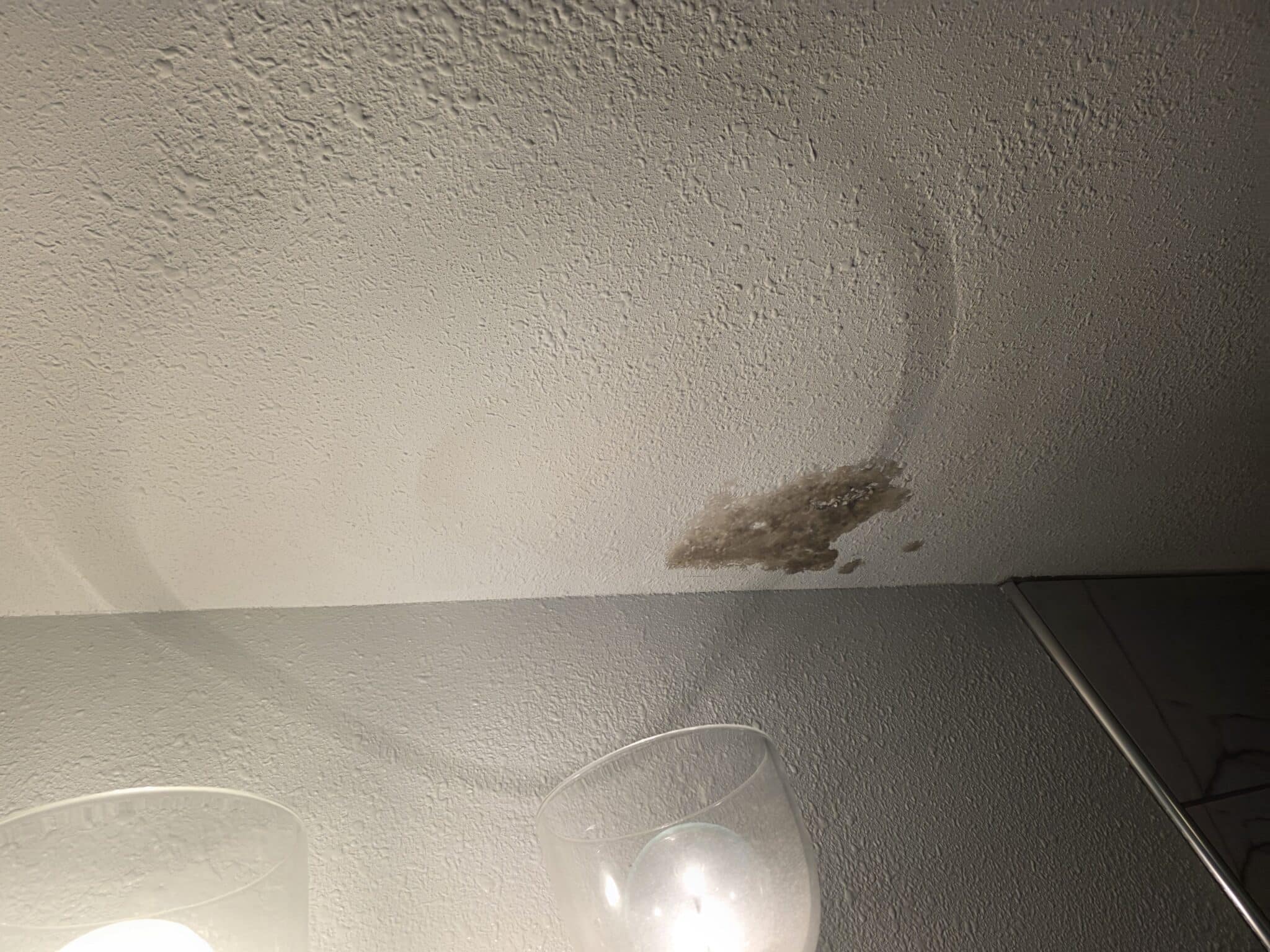
Get everyone out from under any ceiling that is sagging, cracked or dripping heavily. Wet drywall gets heavy, and a soaked section can come down without much warning.
Then check whether you notice water near light fixtures, outlets, ceiling fans and cords. Keep away from all of them. If you want the power off in that part of the house, switch it off at the breaker panel only if you can stand somewhere completely dry to do it. If a breaker has already tripped, leave it off.
If water has reached anything electrical, call an electrician as well as a roofer.
And if you see sparks or smoke, smell something burning, or part of the ceiling falls in, get everyone out first and call for emergency help once you’re outside. That’s the one situation where the roof is the last thing to worry about.
Protect the Inside of Your Home
Once everyone is safe, the job is catching the water and keeping it off what matters.
- Move furniture, rugs, electronics and boxes out of the wet area, as long as you don’t have to stand under a sagging spot to do it.
- Put a bucket, a storage tub or a trash can under each drip. A towel in the bottom keeps the splashing down.
- Lay towels around the edges to soak up what misses.
- Cover anything too heavy to move with plastic sheeting or a tarp.
- Empty the containers often, and check other rooms. A roof leak can show up in more than one place.
A ceiling that is bulging with water needs its own rule. Stay out from under it, keep others out too, and call for help. Don’t poke a hole in it, especially if there is a light fixture or wiring nearby, the drywall is cracking, it’s hanging low, or pieces are already falling. Puncturing it is a judgment call best left to someone who can see what’s behind it.
Document the Damage Before You Clean Up
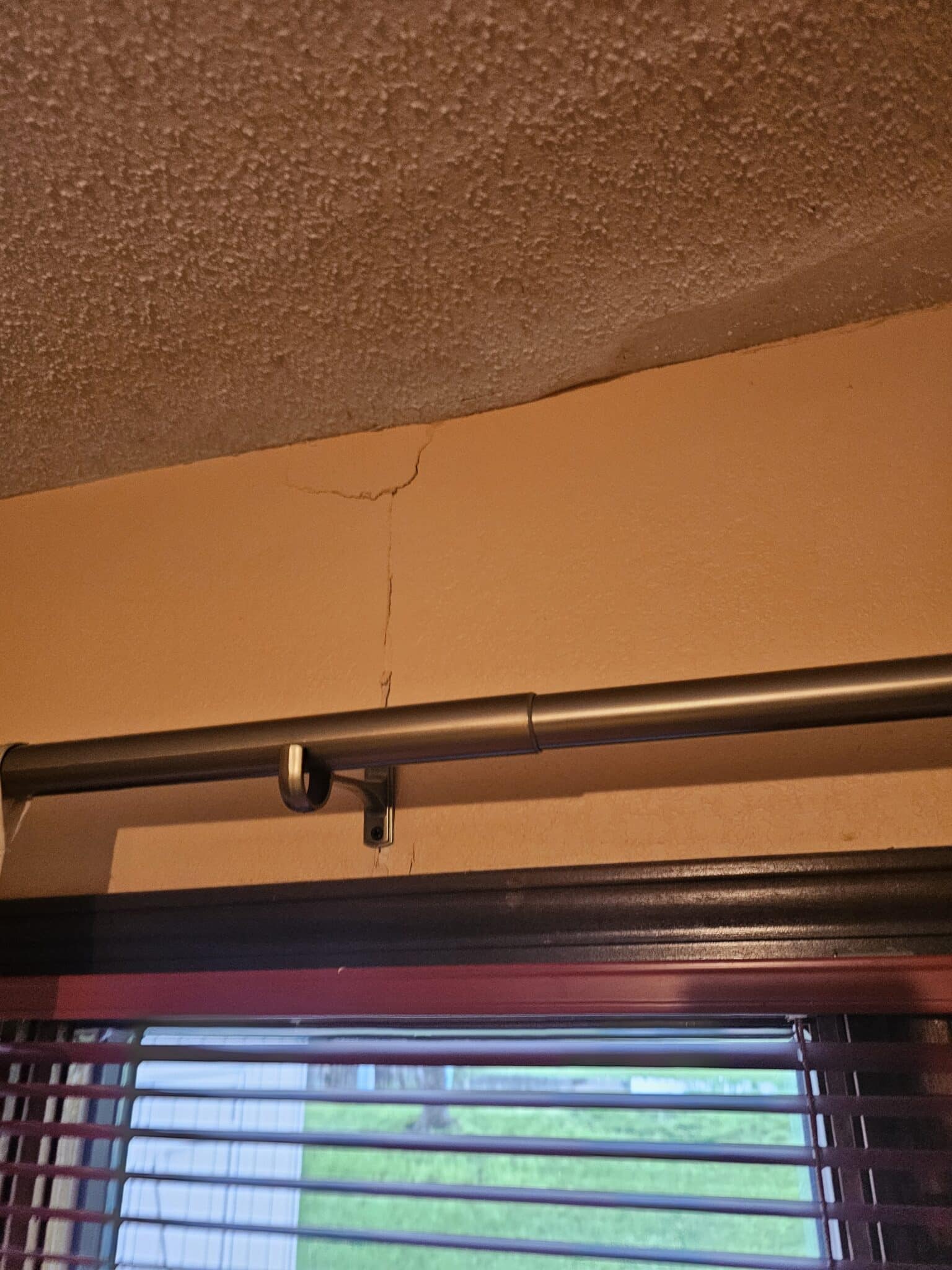
Take photos and video before you mop, move or throw anything away. That record is far easier to make tonight than to rebuild later.
FEMA advises documenting damage inside and out, and the habits below follow that advice:
- Shoot wide first, so a photo shows the whole room, then go close on the stain, the drip and anything damaged.
- Label photos by date and room as you go.
- Keep a short written log: when you first noticed the leak, what the weather was doing, and each step you took.
- Keep receipts for anything you buy, like tarps, fans or buckets.
If the leak follows hail or wind, that same record shows the storm damage as it was. Edwards & Sons works directly with Your Insurance Company and helps homeowners through the claims process, and a dated set of photos and notes makes that work easier for everyone.
Why You Shouldn’t Climb Up There
Leave the roof to the roofer, even if the problem looks small and the ladder is right there.
Wet shingles are slick. Decking that has been soaking can be soft in spots you can’t see from above. And the slope itself works against you: the CDC’s National Institute for Occupational Safety and Health (NIOSH) notes that walking across a sloped roof surface decreases postural stability.
This is a risk for professionals, too. NIOSH reports that roofers accounted for 874 of the 2,013 fatal falls in construction between 2011 and 2017, about 43%. That’s why roofers work with fall protection and training, and why nobody expects a homeowner to go up in the rain.
If you want a look, stay on the ground. A pair of binoculars from the yard can show missing shingles, a lifted edge or a branch on the roof, and that’s useful information to pass along when you call.
Temporary Fixes: What’s Safe and What Isn’t
A temporary fix slows the water down. It doesn’t repair the roof.
The most common one is a tarp. Shingle manufacturers describe tarping as a temporary measure to limit further water damage, with the tarp reaching roughly four to five feet past the damaged area and secured tight so wind can’t get under it. A roofer should check it once it’s on. Owens Corning notes that contractors can place emergency tarps until repairs can begin.
The safe version of a temporary fix, for you, is everything in the sections above: containers, towels, plastic, photos and a phone call. What isn’t safe is getting on a ladder in the rain or wind to spread a tarp yourself.
It also helps to know what a tarp leaves behind. The opening that let the water in is still there, under the plastic, and it still needs a permanent repair.
Dry Things Out Within a Day or Two
Drying is the step that heads off mold. According to the U.S. Environmental Protection Agency, if wet or damp materials are dried within 24 to 48 hours after a leak, in most cases mold will not grow.
Once the water is contained and the area is safe, open interior doors, run fans and a dehumidifier if you have one, and pull wet rugs and cushions somewhere they can dry. Keep fans and cords well away from standing water and any wet ceiling.
Drying doesn’t finish the job on its own. The EPA is clear that the water source has to be stopped too, and soaked porous materials like ceiling tiles may still need to be thrown out if mold takes hold. Wet insulation and drywall often have to come out once the roof is fixed.
What Happens When the Roofer Arrives
A good roof leak visit starts inside your house, not on the roof.
The roofer will want to see the stain, the ceiling and the attic. The stain is usually not directly under the hole. Water runs along the roof decking and the rafters before it drips, so the roofer traces it uphill from where it showed up.
From there, the usual suspects get checked: the flashing around chimneys and walls, the rubber boots around plumbing pipes, roof vents, the valleys where two slopes meet, and the shingles themselves. A clogged gutter that backs water under the roof edge is another common cause. At Edwards & Sons Roofing, we use drones on inspections, which helps when the roof is still wet or too steep to walk safely.
If the water is still getting in, temporary protection usually comes first. The permanent repair follows once the weather and the roof allow it.
Before the roofer leaves, you should have these in hand:
- What caused the leak
- What was done today, and what is still temporary
- The permanent repair they recommend to address the cause
- Photos of what they found
- A written estimate
We recommend roof repair over full replacement whenever possible. If a roof replacement is truly the better choice, you’ll hear why, in plain words.
How to Choose Who Comes Out
When you need emergency roof repair, it’s tempting to call the first number you find. A few quick checks are worth the time.
In Illinois, roofing contractors are licensed by the Illinois Department of Financial and Professional Regulation, and its online License Look Up lets you check a name before anyone climbs your roof. Ask any roofing team to provide proof of insurance, and ask for the warranty in writing.
Edwards & Sons Roofing is family-owned since 1974, veteran-owned and operated, licensed, bonded and insured, and A+ BBB rated. We’re also an Owens Corning Preferred Contractor, and our roof repair services cover homes on both sides of the river around St. Louis.
Every visit starts with a free roof inspection, with no sales pressure. You can call (618) 476-1480 or use the Get a Free Roof Inspection button, and we’ll tell you what your roof actually needs.
Frequently Asked Questions
What can I use when my roof is leaking?
Two things people often reach for don’t do the job. Roofing felt and other underlayments are water-resistant, not waterproof, so they’re no substitute for a heavy-duty tarp. And smearing sealant on the underside of the roof from the attic can hide a leak without closing the opening on the outside. Plastic sheeting, buckets and towels indoors, and a tarp put on by a roofer outdoors, are what hold up.
Can a handyman fix a roof leak?
Rules differ by state. Licensing requirements vary between Illinois and Missouri. In Illinois, roofing repairs must be performed by a state-licensed roofing contractor. In Missouri, there is no single statewide roofing contractor license, but local requirements may apply depending on the city or county. Homeowners should check local rules and verify a contractor’s credentials before hiring someone to perform roofing work. Shingle manufacturers’ warranties can also depend on how the work is done, so a patch by someone outside the trade can matter later.
What happens if a roof leak is left untreated?
The damage keeps spreading out of sight. Wet insulation loses its effectiveness, drywall can stain, sag and eventually fall, and wood that stays wet can rot over weeks or months. There’s no set timetable. How fast it happens depends on how much water gets in and where it sits.
Get A Free Roof Inspection