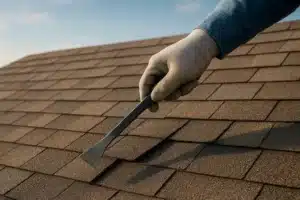
When you look at an asphalt shingle roof, the shingles are the part you see. But shingles are only one part of the roofing system.
Under and around those shingles are several other components that work together to shed water, manage moisture, handle weather, and protect the structure of your home. Understanding how those pieces work can help you recognize potential problems and make more informed decisions about roof maintenance and repairs.
Let’s take a look at the major parts of an asphalt shingle roofing system and what each one does.
The Visible Layer: Asphalt Shingles
What Are Asphalt Shingles?
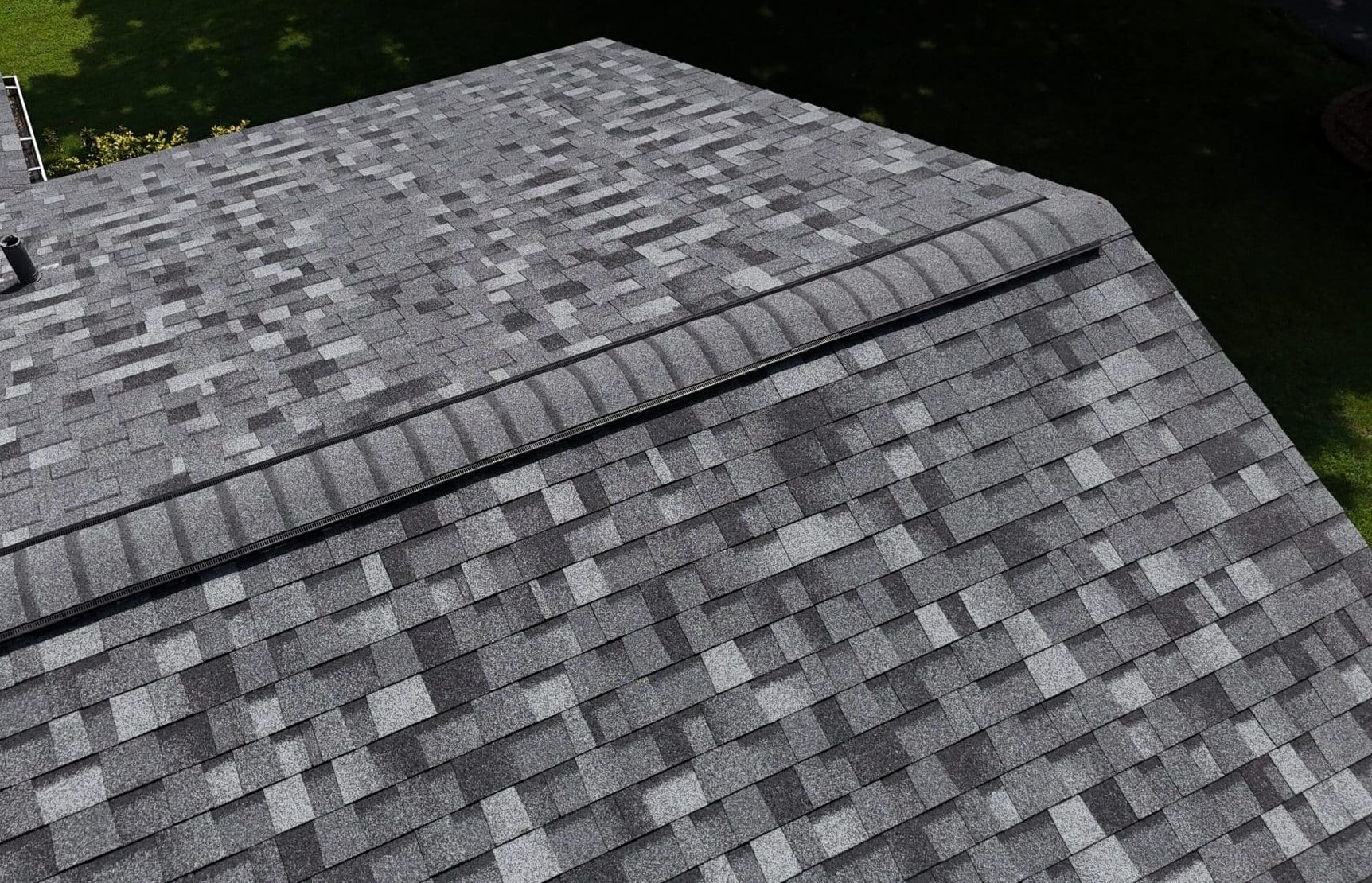
Asphalt shingles are the outer layer of most residential roofing systems. They are typically made with a fiberglass mat, asphalt, and mineral granules.
The granules give shingles their color and help protect the surface from sunlight and weather.
What Do They Do?
Shingles are designed to shed water and protect the layers underneath from rain, wind, sunlight, and other weather conditions.
They are installed in overlapping courses so water can flow down the roof rather than underneath the shingles.
Why Do They Matter?
Because shingles are exposed to the weather every day, they can eventually show signs of aging or damage.
Hail, high winds, falling branches, heavy weather, and normal aging can all affect their condition. In the St. Louis region and Southern Illinois, weather can be especially demanding, with seasonal temperature changes, severe thunderstorms, hail, and freeze-thaw cycles.
What Can Go Wrong?
Common concerns include:
- Missing or lifted shingles
- Cracked or damaged shingles
- Excessive granule loss
- Curling or deteriorating shingles
- Shingles that no longer appear to be lying flat
Some granule loss is normal as shingles age. A sudden increase in granules, particularly after a storm, may be worth having evaluated.
From the ground, homeowners can safely look for missing, visibly damaged, or lifted shingles. Binoculars can help you see details without climbing onto the roof.
You shouldn’t walk on your roof to inspect it yourself.
Starter Strips: Helping Seal the First Course
Starter strips are installed along the lower edge of the roof before the first course of field shingles.
They help provide a sealed edge and help the first row of shingles resist wind uplift.
Because the lower edge of the roof can be exposed to wind-driven rain and strong winds, proper starter-strip installation is an important part of the roofing system.
Starter strips aren’t something most homeowners can evaluate from the ground. If you have concerns about how the edge of your roof was installed, a professional inspection can provide a closer look.
Ridge Cap Shingles: Protecting the Roof’s Peak
Ridge cap shingles cover the highest points of the roof where two slopes meet.
They help protect the ridge from weather and provide a finished, sealed surface over the top of the roofing system.
Because ridges can receive significant wind and sun exposure, ridge caps can develop problems such as lifting, cracking, or missing sections.
If you notice missing ridge shingles from the ground, that is a good reason to have the area evaluated.
Underlayment: A Layer Beneath the Shingles
Underlayment sits on top of the roof decking and beneath the shingles.
Depending on the roofing system, it may be made from synthetic material or another approved underlayment product.
What Does It Do?
Underlayment provides an additional layer of protection beneath the shingles. If water gets past the shingles, underlayment can help protect the decking and direct moisture toward the lower edge of the roof.
It can also provide temporary protection during the roofing installation process.
Why Does It Matter?
Shingles do much of the work of shedding rain, but the roofing system relies on more than the shingles alone.
Underlayment provides another layer of protection if water gets past the outer surface.
Because it’s beneath the shingles, homeowners generally cannot inspect its condition without removing roofing materials.
If you notice interior water staining after rain, the cause may involve several parts of the roofing system. An inspection can help identify where the problem is coming from.
Ice and Water Protection: Extra Protection in Vulnerable Areas
Ice and water protection is a self-adhering membrane used in areas of a roof that may be especially vulnerable to water intrusion.
Depending on the roof design and local requirements, it may be installed along eaves, valleys, and around certain roof penetrations.
This type of protection can be particularly useful in areas where water may back up beneath shingles, including during certain winter conditions.
Illinois and Missouri homes can experience snow, ice, and freeze-thaw cycles, so understanding how a roofing system handles these conditions is important.
The exact placement and amount of ice and water protection can vary by roof design, installation requirements, and local conditions.
Roof Decking: The Structural Base
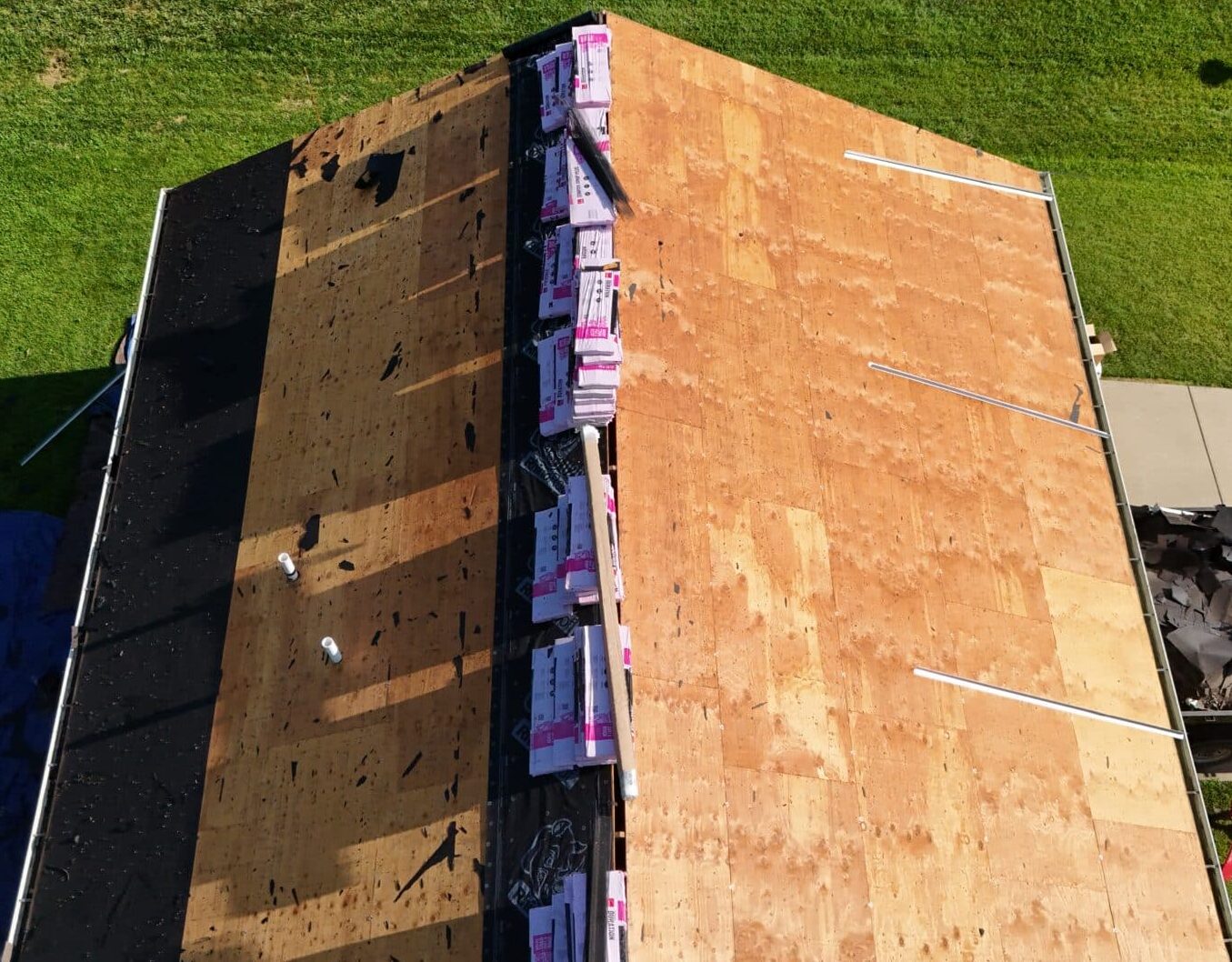
Roof decking, also called sheathing, is the layer attached to the home’s rafters or trusses. Plywood and OSB are common decking materials.
The decking provides the surface that supports the roofing materials above it.
Why Does It Matter?
Roof decking needs to remain in good condition for the roofing system to perform properly.
Long-term moisture exposure can cause decking to deteriorate. Problems with shingles, flashing, ventilation, or other components can sometimes contribute to moisture reaching the decking.
Decking condition can be difficult to determine from the outside. In some cases, a roofer may discover damaged decking after removing shingles.
That is one reason clear communication is important when roofing work is being considered. If damaged decking is discovered, homeowners should understand where the damage is, what needs to be replaced, and why.
Flashing: Protecting Roof Transitions
Flashing is material installed around areas where the roof meets another surface or where something passes through the roof.
You may find flashing around:
- Chimneys
- Walls
- Skylights
- Vents
- Other roof penetrations
Its job is to help direct water away from these vulnerable transition points.
What Can Go Wrong?
Flashing can become damaged, displaced, corroded, or improperly sealed.
Because these areas are more complicated than an open section of shingles, problems around flashing can sometimes be difficult to identify from the ground.
Water stains near a chimney, wall, skylight, or vent may be a reason to have that area evaluated.
A stain inside the home does not necessarily identify the exact point where water entered the roof, so avoid assuming the visible stain tells the whole story.
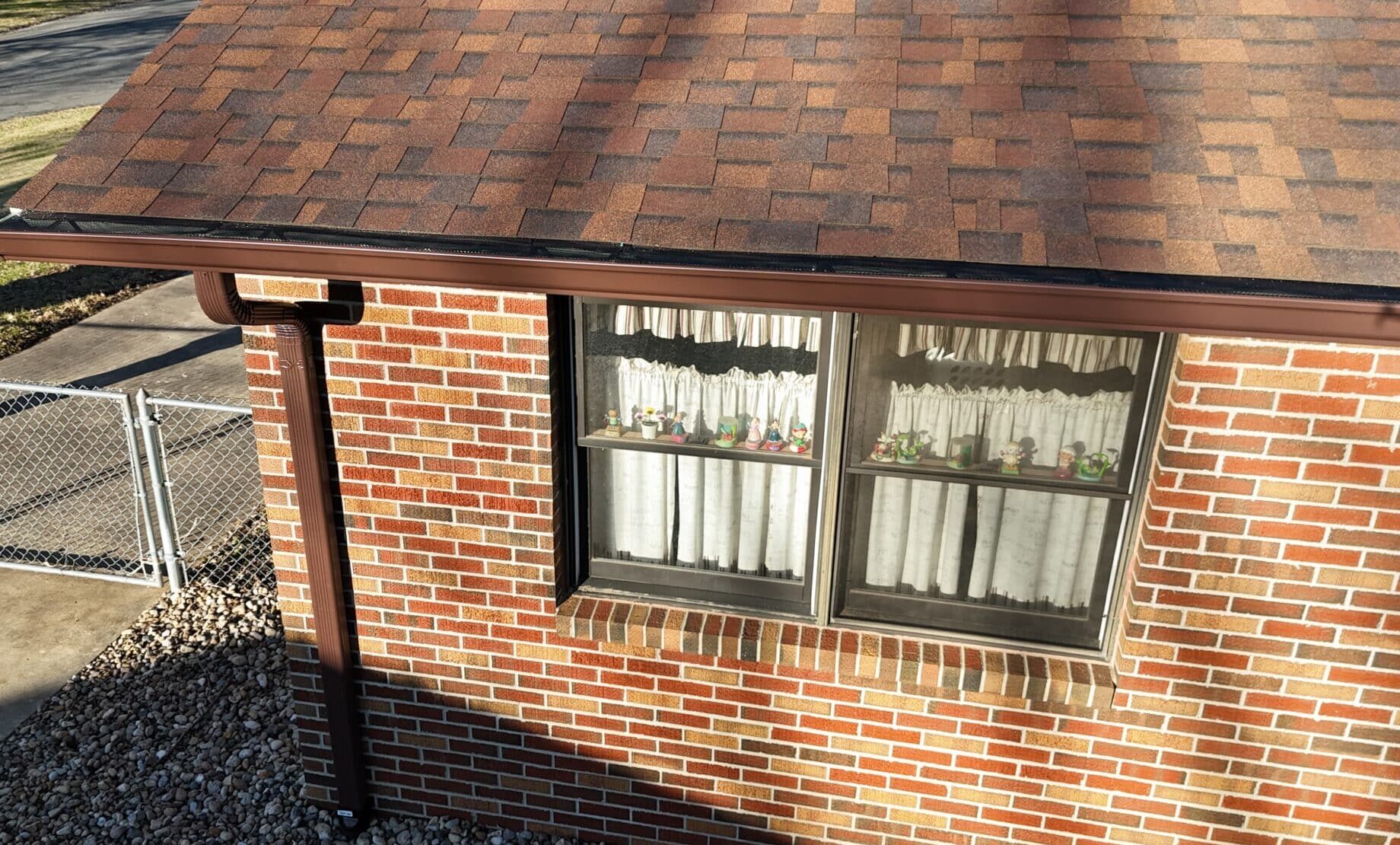
Drip Edge: Directing Water Toward the Gutters
Drip edge is metal trim installed along the edges of many roofing systems.
It helps direct water away from the roof edge and toward the gutter while also helping protect the edge of the roofing system.
A damaged, displaced, or missing drip edge can allow water to reach areas that weren’t designed to handle constant runoff.
Because drip edge is located along the roof perimeter, some concerns can be identified from the ground during a visual inspection.
Roof Valleys: Where Water Comes Together
A roof valley is where two roof slopes meet.
Water flowing down both sections of the roof collects in this area, making proper valley construction and drainage important.
Valleys can be designed and installed in different ways, including systems that use metal flashing or specialized shingle installation.
What Can Go Wrong?
Potential problems can include:
- Damaged or displaced flashing
- Improper shingle installation
- Debris buildup
- Deteriorated roofing materials
- Water backing up during certain weather conditions
Because valleys handle water from two roof surfaces, problems in this area deserve attention.
Roof Ventilation: Managing Attic Air
Roof ventilation helps move air through the attic.
A typical ventilation system uses intake openings, often located at the soffits, along with exhaust openings such as ridge vents or other approved ventilation systems.
What Does Ventilation Do?
Properly designed ventilation can help manage heat and moisture in the attic.
That matters because excess moisture can contribute to condensation and deterioration of materials over time.
Ventilation is only one part of attic performance, though. Insulation, air sealing, roof design, and the balance between intake and exhaust ventilation all matter.
What Can Go Wrong?
Ventilation problems can include:
- Blocked soffit vents
- Inadequate intake ventilation
- Inadequate exhaust ventilation
- Improperly balanced ventilation
- Insulation blocking intended airflow
If you have safe attic access, signs such as moisture, condensation, or staining may deserve further evaluation.
These signs can have more than one possible cause, so they shouldn’t automatically be attributed to ventilation alone.
Ridge Vents: An Exhaust Point
A ridge vent is installed along a roof’s ridge and allows warm, moist attic air to escape when the ventilation system is properly designed.
Ridge vents work as part of a larger ventilation system. They are most effective when there is adequate intake ventilation to bring outside air into the attic.
A ridge vent by itself does not guarantee that an attic is properly ventilated.
Soffits: Providing Intake Ventilation
Soffits are located beneath the roof overhang.
When soffits contain ventilation openings, they can provide an intake path for outside air.
That air can move through the attic and eventually exit through the roof’s exhaust ventilation.
Soffit vents can become blocked by insulation, debris, or other materials. If intake ventilation is blocked, the overall ventilation system may not work as intended.
The Attic: Part of the Roofing System
The attic is more than an empty space beneath the roof. It is where several important parts of the home’s roof and ventilation system come together.
If you have safe access to your attic, you may be able to observe:
- Water staining
- Condensation
- Darkened areas on decking
- Signs of moisture
- Insulation blocking soffit vents
Don’t step on areas of decking that appear weak or damaged.
If you see signs of moisture, the cause may involve the roof covering, flashing, ventilation, plumbing, insulation, or another part of the home. A professional evaluation can help determine what is actually happening.
How the Parts Work Together
The most important thing to understand is that a roof is a system, not simply a layer of shingles.
Shingles shed most of the water. Underlayment provides another layer of protection. Flashing helps protect transitions and penetrations. Drip edge helps move water toward the gutters. Valleys manage concentrated runoff. Ventilation helps manage heat and moisture in the attic.
Each part has a job, and the condition of one component can affect how the rest of the system performs.
That is also why a roofing problem should not automatically lead to a recommendation for complete replacement.
A damaged shingle may be an isolated issue. In another situation, damaged shingles may be part of a broader problem involving flashing, decking, ventilation, or other components.
The right answer depends on the condition of the roof as a whole.
What Homeowners Can Safely Look For
You don’t need to climb onto your roof to gather useful information.
From the ground, you can look for:
- Missing or visibly damaged shingles
- Obvious curling or lifting
- Missing ridge caps
- Visible flashing concerns
- Sagging or unusual changes in the roof line
- Damaged roof-edge materials
- Excessive granules in gutters
Inside the home, you can watch for:
- Water stains after rain
- Signs of moisture in the attic
- Condensation
- Dark staining on roof decking
- Other changes that seem unusual
After a severe storm, you can also look around your property for roofing debris or other obvious signs of damage.
These observations can help you identify something worth investigating, but they do not replace a professional roof inspection.
When a Professional Inspection Makes Sense
A professional inspection may be helpful if you have noticed visible damage, a leak, storm-related concerns, or simply are not sure about the condition of your roof.
A thorough inspection looks beyond the shingles.
At Edwards & Sons, our approach considers the different areas of the home and roofing system, including the interior and attic, the perimeter and exterior, and the rooftop itself.
The goal is to understand what is actually happening before deciding what work, if any, is appropriate.
Sometimes a localized repair makes sense. Other situations may involve more widespread deterioration and require more extensive work.
There is no one answer for every roof.
After more than 50 years serving homeowners in the region, we know that the most useful roofing conversations start with understanding the problem—not assuming the solution.
FAQs
How long does an asphalt shingle roof last?
Roof life varies based on the roofing materials, installation, weather exposure, ventilation, maintenance, and other factors. Age can provide useful context, but the actual condition of the roofing system matters too.
Do all roofs have the same layers?
No. Roofing systems vary based on the home’s design, materials, installation methods, local requirements, and other factors. The components described here are common parts of asphalt shingle systems, but not every roof will be constructed exactly the same way.
Does a damaged shingle mean I need a new roof?
Not necessarily. A damaged shingle may be an isolated problem that can be repaired. The appropriate solution depends on the extent of the damage and the overall condition of the roofing system.
Can I inspect my own roof?
You can safely look for many signs from the ground, but climbing onto a roof can be dangerous and may cause additional damage. If you are concerned about something you see, a professional can inspect areas that cannot be safely evaluated from the ground.
Why is my ceiling stained if I cannot see roof damage?
A ceiling stain can have several possible causes, and the location of the stain does not always show where water entered. Water can travel along roofing materials, framing, or other surfaces before becoming visible inside the home.
Why is roof ventilation important?
Proper ventilation can help manage heat and moisture in the attic. However, ventilation works as part of a larger system that includes intake ventilation, exhaust ventilation, insulation, and air sealing. If you are seeing moisture or condensation, the cause should be evaluated rather than assumed.
The Bigger Picture
An asphalt shingle roof is made up of many components, and each one has a purpose.
Understanding those components can make it easier to recognize potential problems and ask better questions when maintenance or repairs are needed.
You don’t have to become a roofing expert to make a good roofing decision. You simply need clear information about what is happening, what options may be available, and why a particular solution makes sense.
If you are unsure about something you’ve noticed on your roof, a professional inspection can help provide that information.
Understand the problem first. Then decide what makes sense.