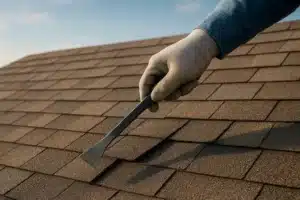
A residential roof is made up of several components, including shingles, flashing, valleys, ridge caps, drip edge, gutters, soffits, and materials beneath the shingles. Each part has a different job, but they work together to protect your home from weather and move water away from the structure.
Knowing the basic parts of a roof can help you understand what you’re looking at, recognize changes over time, and have better conversations with a roofing professional when questions come up.
This guide focuses on the parts homeowners are most likely to see from the ground or hear about during a professional inspection.
The Main Parts of a Roof You Can See
You don’t need to climb onto your roof to identify many of its major components. In fact, climbing onto a roof can be dangerous and isn’t necessary for a basic visual check.
Here are the parts you’re most likely to recognize.
1. Shingles
What they are:
Shingles are the visible covering on most residential asphalt shingle roofs.
What they do:
They are designed to shed rain and protect the roofing system underneath from weather and sunlight.
What to look for:
From the ground, you may notice missing, lifted, curled, or visibly damaged shingles. You might also see an unusual amount of granules collecting in your gutters.
A single damaged shingle does not automatically mean the entire roof needs to be replaced. The location and extent of the problem, along with the condition of the rest of the roof, all matter.
2. The Ridge
The ridge is the highest point where two sloped sections of the roof meet.
You may see a row of specially designed shingles covering the ridge. These are called ridge cap shingles.
The ridge is also an important part of many roof ventilation systems. A ridge vent, when used, allows air to exit the attic as part of a properly designed ventilation system.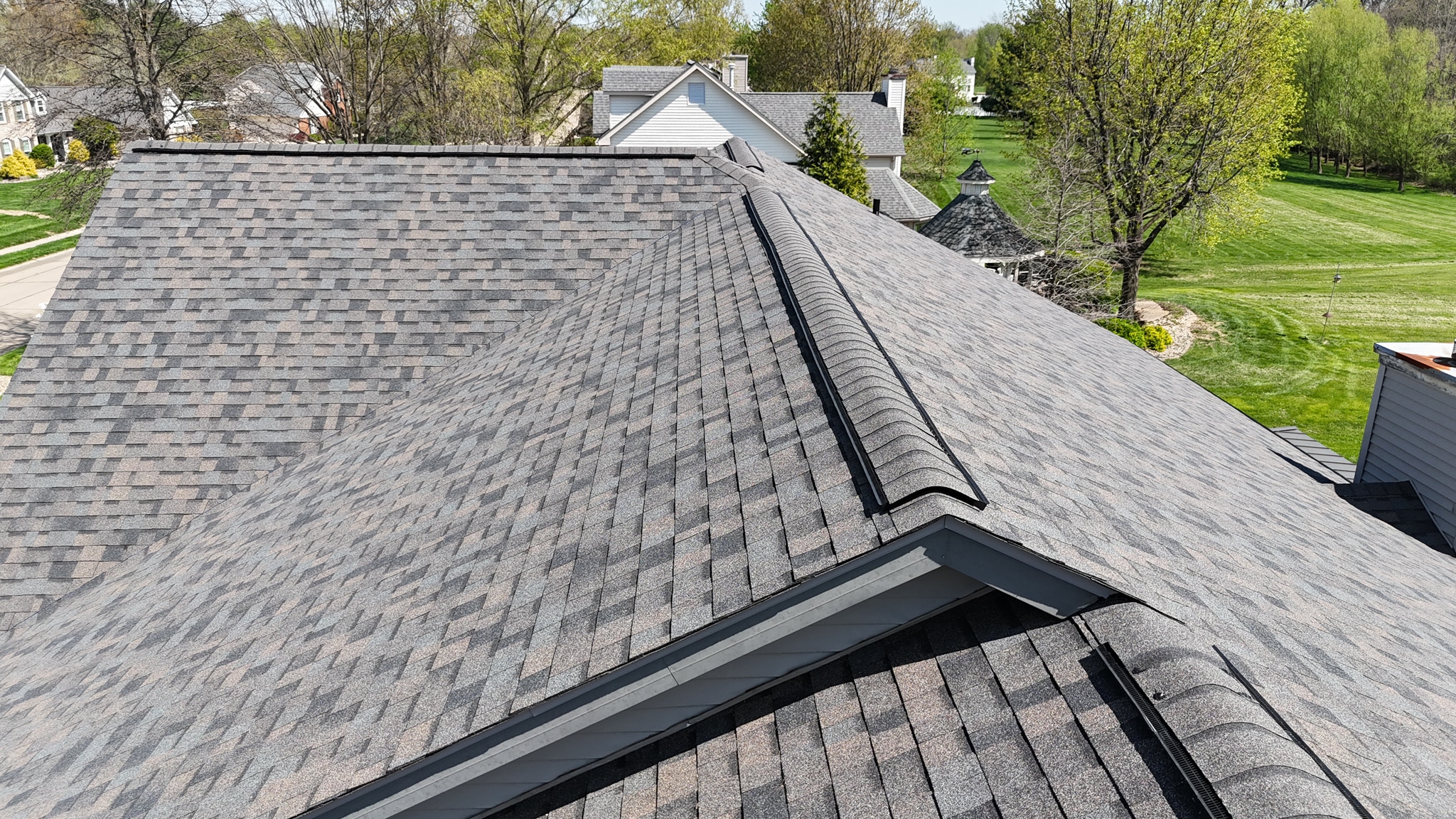
3. Roof Valleys
A valley is where two sloped sections of the roof meet at an angle.
Think of a valley as a natural pathway for rainwater. Water flowing down both roof sections comes together here and continues toward the roof edge.
Because valleys handle water from multiple sections of the roof, proper construction and drainage are important.
Valleys can be difficult to inspect closely from the ground. If you notice something unusual in one, a professional can take a closer look without putting you at risk by climbing onto the roof yourself.
4. Flashing
Flashing is material used around places where the roof meets another surface or where something passes through the roof.
You may find it around:
- Chimneys
- Skylights
- Vents
- Walls
- Other roof penetrations
Flashing helps direct water away from these transition points.
From the ground, you may be able to spot obvious gaps, damaged material, or areas that appear separated. However, flashing problems are not always easy to identify without a closer inspection.
5. Drip Edge
Drip edge is metal trim installed along the edges of many roofing systems.
It helps direct water away from the roof edge and toward the gutter while helping protect the roof’s perimeter.
Some drip edge is visible from the ground, especially along the lower edge of the roof.
If it appears bent, damaged, or displaced, it may be worth having the roof edge evaluated.
6. Gutters and Downspouts
Gutters aren’t technically part of the roof itself, but they play an important role in managing the water that comes off it.
Gutters collect rainwater along the roof edge. Downspouts carry that water toward the ground and away from the home.
Homeowners can safely look for:
- Leaves and debris
- Sagging sections
- Visible damage
- Loose or separated sections
- Water overflowing during rain
Keeping gutters reasonably clear can help the home’s drainage system work as intended.
7. Soffit and Fascia
The soffit is the underside of the roof overhang. The fascia is the vertical trim along the roof’s edge, where gutters are often attached.
These components help protect the edges of the home and provide a finished appearance.
Ventilated soffits can also provide intake ventilation for the attic.
From the ground, look for visible gaps, loose sections, damaged material, or signs of moisture-related deterioration.
Parts of a Roof You Usually Can’t See
Some of the most important roofing components are underneath the shingles or inside the attic.
You generally won’t be able to evaluate these parts from the ground, but understanding what they are can make an inspection report much easier to follow.
8. Underlayment
Underlayment sits between the shingles and the roof decking.
It provides an additional layer of protection beneath the shingles if moisture gets past the outer roofing material.
Because it is hidden beneath the shingles, a homeowner usually cannot evaluate its condition without a closer inspection or removal of roofing materials.
9. Roof Decking
Roof decking, also called sheathing, is the structural surface underneath the roofing materials.
It is commonly made from plywood or OSB and provides the base that supports the roofing system above it.
Long-term moisture exposure can cause decking to deteriorate. In some cases, the full condition of the decking cannot be determined until roofing materials are removed.
If damaged decking is found during roofing work, homeowners should receive a clear explanation of what was found and why it needs attention.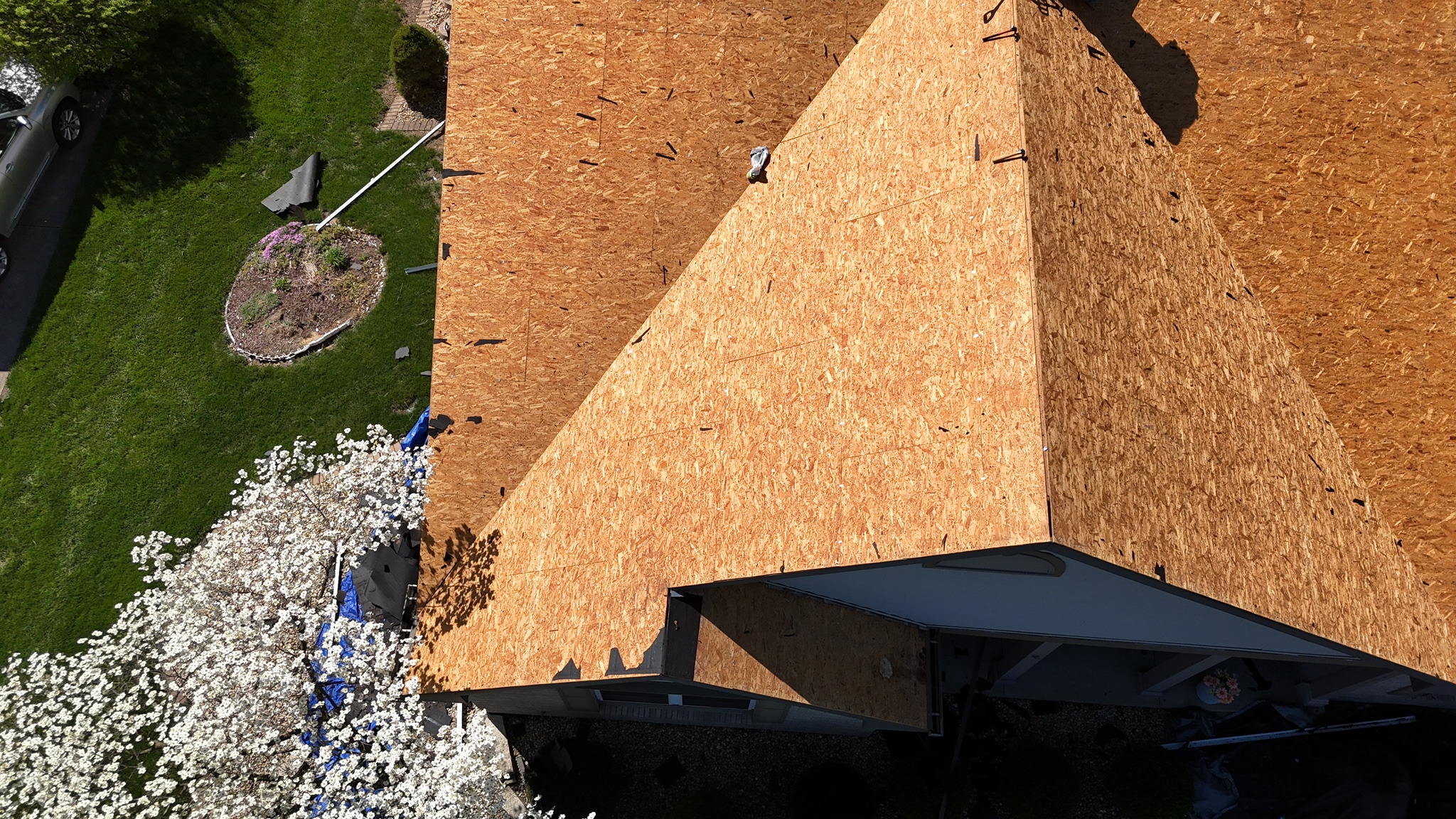
10. Starter Strips
Starter strips are installed along the lower edge of the roof beneath the first course of shingles.
They help create a sealed edge and provide additional resistance to wind uplift along the roof perimeter.
Starter strips are generally hidden once the roof is complete, so they are primarily something a professional would evaluate during an inspection or roof replacement.
11. Ice and Water Protection
Ice and water protection is a specialized membrane used in areas of a roof that may be more vulnerable to water intrusion.
Depending on the roof design, installation requirements, and local conditions, it may be used along eaves, valleys, and around certain roof penetrations.
This can be particularly relevant in Illinois and Missouri, where homes experience heavy rain, snow, ice, and freeze-thaw cycles.
The exact placement and amount of this protection can vary from one roofing system to another.
12. Rafters and Trusses
Rafters and trusses form part of the roof’s structural framework.
They support the decking and the roofing materials above them.
These components are generally hidden from view, although portions may be visible from inside an unfinished attic.
Homeowners don’t normally need to inspect structural framing themselves. During a professional inspection, a roofer may look for visible signs of moisture damage or other concerns.
How These Parts Work Together
The easiest way to understand a roof is to think of it as a system rather than a collection of separate parts.
Rain lands on the shingles and moves down the roof.
Valleys help direct water where roof sections meet.
Flashing helps protect areas where the roof meets walls, chimneys, skylights, and other structures.
Drip edge helps manage water at the roof perimeter.
Gutters and downspouts carry runoff away from the home.
Underlayment provides another layer of protection beneath the shingles, while decking provides the surface that supports the roofing materials.
Ventilation components help manage airflow through the attic.
Each part has a different purpose, but they work together to protect the home.
That’s also why a problem with one visible component doesn’t automatically tell you what needs to happen with the entire roof.
What Homeowners Can Safely Check
You can learn quite a bit about your roof without climbing onto it.
From the ground, look for:
- Missing or visibly damaged shingles
- Curling or lifting shingles
- Missing ridge caps
- Obvious flashing concerns
- Damaged roof edges
- Sagging or unusual changes in the roofline
- Visible soffit or fascia deterioration
You can also check your gutters for excessive granules, debris, sagging, or visible damage.
Inside the home, watch for water stains or other signs of moisture. If you have safe access to your attic, you may also notice condensation, staining, or other changes that deserve attention.
These observations can help you identify something worth investigating, but they don’t tell you everything about the condition of a roof.
Never climb onto your roof to perform your own inspection.
When Should You Have Your Roof Inspected?
A professional inspection may make sense if you’ve noticed visible damage, experienced a leak, recently had severe weather, or simply aren’t sure about the condition of your roof.
A good inspection looks beyond the shingles.
At Edwards & Sons, our inspection process considers three main areas:
Interior & Attic: Looking for signs of moisture, ventilation concerns, and conditions that may not be visible from outside.
Perimeter & Exterior: Looking at roof edges, siding, gutters, flashing, soffits, and other areas around the home.
Rooftop: Evaluating visible roofing materials and components for signs of damage, wear, or other concerns.
The goal is to understand what is actually happening before deciding what work, if any, makes sense.
After more than 50 years serving homeowners throughout Southern Illinois, the Metro East, and Greater St. Louis, we’ve learned that good roofing decisions start with good information.
Sometimes that information leads to maintenance or a repair. Other situations may require more extensive work.
The important part is understanding the condition of the roofing system before deciding what comes next.
Frequently Asked Questions
What is the most important part of a roof?
There isn’t one single part that matters most. A roof works as a system, with shingles, flashing, underlayment, decking, ventilation, and other components each serving a different purpose.
Can I see all the parts of my roof from the ground?
No. Some components, such as shingles, ridge caps, gutters, and portions of flashing, may be visible. Others, including underlayment and decking, are hidden beneath the roofing materials.
Does a damaged shingle mean I need a new roof?
Not necessarily. A damaged shingle may be an isolated problem that can be repaired. The appropriate solution depends on the location and extent of the damage and the overall condition of the roofing system.
Why are there granules in my gutters?
Some granule loss is normal as asphalt shingles age. A noticeable increase in granules, particularly after severe weather, may be worth having evaluated.
Why is there a water stain on my ceiling?
A ceiling stain can have several possible causes. Water can travel along roofing materials, framing, or other surfaces before becoming visible inside the home. The location of the stain does not always identify where the water entered.
Understanding the Parts of Your Roof
You don’t need to know every roofing term to take good care of your home.
Knowing the basic parts of a roof can help you recognize changes, understand what you’re seeing from the ground, and ask better questions when you talk with a roofing professional.
And when something doesn’t look right, you don’t have to guess at the solution.
A professional inspection can help determine what is actually happening and whether the issue calls for maintenance, a repair, or something more extensive.
Understand the problem first. Then decide what makes sense.
Get A Free Roof Inspection